You’re scrolling through your messages and suddenly see “WTH” pop up.
Maybe a friend texts it after a shocking story, or someone drops it in a group chat during a heated debate. You pause for a second… what does it really mean, and is it rude?
If you’ve ever wondered about WTH meaning in text, you’re not alone.
This short abbreviation is everywhere in modern digital communication, from WhatsApp chats to TikTok comments.
Understanding it isn’t just about keeping up with slang — it helps you read tone, avoid misunderstandings, and communicate like a native texter.
In this updated for 2026 guide, you’ll learn exactly what WTH means, where it came from, how to use it correctly, and real examples you can copy. By the end, you’ll never second-guess it again.
What Does “WTH” Mean?
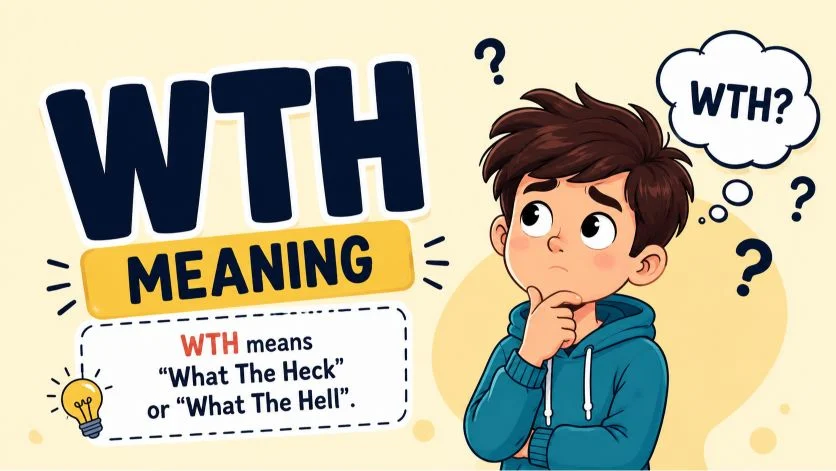
WTH stands for “What the heck” or sometimes “What the hell.” It is used to express surprise, confusion, disbelief, or mild frustration.
Quick Answer
WTH means What the heck. It is a casual abbreviation used in texting and online chats to react to something unexpected, shocking, or confusing. It can also mean What the hell depending on tone.
Origin and Evolution
WTH emerged in early internet chatrooms and SMS texting in the late 1990s and early 2000s. Back then, character limits forced users to shorten phrases.
Over time, it became a softer, more socially acceptable version of stronger expressions. While “What the hell” can sound harsh, “WTH” feels lighter and more casual.
Today, it’s widely used across platforms like WhatsApp, Instagram, and Discord, especially among Gen Z and Millennials.
Pronunciation
People rarely say “WTH” out loud. But if they do, it’s usually read letter by letter as
“double-u tee eich”
How to Use “WTH” Correctly in Texts and Chat
Using WTH is simple, but tone matters a lot.
When to Use It
Use WTH when you want to react to something that feels
- Shocking
- Confusing
- Unexpected
- Slightly annoying
Example
“WTH just happened here”
Tone and Context
WTH can feel playful or slightly annoyed depending on the situation. It’s usually not aggressive unless paired with strong language.
Platform Specific Usage
- WhatsApp and SMS
Casual chats with friends and family - Instagram and TikTok
Reaction comments to surprising videos - Discord and gaming chats
Quick reactions during gameplay - Twitter X
Used in trending reactions or viral posts
When NOT to Use It
Avoid using WTH in
- Professional emails
- Work chats with managers
- Formal communication
It may come off as unprofessional or disrespectful.
Formatting Tips
- Lowercase feels relaxed
wth is this - Uppercase feels stronger
WTH is going on - Add emojis to soften tone
WTH 😂
WTH 😭
Real Conversation Examples Using “WTH”
Between Friends
Friend 1
“I just saw him wearing pajamas at the mall”
Friend 2
“WTH 😂”
Emotion
Amused surprise
In a Group Chat
Person A
“The teacher gave us homework for the weekend”
Person B
“WTH that’s unfair”
Emotion
Mild frustration
Dating Scenario
You
“I thought our date was at 7”
Them
“WTH I thought it was 6”
Emotion
Confusion and miscommunication
Family Chat
Sibling
“I ate the last slice of pizza”
You
“WTH 😭”
Emotion
Playful annoyance
Gaming Chat
Player 1
“Bro I lagged and died”
Player 2
“WTH that server is broken”
Emotion
Frustration
Common Mistakes and Misunderstandings
1. Thinking It’s Always Offensive
WTH is usually mild. It’s far less harsh than the full phrase it represents.
2. Using It in Formal Situations
Dropping WTH in a work email can make you seem unprofessional. Save it for casual chats.
3. Misreading the Tone
Without emojis or context, WTH can seem more negative than intended. Always consider the conversation tone.
Generational Differences
- Gen Z uses WTH casually and frequently
- Older users may interpret it as rude or aggressive
Cultural Differences
In some regions, even mild expressions like WTH may feel inappropriate. Always match your audience.
“WTH” Across Different Platforms and Demographics
Gen Z vs Millennials
- Gen Z
Uses WTH frequently in memes, comments, and fast reactions - Millennials
Use it more sparingly but still understand it well
Popular Platforms
- TikTok comments often include WTH in reaction threads
- Instagram captions use it for humor
- Discord uses it heavily in gaming communities
Formal or Informal
WTH is strictly informal. It is not suitable for professional communication.
Viral Trends
WTH often appears in reaction memes and short-form videos where users respond to shocking or funny content.
Related Slang and Alternatives
Here are similar expressions you can use instead of WTH
| Term | Meaning |
|---|---|
| WTF | Stronger version meaning What the hell |
| OMG | Oh my God used for surprise |
| BRUH | Reaction to something ridiculous |
| SMH | Shaking my head showing disappointment |
| IDK | I don’t know |
| LOL | Laughing out loud |
| LMAO | Strong laughter reaction |
| FR | For real used for emphasis |
| TBH | To be honest |
| NO WAY | Expressing disbelief |
These alternatives help you adjust tone depending on how strong or casual you want to sound.
FAQs:
What does WTH mean in texting
WTH means What the heck or What the hell. It is used to express surprise, confusion, or frustration in a casual way.
Is WTH rude
WTH is generally not considered rude, especially compared to stronger phrases. However, tone and context matter, so it can sound negative in certain situations.
Can I use WTH in professional messages
No, WTH is informal slang and should not be used in work emails or professional communication. Use neutral language instead.
What is the difference between WTH and WTF
WTH is a softer and more polite version, while WTF is stronger and can be offensive depending on the context.
Do people still use WTH in 2026
Yes, WTH is still widely used in 2026, especially in casual texting, social media comments, and online chats.
Conclusion:
Understanding WTH meaning in text is more than just decoding three letters. It’s about reading emotion, tone, and context in modern communication.
WTH works best as a quick reaction. It’s expressive, easy to type, and widely understood. Just remember to keep it casual and avoid using it in formal situations.
Now that you know how to use it, you’ll spot it everywhere and maybe even start using it yourself.
Got a favorite slang term you use daily? Drop it in the comments and keep the conversation going.

Hi, I’m John Mark, the voice behind codexao.com, where meanings aren’t just explained, they’re simplified for the way people actually talk today.
I’ve always been curious about words, how they change, how they trend, and how a simple phrase can carry completely different meanings depending on context. That curiosity turned into codexao, a space where I break down slang, text abbreviations, and everyday words into clear, easy-to-understand explanations.