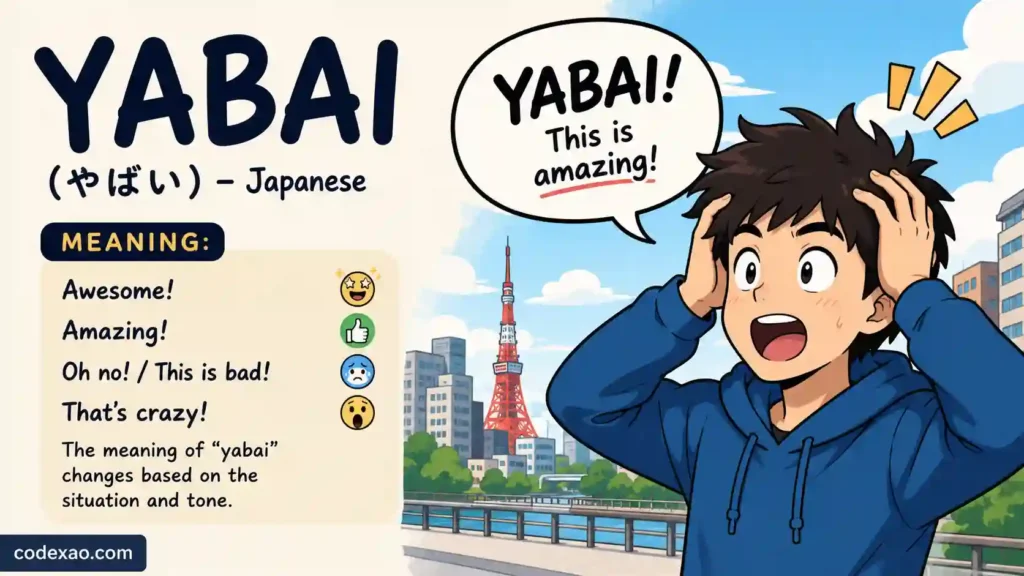
Have you ever watched anime, scrolled through Japanese TikTok videos, or chatted with someone learning Japanese and suddenly heard the word Yabai?
At first, it seems simple. Then you notice people use it for everything. One person says it when they’re excited about delicious food.
Another uses it during a dangerous situation. Someone else says it after seeing an impressive performance.
That’s because yabai meaning is much more flexible than a direct English translation.
It is one of the most commonly used Japanese slang words and can communicate excitement, surprise, admiration, concern, panic, or even disbelief.
Updated for 2026, this guide explains exactly what Yabai means, where it came from, how Japanese speakers use it today, and how you can understand it correctly in texts, social media posts, anime, and real conversations.
What Does Yabai Mean?
Yabai is a Japanese slang expression used when something is extreme, shocking, impressive, dangerous, exciting, or problematic.
Unlike many words that have one fixed definition, Yabai changes meaning depending on context and tone.
Quick Answer
Yabai means something is intensely good, bad, dangerous, surprising, or impressive. The exact meaning depends entirely on the situation and speaker’s emotion.
Origin of Yabai
The word originated in Japan many decades ago. Historically, it carried a negative meaning associated with danger, risk, or trouble.
People used it to describe situations that were unsafe or problematic.
Over time, younger generations transformed the word. Similar to how English speakers use words like mistaken, nonsensical, or wild in positive ways, Japanese speakers began using Yabai to describe things that were exceptionally good.
Today, both meanings coexist.
How the Meaning Evolved
Earlier Meaning
- Dangerous
- Risky
- Bad situation
- Serious trouble
Modern Meaning
- Amazing
- Incredible
- Awesome
- Mind-blowing
- Intense
- Shocking
Pronunciation Guide
Yabai is pronounced:
Ya-bye
The first syllable sounds like “yah” and the second sounds similar to “bye.”
How to Use Yabai Correctly in Texts and Chat
Yabai works best in casual communication.
People commonly use it when they experience strong emotions.
Casual Excitement
“This ramen is yabai.”
Meaning:
This ramen is unbelievably good.
Surprise
“Yabai, I didn’t expect that.”
Meaning:
Wow, that shocked me.
Concern
“Yabai, I’m late.”
Meaning:
Uh-oh, I’m in trouble.
Platform-Specific Usage
SMS and Text Messages
Often used to express quick emotional reactions.
Example:
“That concert was yabai.”
Popular among Japanese speakers and language learners for casual chats.
Example:
“Yabai, the photos look amazing.”
Frequently appears in captions describing food, fashion, travel, or performances.
Example:
“This view is yabai.”
X
Used in reactions to trending topics and viral moments.
Example:
“Yabai ending.”
Discord
Common in gaming communities.
Example:
“That boss fight was yabai.”
Often appears in anime, manga, and Japanese language discussions.
When Not to Use Yabai
Avoid using Yabai in:
- Business emails
- Academic papers
- Professional presentations
- Formal workplace conversations
Emoji Pairings
Common combinations include:
- Yabai 🔥
- Yabai 😱
- Yabai 🤯
- Yabai 😍
- Yabai 😂
Real Conversation Examples Using Yabai
Between Friends
Friend 1:
“The new restaurant just opened.”
Friend 2:
“I tried it yesterday. The food was yabai.”
Meaning:
The food was incredibly good.
Dating Conversation
Person 1:
“You look amazing tonight.”
Person 2:
“Stop, you’re making me blush.”
Person 1:
“No seriously, you’re yabai.”
Meaning:
Exceptionally attractive or impressive.
Family Chat
Mom:
“Did you finish your homework?”
Teen:
“Yabai. I completely forgot.”
Meaning:
I’m in trouble.
Workplace Group Chat
Coworker:
“The presentation starts in five minutes.”
Employee:
“Yabai, I’m still stuck in traffic.”
Meaning:
This situation is bad.
Gaming Session
Player 1:
“Did you see that final attack?”
Player 2:
“That combo was yabai.”
Meaning:
The move was amazing.
Common Mistakes and Misunderstandings
Assuming It Always Means Dangerous
Many beginners learn the older definition first.
Modern Japanese speakers often use Yabai positively.
Using It in Formal Settings
Yabai is slang.
Professional communication requires more formal language.
Ignoring Context
The same word can express admiration or panic.
Always pay attention to tone, facial expressions, and surrounding words.
Generational Differences
Older Japanese speakers may associate Yabai more strongly with danger or trouble.
Gen Z speakers frequently use it to mean amazing or incredible.
Cultural Differences
Japanese slang relies heavily on context.
Direct translations can sometimes miss the intended emotion.
When confused, ask the speaker for clarification.
Yabai Across Different Platforms and Demographics
Gen Z Usage
Gen Z uses Yabai constantly.
It often replaces several different emotional reactions.
Examples:
- Amazing
- mistaken
- Cool
- Unreal
- Shocking
Millennials
Millennials commonly use it but may switch between positive and negative meanings more consciously.
Older Generations
Older adults understand the term but may use it less frequently.
TikTok
Yabai frequently appears under:
- Food videos
- Dance clips
- Travel content
- Viral moments
Popular in captions describing:
- Fashion
- Restaurants
- Concerts
- Scenery
Discord and Gaming
Used to react to:
- Skillful plays
- Difficult challenges
- Unexpected wins
Is It Safe for Work
Generally no.
While not offensive, it remains informal slang.
Related Slang Abbreviations and Alternatives
| Term | Meaning |
|---|---|
| Sugoi | Amazing or great |
| Maji | Seriously |
| Egui | Extreme or intense |
| Kakkoii | Cool or stylish |
| Ukeru | Funny |
| Kimoi | Creepy |
| Maji Yabai | Seriously amazing or seriously bad |
| Sugoi Ne | That’s amazing |
| Honto | Really |
| Ikemen | Handsome person |
Suggested internal anchors:
- Learn more about Sugoi Meaning
- Learn more about Maji Meaning
- Learn more about Ikemen Meaning
- Learn more about Japanese Slang Terms
- Learn more about Anime Expressions
FAQs:
What does Yabai literally mean
Traditionally, Yabai meant dangerous or risky. Modern Japanese slang expanded the meaning to include amazing, shocking, exciting, and impressive.
Is Yabai positive or negative
It can be either. Context determines whether the speaker means something good, bad, surprising, or intense.
Why do anime characters say Yabai so often
Anime characters use Yabai because it quickly communicates strong emotions like excitement, panic, admiration, or disbelief.
Is Yabai rude
No. It is not usually considered rude. However, it is informal and should be avoided in professional environments.
Can foreigners use Yabai
Yes. Language learners commonly use Yabai in casual conversations. Just make sure you understand the context before using it.
Conclusion:
Yabai meaning goes far beyond a simple dictionary definition. It is one of Japan’s most flexible slang words and can describe anything from danger and trouble to excitement and admiration.
The secret to understanding Yabai is context. The same word can mean amazing, terrible, shocking, or incredible depending on the moment.
As Japanese culture, anime, gaming, and social media continue to grow worldwide, knowing what Yabai means helps you understand conversations more naturally and communicate with greater confidence.
Drop your favorite Japanese slang word in the comments below and explore more modern expressions to level up your language skills.

Hi, I’m John Mark, the voice behind codexao.com, where meanings aren’t just explained, they’re simplified for the way people actually talk today.
I’ve always been curious about words, how they change, how they trend, and how a simple phrase can carry completely different meanings depending on context. That curiosity turned into codexao, a space where I break down slang, text abbreviations, and everyday words into clear, easy-to-understand explanations.