Have you ever heard someone say, “The media hounded him for weeks,” and wondered what they meant? Or maybe you came across the word while reading about hunting dogs and wanted a clearer explanation.
The hound meaning is actually more interesting than many people realize. Depending on the context, it can refer to a specific type of dog or describe someone relentlessly pursuing another person.
The word has been part of the English language for centuries and continues to appear in conversations, news articles, movies, and social media.
Understanding the meaning of hound can help you avoid confusion and use the term correctly in both casual and professional situations.
Updated for 2026, this guide explains the definition, origin, modern usage, examples, common mistakes, and related terms so you’ll never be puzzled by the word again.
What Does Hound Mean?
Definition
The hound meaning has two primary uses in English.
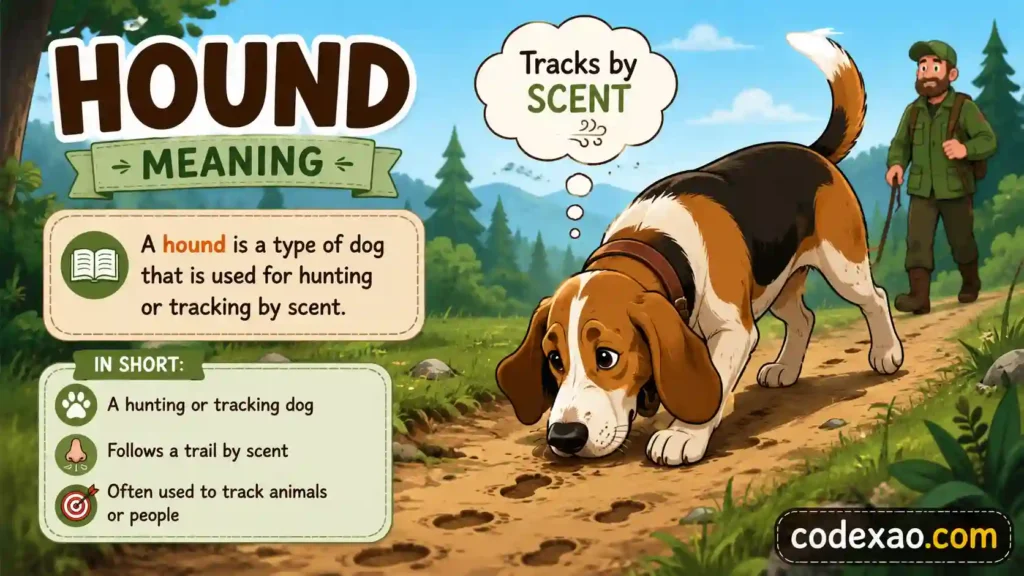
- A hound is a dog, especially one bred for hunting and tracking.
- As a verb, hound means to continually pursue, pressure, follow, or annoy someone.
Quick Answer
Hound means either a hunting dog or the act of persistently chasing, pressuring, or bothering someone.
Origin of the Word
The word “hound” comes from Old English “hund,” which originally referred to dogs in general. Over time, the meaning became more specific and was used primarily for hunting breeds known for their tracking abilities.
As English evolved, people began using hound figuratively. Instead of describing a dog chasing prey, it described a person relentlessly pursuing another person or goal.
How the Meaning Changed Over Time
Centuries ago, hound mainly referred to hunting dogs.
Today, people frequently use it in a figurative sense, especially in news stories and everyday conversations.
Examples include:
- Journalists hounding celebrities
- Debt collectors hounding customers
- Fans hounding athletes for autographs
Pronunciation Guide
Hound is pronounced:
Hownd
It rhymes with words such as:
- Found
- Round
- Sound
How to Use Hound Correctly in Texts and Chat
The word hound is most often used when describing persistent behavior.
Casual Usage
Examples:
- Stop hounding me about the project.
- My friends keep hounding me to join the trip.
- He’s been hounding her for a reply all week.
Emotional Tone
Depending on context, hound can sound:
- Annoyed
- Frustrated
- Humorous
- Playful
- Critical
Platform-Specific Usage
SMS and WhatsApp
Used casually among friends.
Example:
“Bro, quit hounding me for updates.”
Instagram DMs
Often appears in jokes or complaints.
Example:
“My cousins keep hounding me for vacation photos.”
X and Social Media Posts
Common when discussing celebrities or public figures.
Example:
“The press hounded the actor after the scandal.”
Discord
Frequently used in gaming communities.
Example:
“They keep hounding me to join the raid.”
Used in discussions involving persistence or pressure.
Example:
“Customer support hounded me with follow-up emails.”
When Not to Use It
Avoid using hound in highly formal documents unless describing persistent pursuit.
For example:
Less suitable:
- The manager hounded employees.
More professional:
- The manager repeatedly followed up with employees.
Formatting Tips
Common styles include:
- hound
- hounded
- hounding
Emoji pairings:
- 😅
- 😂
- 🙄
- 🐶
Real Conversation Examples Using Hound
Between Friends
Sarah: Did you buy the concert tickets yet?
Mike: Stop hounding me. I’m buying them tonight.
Meaning: Mike feels pressured by repeated reminders.
Dating Conversation
Emma: Have you heard from him?
Lily: No, and I’m not going to hound him for a response.
Meaning: Lily doesn’t want to appear overly persistent.
Family Chat
Mom: Your aunt keeps hounding me for family photos.
Daughter: I’ll send them later today.
Meaning: The aunt is repeatedly asking for something.
Workplace Chat
Manager: Have you finished the report?
Employee: Not yet.
Manager: Sorry for hounding you. Just checking on the deadline.
Meaning: The manager acknowledges repeated follow-ups.
Gaming Community
Player 1: Join the tournament tonight.
Player 2: Everyone keeps hounding me to play.
Meaning: Multiple people are encouraging participation.
Common Mistakes and Misunderstandings
Mistake 1: Thinking It Only Refers to Dogs
Many learners assume hound only means a hunting dog.
In modern English, the figurative meaning is extremely common and often appears more frequently than the literal one.
Mistake 2: Assuming It Is Always Negative
While hound often suggests annoyance, it can sometimes be playful.
Example:
“My friends are hounding me to watch the new series.”
This sounds lighthearted rather than hostile.
Mistake 3: Using It in Formal Business Writing
Professional communication generally benefits from more neutral wording.
Instead of:
“We hounded the client.”
Use:
“We followed up with the client.”
Generational Differences
Older generations may immediately think of hunting dogs.
Younger people are more likely to recognize the figurative meaning first.
Cultural Differences
In regions with strong hunting traditions, hound may still commonly refer to dog breeds.
In urban settings, the figurative meaning often dominates.
Hound Across Different Platforms and Demographics
Gen Z Usage
Gen Z frequently uses hound when joking about:
- Friends demanding updates
- Group chats
- Social media interactions
Millennials
Millennials often use it in workplace and family discussions.
Example:
“My coworkers keep hounding me about the presentation.”
Older Generations
Older users may encounter hound more often in literature, hunting contexts, or traditional expressions.
TikTok
Usually appears in comments about persistence.
Example:
“Fans were hounding her for part two.”
Often used in captions and comment sections.
Discord
Popular in gaming communities where players encourage participation.
Is It Formal or Informal?
The word itself is acceptable in standard English.
However, its figurative use generally feels conversational and informal.
Safe for Work
Yes.
The word is considered workplace-safe, though alternative wording may sound more professional.
Related Slang, Abbreviations and Alternatives
| Term | Meaning |
|---|---|
| Chase | Pursue someone or something |
| Pursue | Follow or seek actively |
| Bug | Repeatedly bother someone |
| Nag | Constantly remind or criticize |
| Pester | Annoy with repeated requests |
| Harass | Aggressively bother someone |
| Follow Up | Check back regarding a matter |
| Track Down | Locate someone persistently |
| Stalk | Follow obsessively |
| Hunt | Search actively for something |
Synonyms
- Pursue
- Chase
- Track
- Pester
- Nag
Opposite Ideas
- Ignore
- Leave Alone
- Avoid
- Disregard
FAQs:
What is the exact hound meaning?
A hound is either a hunting dog bred for tracking prey or a person who persistently pursues, pressures, or bothers someone. The intended meaning depends on context.
Is hound a slang word?
Not exactly. Hound is a standard English word, though it is sometimes used informally in conversations and online discussions.
Can hound be used positively?
Yes. In some situations, it simply means persistent encouragement rather than annoyance. The tone depends on context and intent.
What does hounded mean?
Hounded is the past tense of hound. It means someone was repeatedly pursued, pressured, questioned, or bothered.
Why do journalists use the word hound?
The term creates a vivid image of relentless pursuit. It helps describe situations where reporters continuously seek answers, interviews, or comments.
Is hound still commonly used today?
Yes. It remains widely used in everyday speech, media reporting, entertainment coverage, and online conversations.
Conclusion:
The hound meaning goes far beyond a simple dog breed. While the word originally referred to hunting dogs, modern English often uses it to describe persistent pursuit or repeated pressure.
Whether someone is hounding a friend for updates, reporters are hounding a celebrity for answers, or a hunter is talking about an actual hound dog, context makes the meaning clear.
Now that you understand the definition, origin, and real-world usage, you’ll recognize the word instantly whenever it appears.
Drop your favorite text abbreviation in the comments below and explore more slang meanings to expand your digital vocabulary.

Hi, I’m John Mark, the voice behind codexao.com, where meanings aren’t just explained, they’re simplified for the way people actually talk today.
I’ve always been curious about words, how they change, how they trend, and how a simple phrase can carry completely different meanings depending on context. That curiosity turned into codexao, a space where I break down slang, text abbreviations, and everyday words into clear, easy-to-understand explanations.