Ever read a message, smirked a little, but didn’t burst out laughing? That’s exactly where the word “amusing” comes in.
In today’s world of memes, TikToks, and rapid-fire texting, not everything is “hilarious”, sometimes it’s just… pleasantly funny.
Understanding the amusing meaning helps you express that middle-ground emotion, something that’s entertaining but not laugh-out-loud funny.
And yes, this subtle distinction actually matters more than you think, especially in digital communication where tone can easily get lost.
In this guide (Updated for 2026), you’ll learn what “amusing” really means, how to use it correctly in texts and chats, real-life examples, common mistakes, and how it compares to other slang and expressions.
What Does “Amusing” Mean?
Quick Answer:
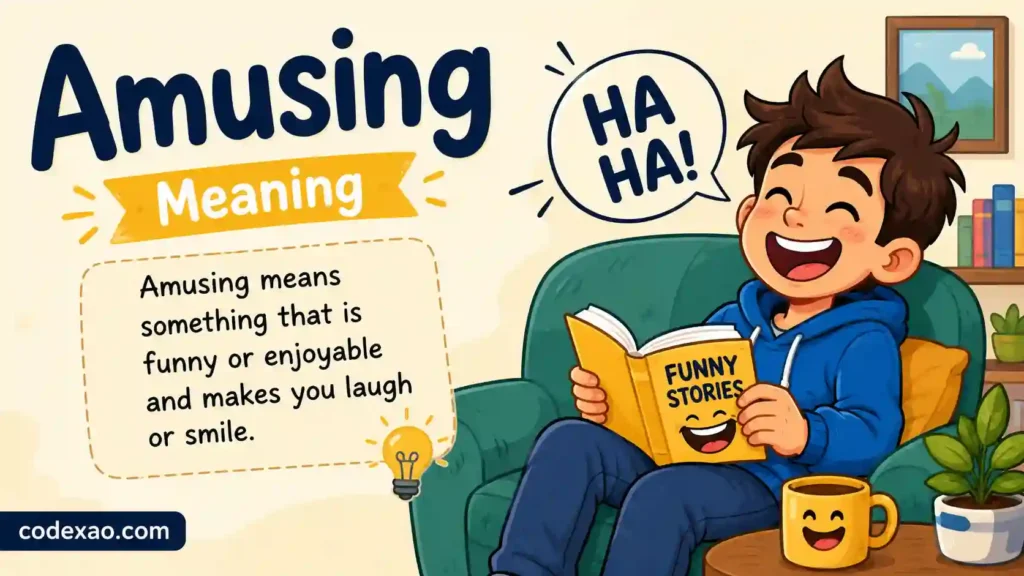
“Amusing” means something that is mildly funny, entertaining, or enjoyable in a lighthearted way.
The word comes from the Old French term amuser, meaning “to divert or entertain.” Over time, it evolved into English as a way to describe something that captures attention in a pleasant, often humorous way.
Unlike stronger words like “hilarious,” “amusing” sits in a softer category, it’s about subtle enjoyment rather than big reactions.
Pronunciation:
uh-MYOO-zing
Evolution of Meaning:
- Originally: General entertainment or distraction
- Modern use: Light humor or mild fun
- Digital age: Often used in a slightly understated or even ironic tone
How to Use “Amusing” Correctly in Texts & Chat
“Amusing” is versatile, but tone is everything.
✅ When to Use It
- When something is slightly funny
- When you want to sound polite or understated
- When reacting to a joke that didn’t fully land
- When describing quirky or odd situations
❌ When NOT to Use It
- When something is extremely funny (use “hilarious” instead)
- In highly emotional reactions (it feels too neutral)
- In sarcasm-heavy contexts unless intentional
Platform-Specific Usage
- WhatsApp/SMS:
“That’s amusing 😂” (casual, friendly tone) - Instagram DMs:
“Lowkey amusing ngl” (blends slang with standard English) - Twitter/X:
Often used ironically: “This is… amusing.” - Discord/Reddit:
Can signal dry humor or intellectual amusement
Formatting Tips
- Pair with emojis: 😂 🙂 🤭
- Lowercase = casual tone
- Period at end = can sound serious or sarcastic
- Add “kind of” or “slightly” to soften it further
Real Conversation Examples Using “Amusing”
1. Between Friends
A: “I tried cooking and burned toast.”
B: “That’s actually amusing 😂”
Emotion: Light teasing, friendly humor
2. In a Group Chat
User1: “He waved back at someone who wasn’t waving at him.”
User2: “That’s so amusing lol”
Emotion: Shared awkward humor
3. Dating Scenario
Person A: “I wore mismatched shoes today by accident.”
Person B: “That’s oddly amusing, I like it.”
Emotion: Playful, slightly flirty
4. Family Chat
Mom: “I just discovered memes today.”
You: “This is very amusing 😄”
Emotion: Warm, affectionate humor
5. Work Chat
Colleague: “The meeting got delayed again.”
You: “Well, that’s… amusing.”
Emotion: Mild sarcasm or frustration
Common Mistakes & Misunderstandings
1. Confusing “Amusing” with “Hilarious”
Not everything funny is “amusing,” and not everything amusing is hilarious. One is subtle; the other is strong.
2. Sounding Sarcastic Without Meaning To
“That’s amusing.” (with a period) can sound passive-aggressive. Tone matters, especially in text.
3. Generational Misinterpretation
- Gen Z: May interpret it as slightly ironic
- Older users: Use it more literally
4. Cultural Differences
In some cultures, calling something “amusing” might sound polite but distant rather than genuinely entertained.
How to Clarify
If misunderstood, just add context:
- “I mean it’s funny in a cute way!”
“Amusing” Across Different Platforms & Demographics
Gen Z
Uses it casually but often with irony or understatement.
Millennials
Use it more traditionally, just meaning “lightly funny.”
Older Generations
Prefer it in formal or descriptive contexts.
Platform Trends
- TikTok: Rare, replaced by slang like “LOL,” “dead,” or “I can’t”
- Instagram: Occasionally in captions
- Discord: Common in dry humor communities
Formality Level
- Semi-formal
- Safe for work
- Works in both emails and casual chats
Related Slang, Abbreviations & Alternatives
| Term | Meaning |
|---|---|
| Funny | Clearly humorous |
| Hilarious | Extremely funny |
| LOL | Laughing out loud |
| LMAO | Strong laughter reaction |
| Entertaining | Engaging and enjoyable |
| Quirky | Odd but interesting |
| Witty | Clever humor |
| Chuckle-worthy | Causes a small laugh |
| Lighthearted | Cheerful and easygoing |
| Mildly funny | Similar tone to amusing |
Pro Tip:
Use “amusing” when you want to sound thoughtful or subtle, not overly reactive.
FAQs:
What does amusing mean in texting?
In texting, “amusing” describes something mildly funny or entertaining. It’s often used when something makes you smile rather than laugh loudly, and it can sometimes carry a slightly sarcastic tone depending on context.
Is amusing a compliment?
Yes, but a soft one. Calling something “amusing” means you found it enjoyable, though not necessarily impressive or hilarious. It’s polite and neutral-positive.
Can amusing be negative?
Sometimes. If used with a flat tone (“That’s amusing.”), it can imply mild sarcasm or even annoyance rather than genuine humor.
What’s the difference between amusing and entertaining?
“Amusing” focuses on light humor, while “entertaining” is broader and can include anything engaging, not necessarily funny.
Is amusing commonly used in slang?
Not really slang, but it blends well with slang in modern texting. You’ll often see it combined with casual phrases or emojis to soften or clarify tone.
Conclusion:
“Amusing” is one of those words that quietly does a lot of work. It captures that in-between feeling, not laugh-out-loud funny, but still worth a smile.
In today’s digital world, where tone can make or break a message, understanding the amusing meaning helps you communicate more precisely.
Whether you’re texting friends, replying in a group chat, or even sending a work message, it adds a layer of subtle expression.
So next time something makes you smirk instead of laugh, you know exactly what to call it.
Got a favorite slang word you want decoded next? Drop it below and keep the convo going.

Hi, I’m John Mark, the voice behind codexao.com, where meanings aren’t just explained, they’re simplified for the way people actually talk today.
I’ve always been curious about words, how they change, how they trend, and how a simple phrase can carry completely different meanings depending on context. That curiosity turned into codexao, a space where I break down slang, text abbreviations, and everyday words into clear, easy-to-understand explanations.