Have you ever seen someone online refuse to share where they bought an outfit, discovered a song, or learned a skill? Chances are you’ve seen gatekeeping in action.
The term gatekeeper meaning has become increasingly popular across social media, online communities, gaming forums, and everyday conversations.
While the word originally described someone who literally controlled access to a place, its modern meaning has evolved into something much broader.
Today, people use “gatekeeper” to describe individuals who decide who gets access to information, opportunities, communities, or experiences.
Sometimes that’s part of their job. Other times, it’s a behavior that sparks debate online.
In this guide, updated for 2026, you’ll learn exactly what gatekeeper means, where the term came from, how it’s used in conversations, and why people often accuse others of gatekeeping on platforms like TikTok, Instagram, Reddit, and Discord.
What Does Gatekeeper Mean?
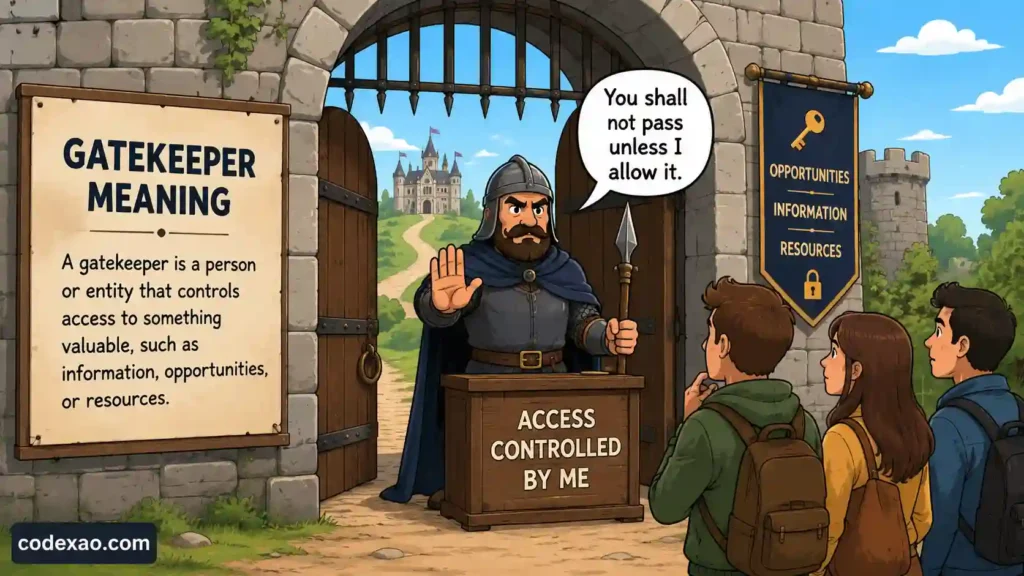
A gatekeeper is a person who controls access to something valuable, whether that is information, opportunities, resources, communities, or people.
In internet slang, the word often describes someone who deliberately keeps others from joining a group, discovering information, or participating in an activity.
Quick Answer
Gatekeeper meaning: A person who controls or restricts access to information, opportunities, groups, or resources. Online, it often refers to someone who tries to keep something exclusive.
Origin of the Term
The word “gatekeeper” originally referred to someone responsible for guarding a gate or entrance. Historically, gatekeepers controlled who could enter castles, cities, or private properties.
Over time, the meaning expanded. Businesses, media organizations, and institutions began using the term for people who decided which information, requests, or opportunities moved forward.
The internet gave the term a new life. Online communities started using “gatekeeping” to describe behavior that excludes newcomers from hobbies, fandoms, or trends.
How the Meaning Has Changed
Years ago, gatekeepers were often viewed as necessary decision-makers.
Today, especially among younger internet users, the term is frequently used as criticism. Someone may be called a gatekeeper if they refuse to share helpful information or make others feel unwelcome.
Pronunciation
Gatekeeper is pronounced:
GAYT-kee-per
How to Use Gatekeeper Correctly in Texts and Chat
The word can be used seriously, humorously, or sarcastically depending on the conversation.
Casual Usage
Most people use it casually when discussing social media behavior.
Examples:
- “Stop being a gatekeeper and tell us where you got those shoes.”
- “He’s gatekeeping his playlist again.”
- “Why are people gatekeeping hobbies?”
Platform-Specific Usage
Often used among friends jokingly.
Example:
“You’re gatekeeping your secret recipe again.”
Common in comments when creators refuse to reveal product sources.
Example:
“Don’t gatekeep the brand name.”
TikTok
Frequently appears under viral videos.
Example:
“Everyone’s asking for the tutorial. Stop gatekeeping.”
Discord
Used in gaming and fandom communities.
Example:
“Some members are gatekeeping new players.”
Often appears in discussions about inclusivity and community culture.
Example:
“That subreddit has a reputation for gatekeeping beginners.”
When Not to Use It
Avoid using the term in highly formal business communication unless discussing access control or organizational processes.
Instead of saying:
“You are gatekeeping information.”
Consider:
“Could you share more information with the team?”
Emoji Pairings
Common emojis include:
- 🚪
- 🔒
- 🤫
- 😂
- 🙄
These often emphasize exclusivity or playful teasing.
Real Conversation Examples Using Gatekeeper
Between Friends
Alex: Where did you find that jacket?
Sam: That’s classified information.
Alex: Stop being a gatekeeper.
Meaning: Alex playfully accuses Sam of withholding information.
Dating Conversation
Taylor: What’s that amazing restaurant you posted?
Jordan: It’s my secret spot.
Taylor: You’re totally gatekeeping.
Meaning: Jordan is keeping the recommendation exclusive.
Family Chat
Mom: How did you make this cake?
Daughter: Family secret.
Mom: Look at you gatekeeping recipes.
Meaning: Used humorously among family members.
Work Chat
Employee: Can you share that project template?
Colleague: I’ll send it over shortly.
Employee: Good. No gatekeeping allowed.
Meaning: Lighthearted request for information sharing.
Gaming Community
Player 1: How did you unlock that character?
Player 2: Figure it out yourself.
Player 1: Why are you gatekeeping?
Meaning: Refusing to help newer players.
Common Mistakes and Misunderstandings
Assuming All Gatekeepers Are Bad
Not every gatekeeper is negative.
Editors, managers, moderators, and security personnel often act as gatekeepers because it’s part of their responsibilities.
Confusing Expertise with Gatekeeping
Experts may correct misinformation without gatekeeping.
For example, a mechanic explaining proper vehicle maintenance is sharing knowledge, not excluding others.
Overusing the Term
Online users sometimes label any disagreement as gatekeeping.
Simply having standards or rules does not automatically make someone a gatekeeper.
Generational Differences
Gen Z tends to use the term frequently on social media.
Older generations may be more familiar with its professional meaning rather than its slang usage.
Cultural Differences
Different online communities have different expectations regarding exclusivity and sharing information. What feels like gatekeeping in one group may seem normal in another.
Gatekeeper Across Different Platforms and Demographics
Gen Z Usage
Gen Z often uses gatekeeper as criticism.
Examples include:
- Fashion trends
- Music recommendations
- Internet aesthetics
- Gaming communities
- Online fandoms
Millennials
Millennials commonly use both the professional and slang meanings.
They may discuss gatekeeping in workplaces, industries, and online communities.
Older Generations
Older adults often associate gatekeepers with organizational roles rather than internet culture.
TikTok
The term appears frequently in comment sections when creators avoid revealing product details or tutorials.
Popular in fashion, beauty, and lifestyle communities.
Discord
Gaming and fandom servers often discuss gatekeeping versus welcoming newcomers.
Is It Formal or Informal?
The slang meaning is highly informal.
The professional meaning can be appropriate in business and academic discussions.
Safe for Work
Yes. The word itself is generally considered workplace-safe and non-offensive.
Related Slang Abbreviations and Alternatives
| Term | Meaning |
|---|---|
| Gatekeeping | The act of restricting access |
| Insider | Someone with exclusive knowledge |
| Elitist | Person who believes only certain people belong |
| Trendsetter | Someone who starts trends |
| Influencer | Person who affects opinions online |
| Newbie | A beginner or newcomer |
| FOMO | Fear of missing out |
| Flex | Showing off achievements or possessions |
| Clout | Online influence or popularity |
| Stan | Extremely devoted fan |
Synonyms
- Excluder
- Controller
- Moderator
- Access manager
- Information keeper
Casual Opposites
- Mentor
- Community builder
- Helper
- Advocate
- Guide
FAQs:
What does gatekeeper mean in slang?
In slang, a gatekeeper is someone who restricts access to information, communities, hobbies, trends, or opportunities. The term is often used online when people refuse to share details that others want to know.
Is gatekeeper an insult?
Not always. In internet culture, it is often used critically. However, in professional environments, gatekeepers may simply be people whose job involves controlling access or screening requests.
What is gatekeeping behavior?
Gatekeeping behavior occurs when someone intentionally limits who can participate, learn, or benefit from something. Examples include refusing to share resources, excluding newcomers, or creating unnecessary barriers.
Why do people accuse others of gatekeeping?
People make this accusation when they feel someone is withholding information or making a community unnecessarily exclusive. Social media users often value openness and accessibility.
What is the opposite of gatekeeping?
The opposite of gatekeeping is encouraging participation and sharing knowledge freely. Mentoring, teaching, and welcoming newcomers are examples of inclusive behavior.
Can gatekeeping be positive?
Yes. Some forms of gatekeeping protect quality, safety, or accuracy. Professional editors, moderators, and security staff often perform beneficial gatekeeping roles.
Conclusion:
The gatekeeper meaning has evolved far beyond its original definition. Today, it can describe anyone who controls access to information, opportunities, communities, or resources.
In internet slang, gatekeepers are often criticized for keeping knowledge or experiences exclusive. On the other hand, some gatekeeping roles remain important for maintaining quality, security, and organization.
The next time someone says, “Stop gatekeeping,” you’ll know exactly what they mean and why the phrase has become such a popular part of online culture.
Got a favorite slang term or internet abbreviation? Share it and keep exploring the fascinating world of digital language.

Hi, I’m Isabella Brown, the voice behind Codexao.com, where meanings aren’t just explained, they’re made easy to understand.
I’ve always been fascinated by how words shape the way we think, speak, and connect. But let’s be honest—most definitions out there feel confusing, outdated, or just plain boring.
That’s exactly why I created Codexao. Here, I break down words, slang, and modern expressions into simple, clear meanings you can actually use in real life.