Ever wondered why some people dread “that time of the month” more than others? The answer often lies in dysmenorrhea meaning, a medical term for painful menstrual cramps that affect millions of people worldwide.
If you’ve ever had period pain that made it hard to focus, move, or even sleep, you’ve already experienced dysmenorrhea in some form.
But here’s the thing, while it’s common, it’s not always “just normal pain.”
Understanding dysmenorrhea is important because it helps you know when discomfort is expected and when it might be a sign of something deeper.
In this updated 2026 guide, we’ll break everything down in simple language: what it means, why it happens, how it feels, and what you can actually do about it.
Let’s make sense of it together, without the confusing medical jargon.
What Does Dysmenorrhea Meaning?
Dysmenorrhea meaning refers to painful cramps and discomfort in the lower abdomen that occur just before or during menstruation.
Quick Answer (Featured Snippet Style)
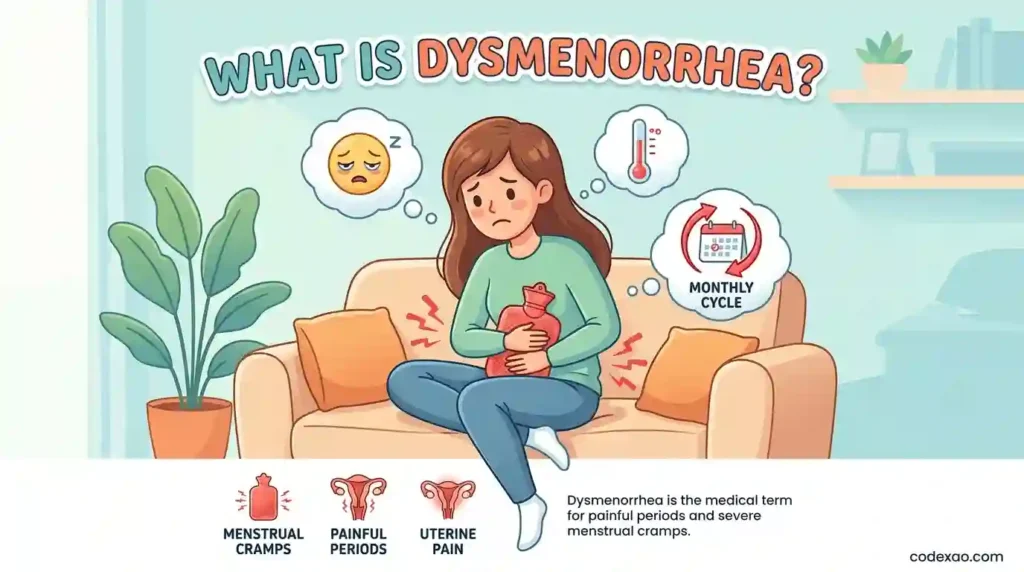
Dysmenorrhea is the medical term for painful menstrual cramps that happen before or during a period due to uterine contractions or underlying reproductive conditions.
Origin of the Term
The word comes from Greek:
- “dys” = difficult or painful
- “meno” = month
- “rrhea” = flow
So, it literally means “painful monthly flow.”
Types of Dysmenorrhea
There are two main types:
1. Primary Dysmenorrhea
- Most common type
- No underlying disease
- Caused by natural uterine contractions
2. Secondary Dysmenorrhea
- Caused by medical conditions
- Examples: endometriosis, fibroids, pelvic infections
Over time, medical research has helped separate “normal period pain” from pain that signals something more serious.
How to Use “Dysmenorrhea” in Medical Context
Unlike internet slang, dysmenorrhea isn’t something you use casually in chats. It’s a clinical term used in healthcare, documentation, and education.
Where it is commonly used:
- Doctor consultations
- Medical reports
- Health articles
- Nursing and medical exams
When NOT to use it:
- Casual texting
- Social media captions
- Informal conversations (unless discussing health seriously)
Tone & Context
- Always formal
- Neutral and scientific
- No emojis or slang required
You wouldn’t text your friend “I have dysmenorrhea lol” , you’d probably say “I have really bad period cramps.”
Real-Life Examples of Dysmenorrhea
🩺 Between patient and doctor
Patient: “I get severe cramps every month that stop me from working.”
Doctor: “This sounds like dysmenorrhea. We may need to evaluate further.”
Meaning: Medical identification of period pain.
👩🎓 Between friends
A: “Why are you skipping class?”
B: “Bad cramps again. It’s dysmenorrhea hitting hard.”
Meaning: Informal explanation of menstrual pain.
💬 In a group chat
“Anyone else dealing with dysmenorrhea today or is it just me?”
Meaning: Shared experience of period discomfort.
🧑⚕️ Health forum discussion
“Secondary dysmenorrhea can sometimes be linked to endometriosis symptoms.”
Meaning: Possible underlying condition explanation.
🏥 At home conversation
“I think your dysmenorrhea is worse this month, you should rest.”
Meaning: Observing severity of menstrual pain.
Common Mistakes & Misunderstandings
1. Thinking all period pain is dysmenorrhea
Not true. Mild discomfort is normal, but dysmenorrhea refers to moderate to severe pain that affects daily life.
2. Ignoring secondary dysmenorrhea signs
Many people assume all cramps are “normal,” but conditions like endometriosis can be hidden behind severe pain.
3. Self-diagnosing without medical advice
Googling symptoms helps, but only a healthcare provider can confirm the cause.
4. Assuming it only affects teenagers
It can affect anyone who menstruates, across different ages.
Dysmenorrhea Across Different People & Contexts
Teenagers
- Often experience primary dysmenorrhea
- Linked to hormonal changes
Adults
- May develop secondary dysmenorrhea
- More likely to have underlying conditions
Workplace context
- Sometimes misunderstood
- Can affect productivity and attendance
Cultural perception
In some regions, period pain is normalized and under-discussed, leading many to avoid seeking help.
Related Medical Terms & Alternatives
- Menstrual cramps – everyday term for dysmenorrhea
- Primary dysmenorrhea – natural period pain
- Secondary dysmenorrhea – pain from medical conditions
- Endometriosis – condition causing severe menstrual pain
- Pelvic pain – broader category of reproductive pain
- Menorrhagia – heavy menstrual bleeding
- Ovulation pain – mid-cycle discomfort
- Amenorrhea – absence of periods
- Gynecological pain – general reproductive system pain
- Prostaglandins – chemicals causing uterine contractions
FAQs:
What is dysmenorrhea meaning in simple words?
Dysmenorrhea simply means painful menstrual cramps that occur during a period. It is one of the most common menstrual health issues worldwide.
Is dysmenorrhea dangerous?
Mild cases are normal, but severe or worsening pain may indicate conditions like endometriosis or fibroids. Medical evaluation is important in such cases.
What foods help reduce dysmenorrhea?
Anti-inflammatory foods like fruits, vegetables, ginger, and omega-3 rich foods may help reduce menstrual discomfort.
Can stress make dysmenorrhea worse?
Yes, stress can increase muscle tension and hormonal imbalance, making cramps feel more intense.
How long does dysmenorrhea last?
It usually lasts 1–3 days during the menstrual cycle, but duration varies depending on the individual.
Conclusion:
Understanding dysmenorrhea meaning is more than just learning a medical definition, it helps you recognize your body’s signals and take better care of your health.
While period pain is common, it shouldn’t be ignored when it becomes severe or disruptive.
Knowing the difference between normal cramps and dysmenorrhea-related conditions can make a real difference in long-term well-being.
If you or someone you know experiences frequent or intense menstrual pain, it’s always worth speaking to a healthcare professional rather than just “pushing through it.”
And now that you understand it better, your body’s language just got a little easier to read.
If you found this helpful, explore more health and menstrual education topics to stay informed and empowered.

Hi, I’m Isabella Brown, the voice behind Codexao.com, where meanings aren’t just explained, they’re made easy to understand.
I’ve always been fascinated by how words shape the way we think, speak, and connect. But let’s be honest—most definitions out there feel confusing, outdated, or just plain boring.
That’s exactly why I created Codexao. Here, I break down words, slang, and modern expressions into simple, clear meanings you can actually use in real life.