Ever seen someone act overly dramatic in a conversation and thought, this feels staged? That is where the kabuki meaning becomes surprisingly relevant in modern language.
While most people first encounter kabuki in a cultural or historical context, the word has quietly slipped into everyday slang and even political commentary.
Understanding kabuki meaning is useful because it shows how language evolves from traditional art into modern communication shortcuts.
Today, kabuki is not just about Japanese theater. It can also describe behavior that feels exaggerated, performative, or designed for effect rather than truth.
In this 2026 updated guide, you will learn what kabuki really means, where it comes from, how people use it in texting and politics, and why it still matters in digital communication today.
What Does Kabuki Meaning Mean?
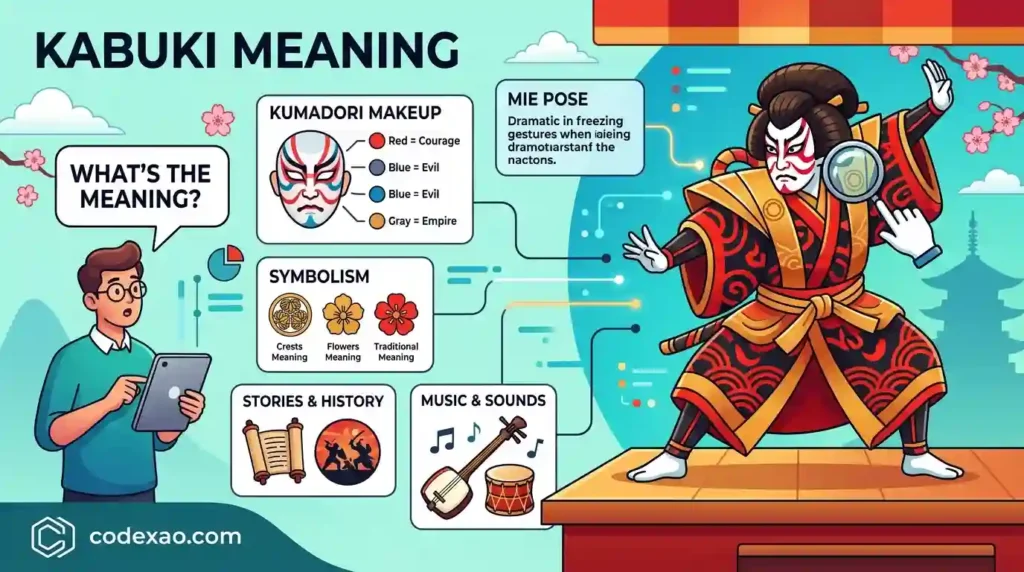
The kabuki meaning originates from Japan and refers to a classical form of theatrical performance known as Kabuki. It is famous for dramatic expressions, stylized movements, bold makeup, and elaborate costumes.
Quick Answer Box
Kabuki originally means a traditional Japanese theatrical art form known for dramatic performance. In modern slang, it refers to exaggerated or performative behavior that feels staged or insincere.
Kabuki began in the early 1600s during the Edo period in Japan. It was created as a popular entertainment form for common people, not the elite. Over time, it evolved into a highly structured performance art with strict techniques, all male actors, and symbolic storytelling.
Today, the word kabuki has expanded beyond theater. In modern English usage, especially in journalism and politics, it often describes actions that seem theatrical or purely for appearance rather than substance.
Pronunciation is simple: kah boo kee
So when someone says kabuki, they might be referring to:
- Traditional Japanese theater
- Or symbolic, exaggerated behavior in real life situations
How to Use Kabuki Meaning Correctly in Texts and Chat
Using the kabuki meaning in conversation depends heavily on context. Most people do not use it in casual texting, but it appears in discussions about politics, media, or dramatic behavior.
When it works well
- Casual discussions about drama or exaggeration
- Political commentary or news analysis
- Describing fake or staged behavior
- Online debates or social commentary
When not to use it
- Formal emails
- Professional workplace communication
- Conversations where the other person may not understand cultural references
Platform usage breakdown
- WhatsApp: Rare, but used jokingly among informed users
- Instagram: Seen in captions about fake behavior or drama
- X formerly Twitter: Common in political commentary
- Reddit: Frequently used in analytical discussions
- Discord: Used in debates or fandom arguments
Tone is usually critical or analytical. It is not a playful slang word like lol or brb. It carries a slightly intellectual or media driven tone.
Real Conversation Examples Using Kabuki Meaning
Between friends
Friend A: Did you see how they argued and then agreed immediately
Friend B: Yeah that whole thing felt like kabuki
Meaning: The argument seemed staged and not genuine
In a group chat
Person A: That apology video felt so fake
Person B: Pure kabuki energy
Meaning: The apology looked performed rather than sincere
In political discussion
User A: The debate looked intense but nothing changed
User B: Just political kabuki
Meaning: The debate was performative with no real outcome
In online gaming chat
Player 1: They acted like they were upset but still teamed up later
Player 2: Total kabuki move
Meaning: Fake emotional display for effect
In workplace discussion
Colleague A: The meeting felt productive
Colleague B: More like kabuki, no real decisions made
Meaning: The meeting was mostly for appearance
Common Mistakes and Misunderstandings
Mistake 1: Thinking kabuki only means theater
Many people assume kabuki is only about Japanese culture. While true historically, modern usage extends into metaphorical language.
Mistake 2: Using it in casual slang incorrectly
Some people use kabuki like a funny slang word, but it usually carries a more serious or analytical tone.
Mistake 3: Misunderstanding negativity
Kabuki is not always insulting. It often describes behavior that is performative, not necessarily bad.
Cultural confusion
- Older generations may not understand modern slang usage
- Non Japanese speakers may confuse it with general Asian theater
- Some people assume it is always political criticism
If someone does not understand, simply explain it as staged or exaggerated behavior for effect.
Kabuki Meaning Across Different Platforms and Demographics
Among Gen Z and online communities, kabuki is used mainly in commentary style discussions. It is not part of everyday texting slang but appears in reaction based conversations.
Millennials use it more in political or media analysis contexts. Older generations mostly recognize it as Japanese theater and may not understand the slang meaning at all.
On platforms:
- X formerly Twitter: High usage in political analysis
- Reddit: Strong presence in discussion threads
- TikTok comments: Occasional use in viral discourse
- Instagram captions: Rare but growing
The term is informal and not safe for professional communication unless the audience understands it.
Kabuki became more popular in online discourse because media commentators began using it to describe political behavior that feels scripted or theatrical.
Related Slang and Alternatives
Here are related expressions that connect with the kabuki meaning:
- Performative behavior: Acting for attention rather than sincerity
- Theater politics: Political actions that feel staged
- Fake drama: Overly exaggerated conflict
- Virtue signaling: Showing morality for appearance
- Political theater: Public actions designed for media effect
- Staged performance: Pre planned or insincere behavior
- Exaggeration: Over the top emotional expression
- Insincere display: Not genuine emotional behavior
- Social posturing: Acting for social approval
- Media spectacle: Events designed for attention
Each of these overlaps with kabuki depending on context.
FAQs:
What does kabuki mean in simple words
Kabuki refers to a traditional Japanese theater style. In modern use, it also describes behavior that feels staged or exaggerated rather than real.
Where does kabuki come from
Kabuki originated in Japan during the early 1600s as a popular theatrical performance style featuring dramatic acting and stylized storytelling.
Is kabuki used in modern slang
Yes, kabuki is sometimes used in modern slang to describe fake, dramatic, or performative behavior, especially in politics or media.
What does kabuki mean in politics
In politics, kabuki refers to situations where actions or debates appear staged for show rather than genuine decision making or conflict.
Is kabuki a negative term
Not always. It can be neutral or slightly critical depending on context. It simply suggests something is performative or theatrical.
How do you use kabuki in a sentence
You can say the meeting felt like kabuki meaning it seemed like everything was staged and nothing real was decided.
Conclusion:
The kabuki meaning is a great example of how language travels from traditional culture into modern digital communication.
What started as a Japanese theatrical art form has become a metaphor for staged or performative behavior in everyday discussions.
Whether you are reading political commentary or online debates, kabuki helps describe situations where things feel more like performance than reality.
Understanding it gives you a sharper lens on how people communicate in media and online spaces.
Language evolves fast, and kabuki is one of those words that bridges culture, history, and modern expression in a unique way.
If you enjoy learning slang and internet language, there is always more to explore.
Drop your favorite slang term and see how it fits into modern communication.

Hi, I’m John Mark, the voice behind codexao.com, where meanings aren’t just explained, they’re simplified for the way people actually talk today.
I’ve always been curious about words, how they change, how they trend, and how a simple phrase can carry completely different meanings depending on context. That curiosity turned into codexao, a space where I break down slang, text abbreviations, and everyday words into clear, easy-to-understand explanations.