Ever seen someone called a “colt” and wondered if they were being complimented… or roasted? You’re not alone.
The term pops up in different contexts, from animal references to subtle slang, and its meaning can shift depending on how it’s used.
Understanding colt meaning matters more than you might think. Language evolves fast, especially online, and even older words can take on fresh, modern twists.
Whether you’re reading a novel, chatting with friends, or scrolling social media, knowing how to interpret “colt” helps you avoid confusion, and maybe even use it confidently yourself.
In this updated 2026 guide, you’ll learn the exact definition, origin, slang interpretations, real-world chat examples, and when using “colt” might actually backfire.
What Does “Colt” Mean?
Definition:
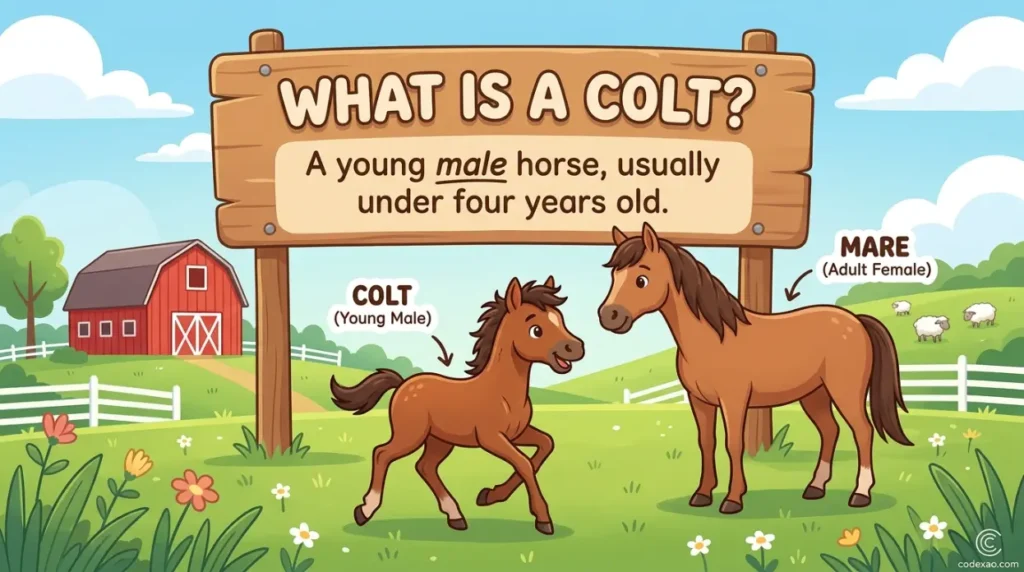
A colt is traditionally a young male horse, typically under the age of four.
Slang Meaning:
In informal language, “colt” can describe a young man who is energetic, inexperienced, or still maturing.
Quick Answer:
A “colt” means a young male horse, but in slang, it refers to someone youthful, inexperienced, or still learning the ropes.
Origin of the Word
The word “colt” comes from Old English colt, meaning a young donkey or horse. Over time, it became specifically associated with young male horses.
Evolution of Meaning
- Literal use (historical): Farm animals, horse breeding
- Metaphorical use (19th–20th century): Youthful men or rookies
- Modern usage: Rare but occasionally used humorously or descriptively
Pronunciation
/koʊlt/ (rhymes with “bolt”)
How to Use “Colt” Correctly in Texts & Chat
Using “colt” in modern conversation requires a bit of awareness, it’s not as common as trendy slang like “rizz” or “bet.”
Tone & Context
- Casual: Yes
- Humorous: Often
- Sarcastic: Sometimes
- Formal: No
Platform-Specific Usage
- WhatsApp/SMS: Rare, but possible in jokes
- Instagram: Might appear in captions describing someone energetic
- Twitter/X: Occasionally used metaphorically
- Discord/Reddit: More likely in niche communities or storytelling
When to Use It
✔ Describing someone young and energetic
✔ Playfully teasing someone inexperienced
✔ Literary or creative writing
When NOT to Use It
✖ Professional emails
✖ Serious discussions
✖ With people unfamiliar with English nuances
Formatting Tips
- Lowercase is standard: colt
- Can pair with emojis: 🐎 😄
- Avoid overusing, it can sound outdated
Real Conversation Examples Using “Colt”
1. Between Friends
A: “You just started the gym?”
B: “Yeah, day one.”
A: “Haha, still a colt in the fitness world.”
Meaning: Playful way of saying someone is new and inexperienced.
2. In a Group Chat
Friend 1: “He tried cooking pasta and burned it.”
Friend 2: “Bro’s a colt in the kitchen.”
Meaning: Light teasing about lack of experience.
3. Dating Context
A: “He’s sweet but kinda a colt when it comes to relationships.”
Meaning: He’s inexperienced romantically.
4. Work Chat (Casual Team)
Senior: “Don’t worry, we were all colts once.”
Meaning: Everyone starts as a beginner.
5. Gaming Scenario
Player 1: “First time playing ranked?”
Player 2: “Yeah.”
Player 1: “Alright colt, follow my lead.”
Meaning: Referring to a newbie player.
Common Mistakes & Misunderstandings
1. Thinking It Only Means a Horse
Yes, that’s the original meaning, but context matters. In conversation, it’s often metaphorical.
2. Using It as Modern Slang Everywhere
Unlike “LOL” or “OMG,” “colt” isn’t widely used in texting. Overusing it may sound odd or outdated.
3. Misinterpreting Tone
Calling someone a colt can feel:
- Friendly (to peers)
- Slightly insulting (to strangers)
Generational Gap
- Older generations: More familiar with the term
- Gen Z: May find it unusual or humorous
Cultural Differences
In some regions, the term might not be used metaphorically at all, only as an animal reference.
“Colt” Across Different Platforms & Demographics
Gen Z vs Millennials
- Gen Z: Rarely uses it, may treat it ironically
- Millennials: Occasionally recognize it
- Older users: More comfortable using it naturally
Social Media Trends
- Not viral or trending
- Sometimes appears in storytelling, memes, or niche humor
Formality Level
- Informal: Yes
- Professional: No
- Safe for work: Depends on tone (generally yes)
Related Slang, Abbreviations & Alternatives
Here are similar words you can use instead of “colt”:
| Term | Meaning |
|---|---|
| Rookie | Someone new or inexperienced |
| Newbie (Noob) | Beginner, often in gaming |
| Green | Lacking experience |
| Fresh | New to a situation |
| Amateur | Non-professional or beginner |
| Trainee | Learning stage |
| Cub | Young or inexperienced person |
| Padawan | Beginner (from pop culture) |
| Intern | Entry-level learner |
| Starter | Just beginning |
These are often more widely understood than “colt” in modern conversations.
FAQs:
What does colt mean in slang?
In slang, “colt” refers to a young or inexperienced person, usually a man. It suggests energy and potential but also a lack of experience.
Is calling someone a colt rude?
Not necessarily. It depends on tone and relationship. Among friends, it’s playful. In formal or unfamiliar settings, it might feel condescending.
Can women be called a colt?
Traditionally, “colt” refers to males. Using it for women is uncommon and may sound incorrect or awkward.
Is colt used in texting today?
It’s not common in everyday texting but may appear in jokes, storytelling, or niche communities.
What’s the difference between colt and rookie?
Both mean inexperienced, but “rookie” is more modern and widely used, while “colt” feels more metaphorical and old-fashioned.
Conclusion:
“Colt” is one of those words that quietly bridges the gap between classic language and modern slang.
At its core, it simply means a young male horse, but in conversation, it paints a picture of someone energetic, raw, and still learning.
Used the right way, it can be playful, descriptive, and even a little poetic. Used the wrong way, it might confuse people or sound out of place.
That’s the balancing act with older slang, it carries charm, but not always clarity.
If you’re aiming for clarity in everyday chats, words like “rookie” or “newbie” will usually do the job better.
But if you want to add personality to your language? “Colt” still has its moment.
Got a favorite slang term you use all the time? Drop it in the comments and let’s decode it next.

Hi, I’m John Mark, the voice behind codexao.com, where meanings aren’t just explained, they’re simplified for the way people actually talk today.
I’ve always been curious about words, how they change, how they trend, and how a simple phrase can carry completely different meanings depending on context. That curiosity turned into codexao, a space where I break down slang, text abbreviations, and everyday words into clear, easy-to-understand explanations.