You’ve probably seen the phrase “for whom the bell tolls” in books, captions, or even social media quotes, and paused for a second.
It sounds poetic. Maybe a little dark. But what does it actually mean?
In today’s world of fast texts and short-form content, older expressions like this still pop up, especially in memes, captions, and dramatic messages.
Understanding phrases like for whom the bell tolls meaning helps you catch deeper emotional context, whether someone’s being serious, reflective, or just a bit dramatic.
Updated for 2026, this guide breaks down everything you need to know: the definition, origin, modern usage, real-life examples, and how people use it across platforms today.
What Does “For Whom the Bell Tolls” Mean?
The phrase “for whom the bell tolls” means that a death or tragedy affecting someone else should remind you that it could affect you too. It emphasizes shared human connection and mortality.
Quick Answer:
“For whom the bell tolls” means that every person’s death or hardship is connected to all humanity, so when one person suffers, it impacts everyone.
Origin and History
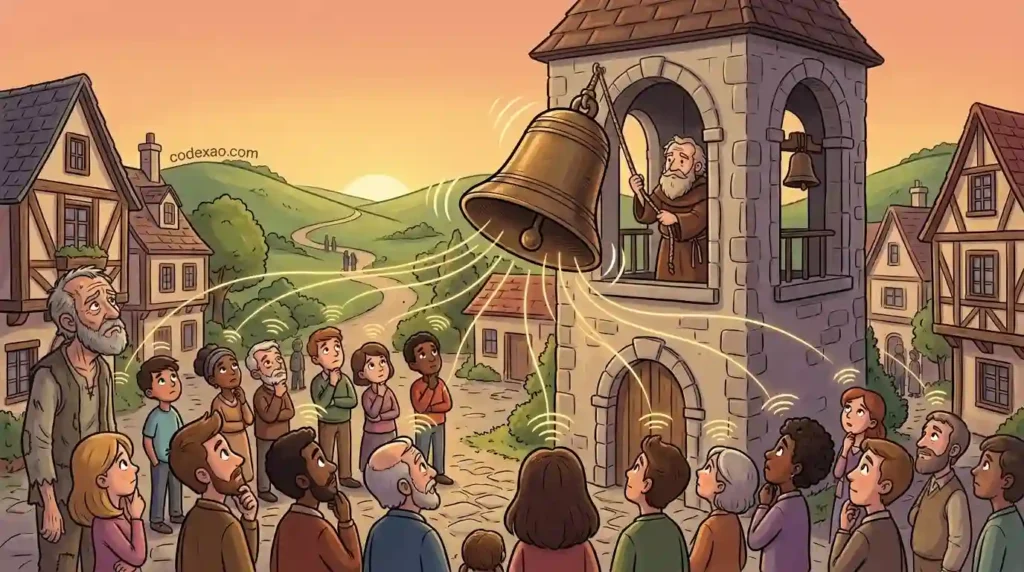
This phrase comes from a 17th-century meditation by English writer John Donne. At that time, church bells would ring when someone died. Donne’s message was simple but powerful: don’t ask who the bell rings for, it rings for all of us.
Later, the phrase gained massive popularity through literature and pop culture, especially after being used as a novel title.
Evolution of Meaning
Originally tied closely to death, the phrase now carries broader emotional weight. Today, it can refer to:
- Shared struggles
- Empathy for others
- A warning or serious realization
- Dramatic or poetic reflection
Pronunciation Guide
for whom the bell tolls
pronounced as: for hoom thuh bell tohlz
How to Use “For Whom the Bell Tolls” Correctly in Texts and Chat
This phrase isn’t your everyday slang like “LOL” or “BRB.” It’s more expressive and serious.
Tone and Context
It works best in:
- Reflective or emotional conversations
- Dramatic or poetic captions
- Discussions about consequences or shared experiences
Avoid using it in:
- Professional emails
- Casual quick replies
- Lighthearted jokes unless used ironically
Platform-Specific Usage
- WhatsApp or SMS: Used in deep conversations or serious discussions
- Instagram captions: Adds a poetic or dramatic vibe
- Twitter X: Often used metaphorically or in commentary
- Discord or Reddit: Seen in philosophical or storytelling threads
Formatting Tips
- Usually written in full lowercase or sentence case
- Can be paired with emojis like 🕯️, 💔, or ⚰️ for tone
- Avoid abbreviating, it loses impact
Real Conversation Examples Using “For Whom the Bell Tolls”
Between Friends
A: Did you hear about what happened to Ali?
B: Yeah… makes you realize for whom the bell tolls.
Meaning: Expresses empathy and shared vulnerability.
In a Group Chat
User1: Another company just laid off employees
User2: For whom the bell tolls… no one’s safe these days
Meaning: Highlights collective risk or uncertainty.
Dating Scenario
Text: I used to think heartbreak was just a story… now I know for whom the bell tolls
Meaning: Dramatic way of expressing emotional pain.
Family Conversation
Parent: Life is unpredictable. Always value your time
Child: I guess… for whom the bell tolls
Meaning: Reflecting on life and mortality.
Gaming Chat
Player1: Our whole team just got wiped
Player2: For whom the bell tolls 😂
Meaning: Used humorously to describe defeat.
Common Mistakes and Misunderstandings
1. Thinking It Refers to One Specific Person
Some assume it asks about a specific individual. In reality, it emphasizes everyone.
2. Using It Casually
Dropping this phrase in a random meme or casual joke can feel out of place unless used ironically.
3. Misinterpreting Tone
Older generations may see it as deeply serious, while Gen Z might use it humorously or sarcastically.
Cultural Differences
In Western contexts, it’s widely recognized. In other regions, it may sound unfamiliar or overly formal.
“For Whom the Bell Tolls” Across Platforms and Demographics
Generational Usage
- Gen Z: Often ironic or meme-based
- Millennials: Balanced use, serious and poetic
- Older generations: Mostly literal and philosophical
Where It Trends
- Instagram captions with moody aesthetics
- TikTok comments in emotional or dramatic videos
- Reddit discussions about life, philosophy, or current events
Formality Level
- Not formal
- Not casual slang
- Best described as literary expression
Related Slang, Abbreviations and Alternatives
Here are similar expressions and phrases:
- Memento mori , Remember you will die
- YOLO , You only live once
- It hits close to home , Feels personally relevant
- Wake-up call , A sudden realization
- Reality check , Facing the truth
- Heavy , Emotionally intense
- Deep , Thought-provoking
- No one is immune , Shared vulnerability
- Life comes at you fast , Unexpected change
- We’re all in this together , Collective experience
FAQs:
What is the meaning of for whom the bell tolls in simple words
It means that when something bad happens to someone else, it reminds us that we are all connected and could face the same situation.
Is for whom the bell tolls about death only
Not anymore. While it originally referred to death, today it can also describe shared struggles, emotional pain, or serious realizations.
Can I use for whom the bell tolls in casual conversation
You can, but it may sound dramatic. It works best in meaningful or reflective conversations rather than everyday chat.
Why do people use this phrase on social media
People use it to add depth, emotion, or a poetic tone to their posts, especially when talking about serious topics.
Is for whom the bell tolls positive or negative
It’s generally neutral to negative, often used in serious or reflective contexts, but it can also be used humorously in modern slang.
Conclusion:
The phrase for whom the bell tolls meaning goes far beyond its old literary roots.
It’s about connection, empathy, and the reminder that no one is isolated from life’s realities.
In modern usage, it has evolved into something flexible.
Sometimes serious. Sometimes ironic. Always impactful.
Understanding it gives you an edge, not just in language, but in emotional awareness too.
Next time you see it in a caption or message, you’ll instantly get the deeper meaning.
Got a favorite phrase or slang you want decoded next? Drop it in the comments and keep the conversation going.

Hi, I’m John Mark, the voice behind codexao.com, where meanings aren’t just explained, they’re simplified for the way people actually talk today.
I’ve always been curious about words, how they change, how they trend, and how a simple phrase can carry completely different meanings depending on context. That curiosity turned into codexao, a space where I break down slang, text abbreviations, and everyday words into clear, easy-to-understand explanations.