You might have come across the word mulatto while reading history, browsing older books, or even scrolling through social media discussions.
It’s one of those terms that sparks curiosity but also confusion. Is it still okay to use? What does it actually mean today?
Understanding the mulatto meaning matters more than ever in 2026. Language evolves fast, and words tied to identity and culture can carry deep historical weight.
Using them without context can lead to misunderstandings or even offense.
In this guide, you’ll learn the exact definition, where the term comes from, how it has changed over time, and whether it’s appropriate to use in modern conversations.
You’ll also see real examples, common mistakes, and better alternatives.
Updated for 2026, this is your complete, no-nonsense breakdown.
What Does mulatto Mean?
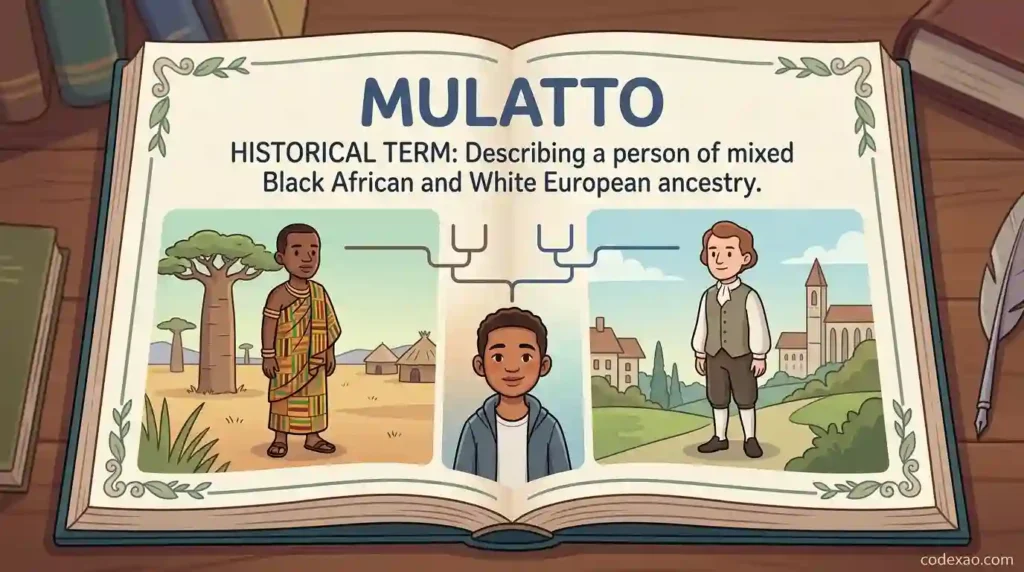
The mulatto meaning refers to a person of mixed racial ancestry, specifically someone with one Black parent and one white parent.
Historically, the term was widely used during colonial times and in societies with strict racial classifications.
Quick Answer:
mulatto means a person of mixed Black and white ancestry, but the term is now considered outdated and potentially offensive in many contexts.
Origin and History
The word comes from Spanish and Portuguese roots, derived from a term historically linked to mixed heritage. It appeared in English usage as early as the 16th century.
Over time, especially during slavery and colonial periods, the term became part of rigid racial labeling systems. Because of this, it carries historical baggage tied to discrimination and inequality.
Evolution of Meaning
- Past: Neutral descriptor in official and social classifications
- 20th century: Gradually viewed as outdated
- Present: Often considered offensive or inappropriate
Today, most people prefer respectful alternatives like mixed race or biracial.
Pronunciation
mulatto is pronounced as muh lat oh
How to Use mulatto Correctly in Texts and Chat
Here’s the truth. In modern communication, using the word mulatto casually is risky and usually discouraged.
Context and Tone
- Tone: Formal historical only
- Context: Academic, historical, or quoted material
- Everyday use: Avoid
Platform Specific Usage
- SMS or WhatsApp: Not recommended
- Instagram or TikTok: Likely to be seen as insensitive
- Twitter or X: Can trigger backlash
- Reddit or forums: Acceptable only in historical discussions
- Academic writing: Acceptable with context
When to Use It
- Discussing history or literature
- Quoting older texts
- Academic analysis
When NOT to Use It
- Casual conversations
- Describing someone in real life
- Social media captions or jokes
Formatting Tips
If you must use it:
- Keep it lowercase unless starting a sentence
- Add context to explain usage
- Avoid pairing with humor or slang
Real Conversation Examples Using mulatto
Between students discussing history
A: The novel used the word mulatto to describe the character
B: Yeah, but today we would say biracial instead
Meaning: They recognize historical usage but update modern language
In an academic setting
Professor: The term mulatto appears frequently in colonial records
Student: Does it have the same meaning today
Meaning: Neutral academic discussion
In a group chat
A: I heard someone use that word yesterday
B: That’s kind of outdated now
Meaning: Social awareness of changing language
On social media
Comment: This term was common in old texts but is no longer appropriate
Meaning: Educational tone correcting usage
In a book club discussion
A: The author used mulatto in the story
B: It shows the historical setting, but it feels outdated now
Meaning: Contextual understanding
Common Mistakes and Misunderstandings
1 Using it as a modern label
Many people think it’s still acceptable to describe someone today. It’s not. Most consider it outdated or offensive.
2 Assuming it’s neutral everywhere
In some regions or older texts, it may seem neutral. But globally, it carries sensitive historical implications.
3 Confusing generational understanding
- Older generations may see it as normal
- Gen Z and Millennials often view it as inappropriate
How to Clarify
If someone uses it:
You can say
That term is outdated. Today people usually say biracial or mixed race
Mulatto Across Different Platforms and Demographics
Gen Z
Rarely uses the term. Prefers inclusive and respectful language.
Millennials
Aware of the term but avoids it in casual use.
Older Generations
May still use it without realizing its modern impact.
Platform Trends
- TikTok: Mostly used in educational or critical content
- Instagram: Avoided in captions
- Discord: Used only in debates or historical chats
Formal or Informal
- Formal: Only in academic or historical writing
- Informal: Not appropriate
Related Slang Abbreviations and Alternatives
Here are better and safer alternatives:
- Biracial
A person with two different racial backgrounds - Mixed race
A general and widely accepted term - Multiracial
Used for people with multiple racial identities - Person of mixed heritage
More formal and respectful - Afro mixed
Used in specific cultural contexts - Dual heritage
Neutral and inclusive - Hybrid identity
More modern and conceptual - Diverse background
General and safe phrasing
FAQs:
Is mulatto a bad word
It is not always used with bad intent, but today it is widely considered outdated and potentially offensive. It’s better to avoid it in everyday language.
What should I say instead of mulatto
Use terms like biracial, mixed race, or multiracial. These are more respectful and widely accepted in modern communication.
Why is mulatto considered offensive
The term is tied to colonial history and racial classification systems. Because of that, it can feel dehumanizing or insensitive today.
Can I use mulatto in academic writing
Yes, but only when discussing historical contexts or quoting sources. Always provide explanation and context.
Is mulatto still used today
It appears in historical texts, literature, and academic discussions. However, it is rarely used in modern casual conversations.
Conclusion:
The mulatto meaning is simple on the surface but complex in context. It refers to mixed Black and white ancestry, but its historical roots make it sensitive today.
Language evolves, and this is a clear example. What was once common is now outdated. Choosing respectful, modern alternatives shows awareness and cultural sensitivity.
If you remember one thing, it’s this. Words matter. And using the right ones can make communication clearer and more respectful.
Want to keep up with modern slang and meanings? Drop your favorite term below and explore more guides like this.

Hi, I’m John Mark, the voice behind codexao.com, where meanings aren’t just explained, they’re simplified for the way people actually talk today.
I’ve always been curious about words, how they change, how they trend, and how a simple phrase can carry completely different meanings depending on context. That curiosity turned into codexao, a space where I break down slang, text abbreviations, and everyday words into clear, easy-to-understand explanations.