You may have heard someone mention endometriosis meaning during a health discussion, on social media, or in a medical video and wondered what it actually refers to.
It sounds complex, but understanding it is important because millions of people worldwide live with it and often struggle to get the right diagnosis.
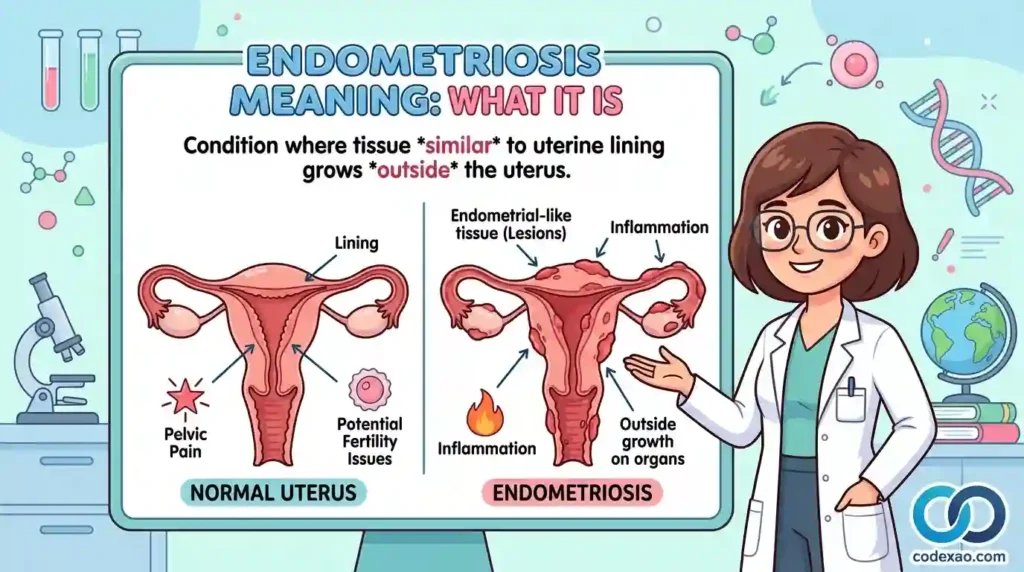
Endometriosis is a medical condition where tissue similar to the lining of the uterus grows outside it, often causing pain, inflammation, and sometimes fertility challenges.
Many people confuse it with normal menstrual cramps, which delays proper treatment.
In this guide, updated for 2026, you will learn the clear meaning of endometriosis, how it affects the body, real symptoms, diagnosis methods, and treatment options.
We will also break down common myths and explain how people talk about it in everyday language so the topic becomes simple, clear, and easy to understand.
What Does Endometriosis Mean?
Endometriosis refers to a condition where tissue similar to the uterine lining grows in places it should not, such as the ovaries, fallopian tubes, or pelvic lining.
Quick Answer
Endometriosis means a long term medical condition where uterine like tissue grows outside the uterus, causing pain, inflammation, and possible fertility issues.
The term comes from the word endometrium, which is the inner lining of the uterus. When this tissue grows outside the uterus, it still behaves as if it is inside the uterus, thickening and bleeding during the menstrual cycle, which leads to irritation and pain.
Over time, this can cause scar tissue and adhesions, making symptoms more severe.
How Endometriosis Affects the Body
When this tissue grows outside the uterus, it has no way to leave the body during menstruation. This causes internal bleeding and inflammation.
Common affected areas include:
- Ovaries
- Fallopian tubes
- Pelvic lining
- Bladder or bowel in severe cases
The body responds with swelling, pain, and sometimes internal scarring. This is why pain can become chronic instead of only occurring during periods.
Symptoms of Endometriosis Explained Simply
Symptoms vary widely, but common signs include:
- Severe menstrual cramps that worsen over time
- Pelvic pain outside of periods
- Pain during or after intercourse
- Heavy or irregular menstrual bleeding
- Fatigue and low energy
- Digestive issues like bloating or nausea
- Difficulty getting pregnant
Some people experience mild symptoms, while others face intense daily discomfort. This variation often makes diagnosis difficult.
Causes and Origin
The exact cause is not fully understood, but several theories exist:
- Retrograde menstruation where menstrual blood flows backward into the pelvic cavity
- Immune system issues that fail to remove misplaced tissue
- Genetic factors, meaning it can run in families
- Hormonal influences, especially estrogen
It is not caused by lifestyle habits or poor hygiene. It is a complex biological condition that develops differently in each person.
Diagnosis and Medical Process
Doctors usually diagnose endometriosis through a combination of:
- Symptom evaluation
- Pelvic examination
- Ultrasound imaging
- MRI scans
- Laparoscopy, a minor surgical procedure that confirms the condition
Because symptoms overlap with other conditions, many people experience delays in diagnosis. On average, it can take several years for a confirmed diagnosis.
Treatment Options
There is currently no permanent cure, but treatments help manage symptoms effectively.
Pain Management
- Over the counter pain relief
- Anti inflammatory medications
Hormonal Therapy
- Birth control pills
- Hormone regulating treatments
Surgery
- Laparoscopic removal of tissue
- In severe cases, removal of affected organs
Lifestyle Support
- Diet changes
- Regular exercise
- Stress management techniques
Treatment plans depend on severity, age, and fertility goals.
Common Myths and Misunderstandings
Many misconceptions surround this condition:
Myth 1: It is just bad period pain
Reality: It is a chronic medical condition affecting multiple organs.
Myth 2: Pregnancy cures it
Reality: Symptoms may improve temporarily but it is not a cure.
Myth 3: Only older women get it
Reality: It can affect teenagers and young adults too.
Myth 4: It is rare
Reality: It is more common than many people realize worldwide.
Endometriosis Across Different Contexts
Understanding how people talk about endometriosis helps clarify awareness:
Medical context
Doctors use it to describe diagnosis, symptoms, and treatment.
Social media context
People share personal experiences, awareness posts, and support discussions.
Educational context
It is discussed in biology, health education, and reproductive science.
Workplace context
Some individuals discuss it as a chronic condition affecting productivity and attendance.
Despite being a medical condition, it is increasingly discussed in everyday conversations due to awareness campaigns.
Related Terms and Similar Conditions
Here are related concepts that often appear with endometriosis:
- Adenomyosis
- Pelvic inflammatory disease
- Ovarian cysts
- Menstrual disorders
- Chronic pelvic pain
- Infertility
- Hormonal imbalance
- Uterine fibroids
- Dysmenorrhea
- Reproductive health conditions
Each of these conditions shares overlapping symptoms but has different causes and treatments.
FAQs:
What is the simple meaning of endometriosis
Endometriosis is a condition where tissue similar to the uterus lining grows outside the uterus and causes pain and inflammation, especially during menstrual cycles.
Is endometriosis a serious disease
Yes, it can be serious because it may cause chronic pain and fertility issues if not managed properly, although severity varies from person to person.
Can endometriosis be cured permanently
There is no permanent cure yet, but treatments can significantly reduce symptoms and improve quality of life.
Who is most likely to get endometriosis
It commonly affects people of reproductive age, but it can begin in teenage years and sometimes runs in families due to genetic factors.
How do doctors confirm endometriosis
Doctors use symptoms, imaging tests, and sometimes a minor surgical procedure called laparoscopy to confirm the diagnosis accurately.
Conclusion:
Endometriosis is more than just period pain.
It is a long term condition that affects reproductive health, daily comfort, and overall quality of life.
Understanding the endometriosis meaning helps reduce confusion and encourages earlier medical attention.
Awareness is growing, and with better diagnosis tools and treatment options, people living with this condition can manage symptoms more effectively than ever before.
If you or someone you know experiences persistent pelvic pain or unusual menstrual symptoms, seeking medical advice early can make a significant difference.

Hi, I’m John Mark, the voice behind codexao.com, where meanings aren’t just explained, they’re simplified for the way people actually talk today.
I’ve always been curious about words, how they change, how they trend, and how a simple phrase can carry completely different meanings depending on context. That curiosity turned into codexao, a space where I break down slang, text abbreviations, and everyday words into clear, easy-to-understand explanations.