Ever seen a movie where a criminal walks into a “perfect deal”… only to realize too late that everyone around them is an undercover cop? That’s not just Hollywood drama, it’s a real tactic used worldwide.
The term sting operation meaning pops up in news reports, crime shows, and even social media debates.
But what does it actually mean, and how does it work in real life?
In today’s digital age, sting operations have evolved beyond shady alleyways.
They now happen online, in chat rooms, and even on dating apps.
Knowing what this term means isn’t just interesting, it helps you understand modern law enforcement, online safety, and legal boundaries.
In this guide (Updated for 2026), you’ll learn:
- The exact definition of a sting operation
- Where the term came from
- Real-life examples and scenarios
- Common misunderstandings (including entrapment)
- How it’s used across platforms and generations
Let’s break it down in plain English.
What Does “Sting Operation” Mean?
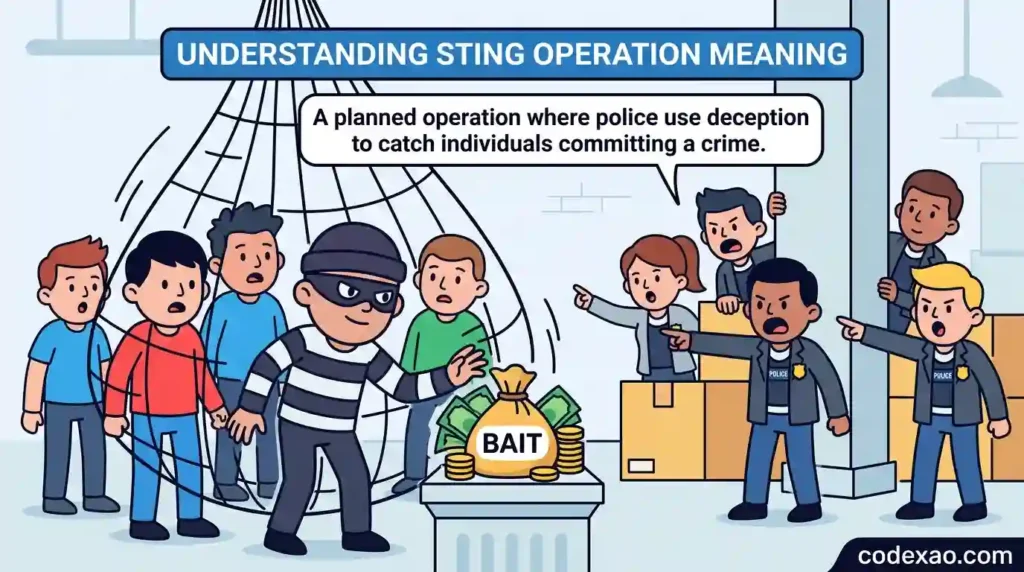
A sting operation is a planned setup where law enforcement officers pretend to be involved in illegal activity to catch someone committing a crime.
Quick Answer:
A sting operation is a deceptive law enforcement tactic where officers pose as criminals or victims to expose and arrest suspects during illegal activities.
Origin of the Term
The word “sting” comes from the idea of a trap that “stings” when it snaps shut, catching someone in the act. The term became widely popular in the 1970s, especially after the film The Sting, which showcased elaborate cons and setups.
Over time, the phrase moved from pop culture into real-world law enforcement vocabulary.
How the Meaning Has Evolved
Originally, sting operations were mostly physical setups, think fake drug deals or bribery traps. Today, they’ve expanded into:
- Cybercrime investigations
- Online fraud detection
- Child protection operations
- Financial scams
Modern agencies like the Federal Bureau of Investigation often run highly sophisticated digital stings.
How to Use “Sting Operation” Correctly in Texts & Chat
While it’s not exactly slang, “sting operation” is commonly used in everyday conversations, especially when discussing crime, news, or suspicious setups.
Tone & Context
- Serious / Informational:
“Police conducted a sting operation to catch scammers.” - Casual / Conversational:
“Bro, that felt like a sting operation 💀” - Humorous / Sarcastic:
“Why does this deal feel like a sting operation?”
Platform-Specific Usage
- WhatsApp / SMS:
Used in discussions about news or warnings - Instagram / TikTok:
Often used jokingly in captions or comments - Twitter/X:
Common in trending crime or political discussions - Reddit / Discord:
Used in debates about legality or ethics
When NOT to Use It
Avoid using it in:
- Formal business emails
- Academic writing (unless defined properly)
- Legal discussions without clarity
Formatting Tips
- Usually lowercase: sting operation
- No abbreviation
- Emojis for casual tone: 🕵️♂️🚨
Real Conversation Examples Using “Sting Operation”
1. Between Friends
A: “This guy is offering iPhones for half price.”
B: “Sounds like a sting operation 😭”
Meaning: Suspicion that something is too good to be true.
2. In a Group Chat
Friend 1: “Police caught fake job recruiters.”
Friend 2: “Yeah, it was a sting operation.”
Meaning: Refers to a real law enforcement tactic.
3. Dating Scenario
A: “She asked for money after one message.”
B: “Either a scam or a sting operation 💀”
Meaning: Doubt about authenticity or safety.
4. Work Chat
Colleague: “Audit team showed up unannounced.”
You: “Feels like a sting operation 😅”
Meaning: Light humor about being caught off guard.
5. Gaming Context
Player 1: “Enemy team baited us into a trap.”
Player 2: “That was a full sting operation.”
Meaning: Strategic trap comparison.
Common Mistakes & Misunderstandings
1. Confusing It With Entrapment
People often mix up sting operations with entrapment, but they’re not the same.
- Sting operation: Catching someone already willing to commit a crime
- Entrapment: Forcing or persuading someone into committing a crime they wouldn’t normally do
2. Thinking It’s Always Illegal
Many assume sting operations are shady, but they’re usually legal if done properly under law enforcement guidelines.
3. Overusing It Casually
Calling every suspicious situation a “sting operation” can sound exaggerated or dramatic.
Generational Differences
- Gen Z: Uses it jokingly or metaphorically
- Millennials: Mix of serious and casual use
- Older generations: Mostly literal, law-related meaning
“Sting Operation” Across Different Platforms & Demographics
Gen Z vs Millennials
- Gen Z: Meme-driven usage (“This feels like a sting operation”)
- Millennials: Balanced use, both literal and metaphorical
Platform Trends
- TikTok: Used in storytelling or “scam alert” videos
- Instagram: Caption humor or crime news
- Discord: Gaming and strategy analogies
Formality
- ❌ Not formal
- ✔️ Safe for general conversation
- ⚠️ Use carefully in professional settings
Viral Popularity
Sting operations often trend when:
- Major fraud cases break
- Online scams are exposed
- Influencers discuss “fake setups”
Related Slang, Abbreviations & Alternatives
| Term | Meaning |
|---|---|
| Undercover | Secretly working as law enforcement |
| Setup | A planned trap |
| Bait | Luring someone into a situation |
| Trap | A general term for deception |
| Scam | Fraudulent scheme |
| Catfish | Fake online identity |
| Honeytrap | Using romance to deceive |
| Bust | Arrest or capture |
| Surveillance | Monitoring suspects |
| Sting | Short version of sting operation |
FAQs:
What is a sting operation in simple terms?
A sting operation is when police set up a fake situation to catch someone committing a crime. They may pretend to be buyers, sellers, or victims to gather evidence and arrest the suspect.
Are sting operations legal?
Yes, sting operations are generally legal if law enforcement follows proper rules. However, they must avoid entrapment, meaning they can’t force someone into committing a crime they wouldn’t normally commit.
What crimes use sting operations most often?
Sting operations are commonly used in cases involving drug trafficking, fraud, bribery, cybercrime, and human trafficking. They’re especially useful when direct evidence is hard to obtain.
What is the difference between entrapment and a sting operation?
A sting operation catches someone already willing to commit a crime. Entrapment, on the other hand, involves persuading or pressuring someone into committing a crime they wouldn’t have done otherwise.
How do undercover officers conduct a sting?
Undercover officers create a believable scenario, like a fake deal or online profile, then interact with suspects. Once the suspect commits or attempts a crime, officers step in and make an arrest.
Conclusion:
The sting operation meaning goes far beyond crime dramas, it’s a real, strategic tool used to catch criminals in the act. At its core, it’s about deception with a purpose: exposing illegal behavior safely and effectively.
From physical setups to digital traps, sting operations have adapted to modern times. And thanks to social media, the term now lives a double life, both serious and slightly meme-worthy.
Next time you hear someone say “this feels like a sting operation,” you’ll know exactly what they mean, and why it matters.
Got a favorite slang term you want decoded next? Drop it in the comments!

Hi, I’m John Mark, the voice behind codexao.com, where meanings aren’t just explained, they’re simplified for the way people actually talk today.
I’ve always been curious about words, how they change, how they trend, and how a simple phrase can carry completely different meanings depending on context. That curiosity turned into codexao, a space where I break down slang, text abbreviations, and everyday words into clear, easy-to-understand explanations.