Ever seen people celebrating on June 19 and wondered what it actually represents? You are not alone.
The meaning of Juneteenth has gained global attention in recent years, yet many people still do not fully understand its significance.
Juneteenth is more than just a date. It marks a powerful turning point in history tied to freedom, justice, and delayed emancipation.
In today’s world where social awareness spreads fast through social media, knowing what Juneteenth means helps you stay informed, respectful, and culturally aware.
Updated for 2026, this guide breaks everything down in simple, clear language. You will learn the true definition, historical background, modern usage, and why this day continues to matter across generations.
What Does “Meaning of Juneteenth” Mean?
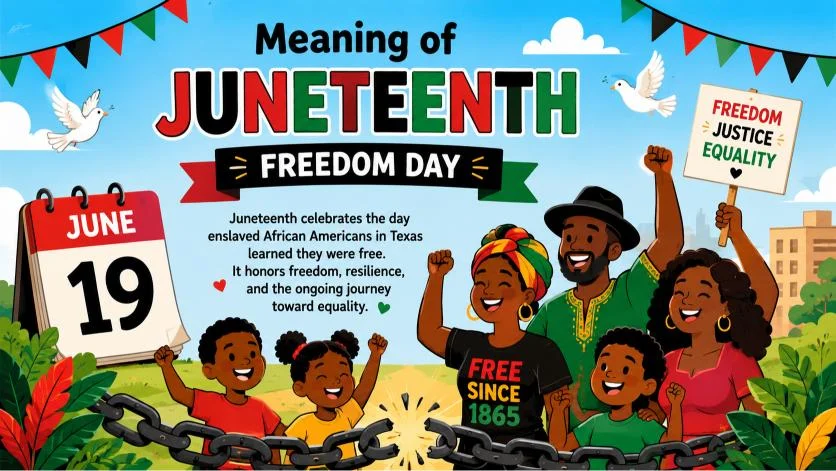
Juneteenth refers to June 19, 1865, the day enslaved African Americans in Texas were officially informed they were free, marking the end of slavery in the United States.
Quick Answer
Juneteenth is a historical holiday celebrated on June 19 that commemorates the end of slavery in the United States and symbolizes freedom, resilience, and equality.
Origin and History
The name Juneteenth combines the words June and nineteenth. It originated in Texas when Union soldiers arrived and announced freedom to enslaved people more than two years after the Emancipation Proclamation had been issued.
This delay is a key part of its meaning. It highlights how freedom was not immediate or equally enforced for everyone.
Evolution Over Time
- 1800s: Began as local celebrations in Texas
- 1900s: Spread across African American communities
- 2000s: Gained national awareness
- 2021: Officially recognized as a federal holiday in the United States
Today, Juneteenth is both a celebration and a reflection on justice and equality.
How to Use “Juneteenth” Correctly in Conversations
Unlike slang terms, Juneteenth is a historical and cultural term, so context matters.
Correct Usage
- Educational discussions
- Social media awareness posts
- Cultural celebrations
- Historical references
Tone and Context
- Respectful and informative
- Reflective and thoughtful
- Celebratory when appropriate
Examples by Platform
- SMS or WhatsApp
“Happy Juneteenth. Today is about freedom and history.” - Instagram
“Honoring the meaning of Juneteenth and the journey toward equality.” - Twitter X
“Juneteenth reminds us that freedom delayed is still freedom worth fighting for.” - Workplace chat
“We are observing Juneteenth today to recognize its historical importance.”
When NOT to Use It Casually
Avoid using Juneteenth as a joke, meme, or in a dismissive way. It carries deep historical meaning.
Real Conversation Examples Using Juneteenth
Between Friends
A: Are you off on June 19
B: Yeah it is Juneteenth
A: Oh right that is about the end of slavery
B: Exactly
This shows awareness and casual understanding.
In a Group Chat
A: What is Juneteenth again
B: It marks when enslaved people in Texas were finally told they were free
A: That is actually powerful
This highlights learning and curiosity.
Family Discussion
Parent: Do you know why Juneteenth matters
Child: It is about freedom
Parent: Yes and also about delayed justice
This conveys educational value.
Workplace Chat
Manager: Reminder that the office is closed for Juneteenth
Employee: Thanks for the reminder
Shows formal respectful usage.
Social Media Post
“Understanding the meaning of Juneteenth helps us appreciate how far we have come and how far we still need to go.”
This reflects awareness and reflection.
Common Mistakes and Misunderstandings
1. Thinking It Is Just Another Holiday
Juneteenth is not just a day off. It represents a major historical moment.
2. Confusing It With Independence Day
Independence Day celebrates national freedom. Juneteenth focuses on the end of slavery specifically.
3. Misusing It Casually
Using it in jokes or memes without context can come across as insensitive.
Generational Differences
- Gen Z tends to actively discuss and share awareness online
- Older generations may have less exposure to its history
Cultural Awareness
Outside the United States, people may not fully understand Juneteenth, making explanation important.
Juneteenth Across Platforms and Demographics
Gen Z Usage
- Frequently discussed on TikTok and Instagram
- Shared through educational posts and short videos
Millennials
- Focus on awareness and advocacy
- Share articles and historical insights
Older Generations
- May observe quietly or learn about it later in life
Online Trends
Juneteenth often trends yearly with hashtags, educational threads, and cultural celebrations.
Formal vs Informal
- Informal in conversation but serious in meaning
- Suitable for workplaces, schools, and public discussions
Related Terms and Concepts
- Emancipation
The act of being set free from legal or social restrictions - Freedom Day
Another name sometimes used for Juneteenth - Abolition
The ending of slavery - Civil Rights
Rights for equal treatment under the law - Equality
Fair treatment for all people - Liberation
The act of gaining freedom - Independence
Freedom from control - Social Justice
Fairness in society - Reconstruction Era
Period after slavery ended in the US
FAQs:
What is the meaning of Juneteenth in simple words
Juneteenth means the day when enslaved people in Texas learned they were free. It represents freedom and the end of slavery in the United States.
Why is Juneteenth important today
It reminds people of past injustices and encourages ongoing efforts toward equality and fairness in society.
Is Juneteenth a federal holiday
Yes, it became a federal holiday in 2021 and is officially recognized across the United States.
How do people celebrate Juneteenth
Celebrations include parades, cultural events, educational programs, and family gatherings focused on history and heritage.
Is Juneteenth only celebrated in the US
It is mainly a US holiday, but awareness is growing globally as people learn about its significance.
Conclusion:
The meaning of Juneteenth goes far beyond a single date. It tells a story about delayed freedom, resilience, and the ongoing pursuit of equality.
Understanding Juneteenth helps you stay informed and respectful in conversations that matter today. It is a reminder that history shapes the present in powerful ways.
As awareness continues to grow worldwide, knowing the true meaning of Juneteenth is more important than ever.
Want to explore more meanings and modern terms? Drop your favorite word or phrase and keep learning.

Hi, I’m Isabella Brown, the voice behind Codexao.com, where meanings aren’t just explained, they’re made easy to understand.
I’ve always been fascinated by how words shape the way we think, speak, and connect. But let’s be honest—most definitions out there feel confusing, outdated, or just plain boring.
That’s exactly why I created Codexao. Here, I break down words, slang, and modern expressions into simple, clear meanings you can actually use in real life.