Understanding this phrase matters more than you might think. In today’s global internet culture, where TikTok, Instagram, gaming chats, and online friendships connect people worldwide, expressions like this pop up everywhere.
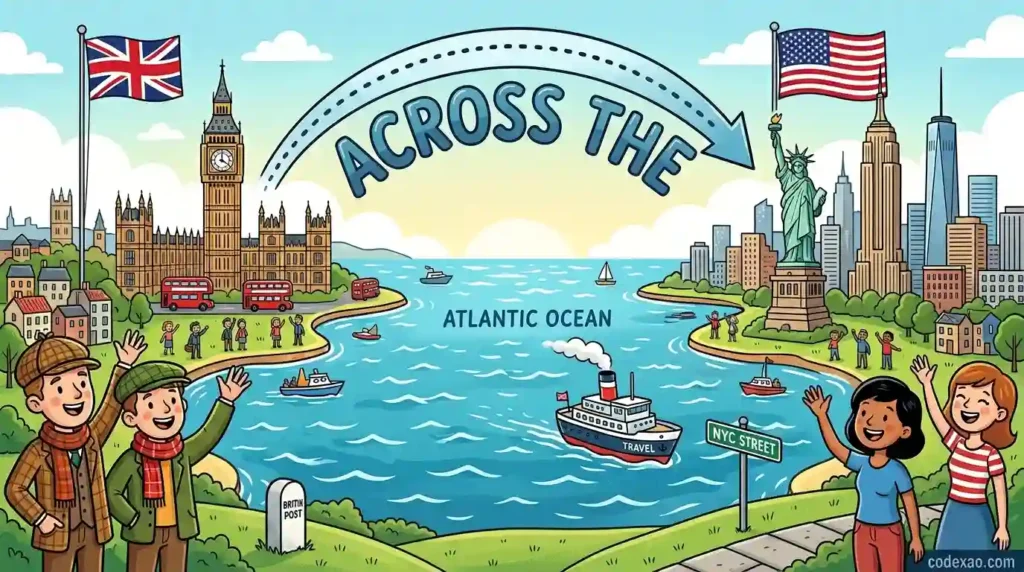
The phrase across the pond meaning actually has nothing to do with water in your neighborhood, it’s a fun, informal way people in the UK and US refer to each other’s countries across the Atlantic Ocean.
This guide breaks down everything you need to know about across the pond meaning, including where it came from, how to use it correctly, real chat examples, and common mistakes people make.
Updated for 2026, this is your complete reference for mastering the phrase like a native speaker.
What Does “Across the Pond” Mean?
The phrase “across the pond” is a lighthearted idiom used mainly between British and American English speakers. It refers to the Atlantic Ocean, treating it humorously as a “pond,” even though it’s anything but small.
Quick Answer:
“Across the pond” means “on the other side of the Atlantic Ocean,” usually referring to the US from a UK perspective or the UK/Europe from a US perspective.
The phrase likely became popular in the early 20th century, especially in journalism and literature, when transatlantic travel and communication became more common. Writers used it to soften the sense of distance between the UK and US.
Today, it’s widely used on social media, in interviews, and even casual business conversations between international teams.
Pronunciation: /əˈkrɒs ðə pɒnd/ (UK) or /əˈkrɔːs ðə pɑːnd/ (US)
How to Use “Across the Pond” Correctly in Texts & Chat
The across the pond meaning is casual, friendly, and slightly playful. It’s not something you’d use in legal documents or formal reports, but it works perfectly in everyday communication.
Where it fits naturally:
- WhatsApp chats with friends
- Instagram captions
- Twitter/X posts
- Discord gaming chats
- Casual emails between international coworkers
When NOT to use it:
- Academic essays
- Formal business contracts
- Government or legal communication
Style tips:
- Usually lowercase in casual writing: “across the pond”
- Often paired with humor or emojis 🌍✈️
- Works best when talking about travel, culture, or people abroad
Across the Pond Synonym
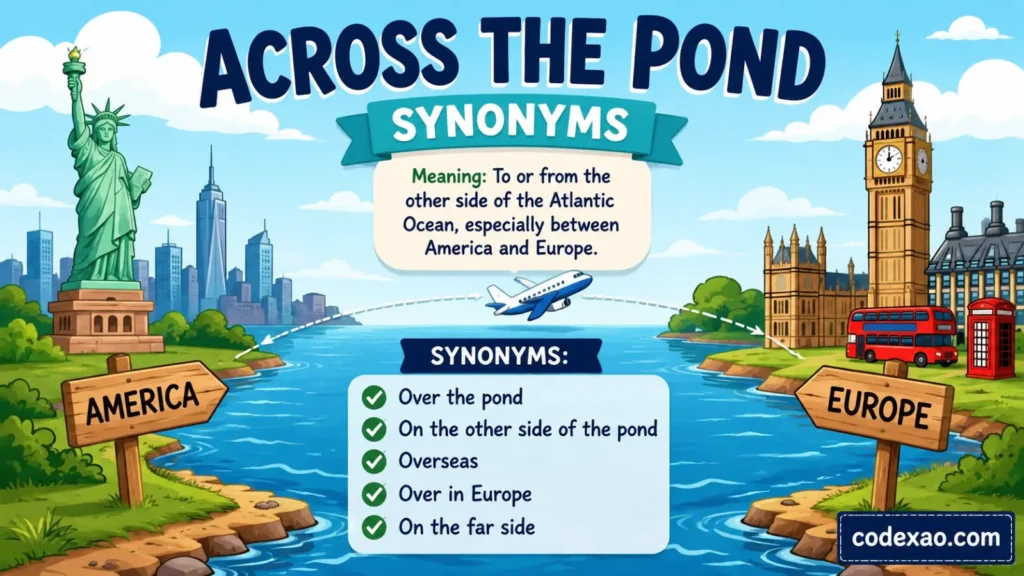
The phrase across the pond is an informal way to refer to traveling between North America and Europe, especially between the United States and the United Kingdom.
Common synonyms and similar expressions include:
- Overseas
- Abroad
- On the other side of the Atlantic
- Across the Atlantic
- In another country
- Foreign
- Internationally
Example:
- She moved across the pond to London.
- She moved overseas to London.
Across the Pond Clothing
When used in the fashion industry, Across the Pond Clothing generally refers to clothing brands, stores, or styles that originate from the opposite side of the Atlantic Ocean. For example:
- Americans may use it when talking about British fashion.
- Britons may use it when discussing American clothing trends.
The phrase itself is not a specific clothing term but is often used in articles, blogs, and marketing to compare fashion trends between the U.S. and the U.K.
Example:
- This season’s popular styles across the pond are making their way to American stores.
Real Conversation Examples Using “Across the Pond”
🟢 Between friends
A: “Heading to London next week!”
B: “Nice! Say hi to everyone across the pond 😂”
Shows playful excitement about international travel.
🟢 Dating chat
A: “He lives in New York.”
B: “Oh wow, long-distance across the pond situation 😭”
Implies a UK–US relationship distance.
🟢 Gaming group chat
Player1: “We’ve got a teammate from the UK.”
Player2: “Nice, skills from across the pond!”
Friendly global gaming culture reference.
🟢 Work Slack message
Manager: “We’re meeting the US team tomorrow.”
Colleague: “Got it, connecting with the folks across the pond.”
Casual workplace tone (only suitable in relaxed environments).
🟢 Social media caption
“Coffee time with my bestie across the pond ☕🌍”
Expresses friendship despite distance.
Common Mistakes & Misunderstandings
1. Thinking it refers to a real pond
Many learners assume it’s literal. It’s not, it’s purely metaphorical for the Atlantic Ocean.
2. Using it in formal writing
Saying “our company partners across the pond” in a formal report may sound too casual.
3. Confusing direction
- UK speaker → “across the pond” = USA
- US speaker → “across the pond” = UK/Europe
Generational gap
Older speakers may find it slightly informal or outdated, while Gen Z uses it ironically or humorously online.
“Across the Pond” Across Different Platforms & Demographics
Gen Z usage
Often used sarcastically or humorously on TikTok and memes:
“She’s just across the pond… only 8,000 km away 💀”
Millennials
Use it more naturally in conversation and social media captions.
Older generations
Recognize it but may prefer clearer terms like “in the UK” or “in the US.”
Platform trends:
- TikTok: ironic usage + memes
- Instagram: travel captions
- Discord: gaming + global friend groups
- Reddit: cultural discussions and comparisons
It’s considered informal but widely understood.
Across the Pond Meaning in Slang
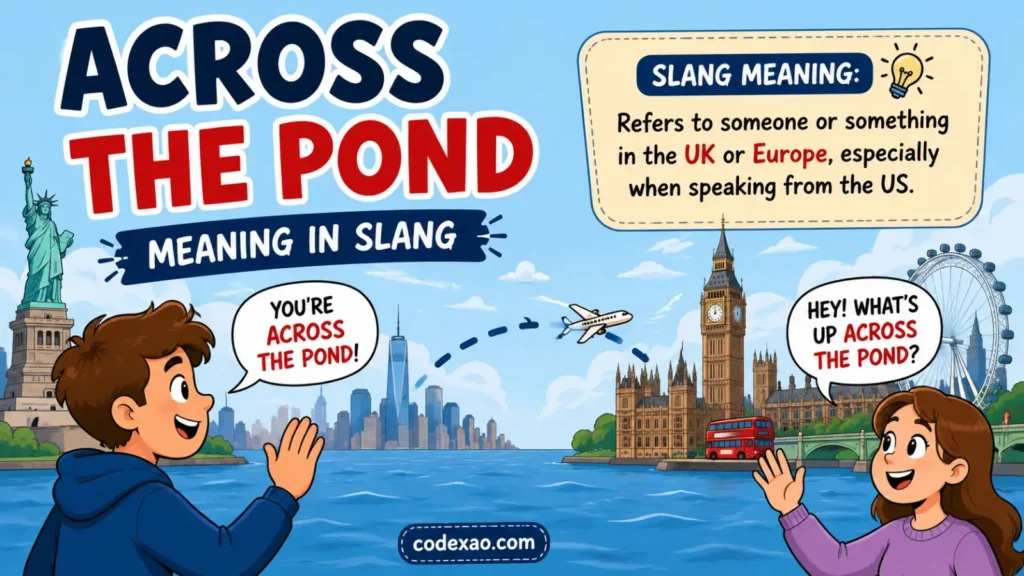
In slang and casual conversation, across the pond means:
On the other side of the Atlantic Ocean, usually referring to the United States, Canada, the United Kingdom, or Europe.
The expression is friendly, conversational, and commonly used in media, travel discussions, sports coverage, and online communication.
Examples:
- My cousins live across the pond in England.
- That TV show became popular across the pond before it reached America.
The phrase adds a lighthearted tone and makes the Atlantic Ocean sound much smaller than it actually is.
Across the Pond Meaning Origin
The origin of across the pond comes from the humorous comparison of the Atlantic Ocean to a small pond.
The expression became popular in the 20th century as travel and communication between North America and Europe increased. People began using it jokingly to refer to crossing the Atlantic, making the long-distance journey seem less daunting and more familiar.
Why Is It Called a Pond?
The Atlantic Ocean is one of the largest bodies of water on Earth, but English speakers playfully call it a pond to emphasize the close cultural, historical, and economic ties between countries on both sides.
Example of the Origin in Use
- British newspapers often refer to events in America as happening across the pond.
- American journalists may describe trends in Britain as coming from across the pond.
Today, the phrase remains a popular idiom in everyday English, journalism, travel writing, and international business communication.
Related Slang, Abbreviations & Alternatives
- Transatlantic – relating to both sides of the Atlantic
- The other side of the pond – same meaning, reversed phrasing
- UK/US – direct geographic reference
- Overseas – general international term
- Across the water – similar idiom
- Stateside – refers to the US (from UK perspective)
- Blighty – informal UK reference (British slang)
- Yanks – informal US reference (context-sensitive)
- International – neutral alternative
- Long-distance – often used in relationships
FAQs:
What does across the pond mean in simple words?
It means “on the other side of the Atlantic Ocean,” usually referring to the UK or the US depending on who is speaking.
Is across the pond American or British?
Both. British people use it to mean the US, and Americans use it to mean the UK or Europe.
Is across the pond still used today?
Yes, especially online, in social media, and casual conversations. It’s still popular in 2026.
Can I use across the pond in emails?
Only in informal or friendly emails. Avoid it in strict professional communication.
Why do people say across the pond instead of UK or US?
Because it sounds more casual, humorous, and culturally friendly compared to direct geographic labels.
Conclusion:
The across the pond meaning is simple once you break it down, it’s just a playful way of describing the distance between the UK and the US across the Atlantic Ocean.
What makes it interesting is not the geography, but the tone: friendly, informal, and culturally connected.
Whether you’re chatting online, writing captions, or talking to international friends, this phrase adds a bit of personality to your language.
Just remember, it’s casual, not formal.
Language keeps evolving, and expressions like this show how connected the world has become.
Now that you know it, you’ll start spotting it everywhere.
Got a slang term you’ve seen online and want decoded next? Drop it, you might see it featured next.

Hi, I’m Isabella Brown, the voice behind Codexao.com, where meanings aren’t just explained, they’re made easy to understand.
I’ve always been fascinated by how words shape the way we think, speak, and connect. But let’s be honest—most definitions out there feel confusing, outdated, or just plain boring.
That’s exactly why I created Codexao. Here, I break down words, slang, and modern expressions into simple, clear meanings you can actually use in real life.