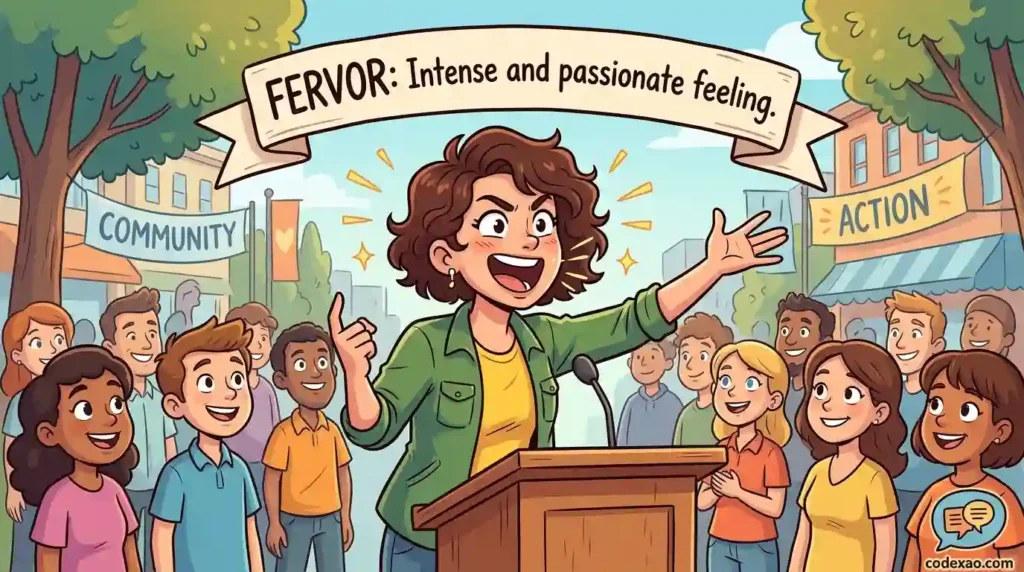
Ever read a message or heard someone speak with so much energy that you could feel their excitement through the screen? That’s where understanding fervor meaning becomes surprisingly useful.
In today’s world of fast texts, social media debates, and passionate opinions, words like fervor help describe emotions that go beyond “just excited.”
Whether it’s a viral trend, a heated discussion, or someone hyping their favorite show, fervor captures that intense emotional spark.
This guide (Updated for 2026) breaks everything down in plain English, what fervor really means, where it comes from, how to use it correctly, and how it fits into modern communication. By the end, you’ll not only understand it, you’ll actually use it naturally.
What Does “Fervor” Mean?
Fervor means intense passion, enthusiasm, or strong emotion toward something.
Quick Answer:
Fervor = strong, energetic emotion or passion about something.
Origin & Etymology
The word comes from Latin “fervor,” meaning “heat” or “boiling.” That’s a pretty accurate metaphor, when someone has fervor, their emotions feel like they’re boiling over.
Evolution of Meaning
- Old usage: Mostly used in religious or spiritual contexts
- Modern usage: Applies to anything, sports, fandoms, social issues, even memes
Pronunciation
FUR-vor (/ˈfɜːr.vər/)
How to Use “Fervor” Correctly in Texts & Chat
Let’s be honest, fervor isn’t your typical slang like “LOL” or “BRB.” But it still shows up in digital conversations, especially when someone wants to sound expressive or dramatic.
Tone & Context
- 🔥 Passionate: “He spoke with fervor about his dreams.”
- 😂 Dramatic (sometimes humorous): “She defended that show with absolute fervor.”
- 💬 Emotional: Used when feelings are intense, not casual
Platform-Specific Usage
- WhatsApp / SMS: Slightly formal but impactful
- Instagram captions: Great for dramatic or poetic tone
- Twitter/X: Common in debates or opinions
- Discord / Reddit: Often used sarcastically or humorously
When NOT to Use It
- ❌ Formal business emails (sounds overly emotional)
- ❌ Casual quick replies (“ok” doesn’t need fervor)
- ❌ When you mean mild interest (too strong)
Formatting Tips
- Usually lowercase: fervor
- No abbreviations (it’s already concise)
- Can pair with emojis: 🔥💯 for emphasis
Real Conversation Examples Using “Fervor”
1. Between Friends
A: “Why are you defending that movie so hard?”
B: “Because I love it with full fervor 😤”
👉 Shows playful but intense passion
2. In a Group Chat
A: “Bro just wrote a whole paragraph about football”
B: “That’s pure fandom fervor right there”
👉 Highlights enthusiasm in a humorous way
3. Dating Scenario
A: “He talks about his goals with so much fervor.”
B: “That’s kinda attractive tbh.”
👉 Fervor signals ambition and passion
4. Family Conversation
Mom: “He argued with such fervor at dinner.”
👉 Suggests strong emotional involvement
5. Gaming Chat
Player 1: “Why are you yelling?”
Player 2: “It’s not yelling, it’s competitive fervor!”
👉 Adds humor to intensity
Common Mistakes & Misunderstandings
1. Confusing Fervor with Simple Excitement
Fervor is stronger than excitement. Saying “I have fervor for pizza” sounds exaggerated unless you’re joking.
2. Using It in Formal Settings
It can sound overly emotional in professional writing:
- ❌ “I completed the report with fervor”
- ✅ “I completed the report efficiently”
3. Generational Confusion
- Gen Z: May use it ironically or dramatically
- Older users: Use it more literally
4. Cultural Differences
In some regions, fervor is mainly tied to religion or politics, not everyday emotions.
“Fervor” Across Different Platforms & Demographics
Generational Usage
- Gen Z: Dramatic, ironic, meme-friendly
- Millennials: Balanced, serious and casual
- Older generations: Formal, emotional depth
Platform Trends
- TikTok: Used in captions like “fan fervor is real”
- Instagram: Poetic captions and storytelling
- Reddit: Analytical or sarcastic tone
- Semi-formal word
- Flexible depending on tone
- Safe for most contexts, but not corporate-heavy writing
Related Slang, Abbreviations & Alternatives
| Term | Meaning |
|---|---|
| Passion | Strong feeling toward something |
| Enthusiasm | Excitement and eagerness |
| Zeal | Energetic devotion |
| Hype | Intense excitement (modern slang) |
| Obsession | Extreme focus (sometimes unhealthy) |
| Dedication | Long-term commitment |
| Energy | General excitement |
| Fan energy | Internet slang for enthusiasm |
| Devotion | Deep emotional loyalty |
💡 Example: Instead of “fervor,” you might say “hype” in casual chats.
FAQs:
What does fervor mean in simple terms?
Fervor means strong passion or intense enthusiasm. It’s when someone feels deeply excited or emotionally invested in something, often showing it through energetic words or actions.
Is fervor always positive?
Not always. While it usually describes positive passion, it can turn negative if it becomes extreme or obsessive, like arguing aggressively over small issues.
Can fervor be used in texting?
Yes, but it’s less common than slang. It’s often used for emphasis, humor, or dramatic effect in chats and social media.
What is the difference between fervor and enthusiasm?
Enthusiasm is general excitement. Fervor is stronger and more intense, it suggests deeper emotional involvement.
Is fervor a formal word?
It sits in the middle. It’s more formal than slang but still works in casual conversations, especially online.
Conclusion:
Understanding feraor meaning gives you a powerful way to describe emotions that go beyond basic excitement. It’s not just liking something, it’s feeling it deeply, almost intensely.
In modern communication, fervor adds personality.
Whether you’re joking in a group chat or expressing genuine passion, it makes your message stand out.
So next time someone goes all-in defending their favorite show or passionately arguing a point, you’ll know exactly what to call it: fervor.
Got a favorite slang or word you want explained next? Drop it below and keep exploring the language of the internet.

Hi, I’m John Mark, the voice behind codexao.com, where meanings aren’t just explained, they’re simplified for the way people actually talk today.
I’ve always been curious about words, how they change, how they trend, and how a simple phrase can carry completely different meanings depending on context. That curiosity turned into codexao, a space where I break down slang, text abbreviations, and everyday words into clear, easy-to-understand explanations.