If you have ever seen someone type “molto good,” “molto happy,” or even “molto vibes” in a chat and paused for a second, you are not alone.
Internet slang evolves fast, and sometimes words from other languages suddenly show up in everyday texting culture.
The term molto meaning slang has become one of those curious expressions that people encounter on social media, especially in captions, aesthetic posts, and casual conversations.
While it originally comes from Italian, its modern digital usage is slightly different and more playful.
Global communication is more blended than ever. People mix languages, aesthetics, and slang to express emotions in a more stylish way.
That is where “molto” fits in. This guide breaks it all down in simple language so you never feel confused when you see it online again.
You will learn its meaning, origin, correct usage, real chat examples, common mistakes, and how it compares across different platforms and generations.
What Does Molto Mean in Slang?
The slang term molto meaning slang comes from the Italian word “molto,” which directly translates to “very” or “much” in English. In traditional Italian, it is used to intensify adjectives or quantities.
Quick Answer
Molto in slang means very or extremely, used informally online to emphasize feelings, descriptions, or reactions in a stylish or aesthetic way.
Originally, “molto” has been part of the Italian language for centuries. It is not new. What is new is how internet users have adopted it in casual texting, especially in global social media spaces like Instagram captions, TikTok comments, and aesthetic blogs.
Over time, people began using it in English sentences for stylistic effect, even though it is not grammatically standard in English. This is common in internet culture where multilingual expressions often become trendy.
Pronunciation
Molto is pronounced as mol-toh, with a soft and smooth ending sound.
Evolution in Digital Culture
- Traditional Italian usage: grammatical intensifier
- Early internet usage: niche aesthetic captions
- Modern usage: stylistic slang for emphasis
Today, it is more about vibe than grammar.
How to Use Molto Correctly in Texts and Chat
Using molto meaning slang correctly depends on context. It is not a formal English word, so its usage is purely casual and expressive.
Where it fits best
- Casual texting with friends
- Instagram captions
- TikTok comments
- Aesthetic or poetic writing
- Meme culture
Where you should avoid it
- Emails
- Academic writing
- Job applications
- Professional communication
Style tips
- Works best before adjectives
- Often used for emotional emphasis
- Sometimes paired with aesthetic emojis like ✨ or 💫
- Capitalization is flexible but usually lowercase for style
Example structure:
- molto + adjective
- molto + vibe expression
It is more about mood than grammar correctness.
Molto Bella Meaning
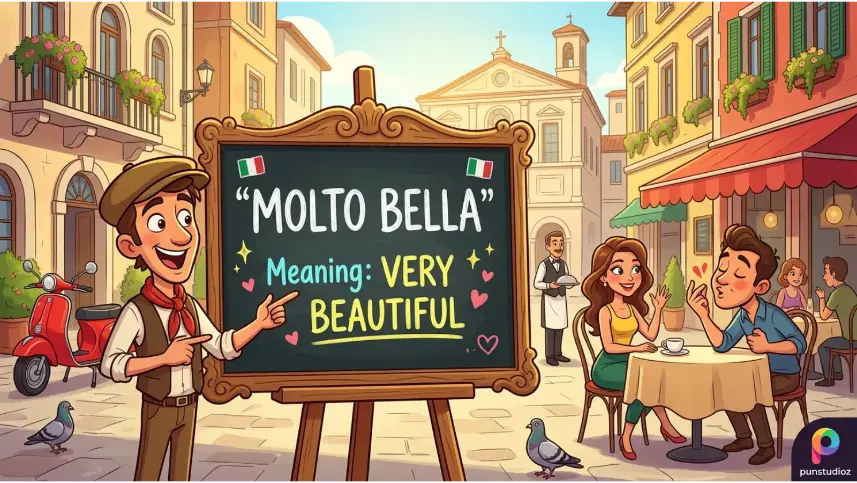
“Molto bella” is an Italian phrase that means “very beautiful” or “very pretty” in English. It is commonly used to compliment a woman, girl, place, object, or anything feminine that looks especially attractive or beautiful.
The phrase combines two simple Italian words: molto, meaning “very” or “a lot,” and bella, the feminine form of “beautiful.” So, when someone says molto bella, they are essentially saying that something or someone is very beautiful.
For example, if someone sees a beautiful woman, they might say molto bella as a compliment. The phrase can also describe things such as a dress, painting, city, photograph, or view.
What Does Molto Bella Mean in English?
Depending on the situation, molto bella can translate as:
- Very beautiful
- Very pretty
- Really beautiful
- So beautiful
- Very lovely
The exact English translation can change slightly depending on the context, but the basic idea remains the same: strong admiration for feminine beauty.
One important detail is that bella is feminine. If you are describing a masculine person or masculine noun, Italian generally uses bello instead.
Example:
Questa ragazza è molto bella.
“This girl is very beautiful.”
You may also see molto bella in social media comments, captions, messages, or casual conversations, especially when someone wants to give a simple and stylish compliment.
Real Conversation Examples Using Molto
Between Friends
Friend A: I am feeling molto tired today
Friend B: Same, I need coffee ASAP
Meaning: Emphasizes extreme tiredness in a casual, humorous way
Instagram Caption
“Molto happy today ✨ life feels soft again”
Meaning: Adds emotional aesthetic emphasis to happiness
Group Chat
Person 1: That movie was molto good
Person 2: Facts, I want to watch it again
Meaning: Strong positive reaction to the movie
Gaming Chat
Player: That win was molto nonsensical
Teammate: We carried hard
Meaning: Expresses excitement and intensity after a win
Romantic Chat
Person A: You are molto special to me
Person B: Stop, you are making me blush
Meaning: Emotional emphasis in affectionate context
Molto Meaning Slang in English
When molto appears in English slang or informal internet language, it usually means “very,” “really,” or “a lot.” It is borrowed from Italian and is often used humorously or stylishly rather than as established English slang.
For instance:
“That outfit is molto nice.”
The intended meaning is essentially:
“That outfit is very nice.”
You might also see expressions such as:
- Molto good = Very good
- Molto nice = Very nice
- Molto impressive = Very impressive
- Molto love = A lot of love
- Molto bella = Very beautiful
However, there is an important distinction: these mixed-English expressions are informal and playful. A native Italian speaker would normally use molto according to Italian grammar, rather than randomly inserting it into English sentences.
Why Do People Use Molto in English?
Using molto in an English sentence can make a statement sound:
- Playful
- Dramatic
- Stylish
- Humorous
- Slightly exaggerated
- Italian-inspired
This is particularly common in internet culture, captions, memes, and casual conversations where people intentionally mix languages.
Molto vs. Very
| Word | Meaning | Language | Common Use |
|---|---|---|---|
| Molto | Very / much / a lot | Italian | Standard Italian |
| Very | To a high degree | English | Standard English |
| Molto in English slang | Very / really | Informal borrowed usage | Jokes, captions, memes |
So, if someone says “molto bella,” the safest interpretation is simply “very beautiful.” If molto appears by itself in an English sentence, look at the surrounding words to determine whether it means “very,” “much,” or “a lot.”
Common Mistakes and Misunderstandings
Even though it looks simple, people often misuse molto meaning slang in a few ways.
1. Treating it as standard English
Many users think “molto” is an English slang word. It is not. It is borrowed from Italian.
2. Overusing it in formal writing
Some people mistakenly include it in professional emails or essays. This makes writing look unprofessional.
3. Wrong placement in sentences
Incorrect: I am very molto happy
Correct: I am molto happy or I am very happy
Generational confusion
Older readers may find it confusing because it blends languages, while Gen Z users often understand it as aesthetic slang.
Clarification tip
If someone does not understand it, just explain it means “very” in a stylish or multilingual way.
Molto Across Platforms and Demographics
The usage of molto meaning slang varies depending on platform and audience.
Gen Z usage
- Used in aesthetic captions
- Popular in TikTok comments
- Often mixed with emojis and soft tones
Millennials
- Rare usage
- More likely to recognize its Italian origin
- Used intentionally for humor or style
Older generations
- Often unfamiliar with slang use
- May interpret it literally as Italian grammar
Platform trends
- Instagram: aesthetic captions
- TikTok: expressive comments
- Discord: niche meme usage
- Reddit: language discussions and explanations
It is not a mainstream slang term but has a strong niche aesthetic presence.
Related Slang, Abbreviations and Alternatives
Here are similar expressions used for emphasis in casual communication:
- very: standard English intensifier
- super: casual emphasis word
- mega: exaggerated informal intensity
- ultra: strong emphasis prefix
- hella: Gen Z slang for “very”
- ferociously: extreme informal emphasis
- literally: used for emphasis, not literal meaning
- so: simple intensifier
- beyond: expressive exaggeration
- extremely: formal strong intensifier
These alternatives often replace “molto” depending on tone and audience.
FAQs:
What does molto mean in slang?
Molto means “very” or “extremely” when used in slang or informal digital communication, often borrowed from Italian for style.
Is molto a real English word?
No, it is originally Italian but is used informally online in English conversations for emphasis.
Why do people use molto in chats?
People use it to make messages sound aesthetic, expressive, or multilingual in tone.
Is molto appropriate in formal writing?
No, it is strictly informal and should not be used in professional or academic contexts.
Where is molto most commonly used?
It is mostly seen on Instagram captions, TikTok comments, and casual chat conversations.
CONCLUSION:
Understanding molto meaning slang helps you decode one of those stylish internet expressions that blend languages and digital culture.
It is simple in meaning but powerful in tone, making it popular in aesthetic and emotional online communication.
While it is not a formal English word, its charm lies in how people use it creatively across social media platforms.
Whether it is “molto happy” or “molto vibes,” it always adds an extra layer of expression.
If you enjoy learning modern slang like this, keep exploring how language evolves online because new expressions appear every day.
Drop your favorite slang term in a chat or comment and see how many people actually understand it.

Hi, I’m John Mark, the voice behind codexao.com, where meanings aren’t just explained, they’re simplified for the way people actually talk today.
I’ve always been curious about words, how they change, how they trend, and how a simple phrase can carry completely different meanings depending on context. That curiosity turned into codexao, a space where I break down slang, text abbreviations, and everyday words into clear, easy-to-understand explanations.