You’re scrolling through a chat, maybe on WhatsApp or a gaming server, and suddenly someone drops “NKDA.” You pause. Is it slang? A typo? Or something serious?
Here’s the thing , NKDA meaning isn’t typical internet slang like LOL or BRB. It actually comes from a completely different world, and misunderstanding it can lead to confusion in the wrong context.
In 2026, as digital communication blends professional, medical, and casual spaces, abbreviations like NKDA are popping up more often.
Knowing what they mean helps you avoid awkward misunderstandings and even serious mistakes.
In this guide, you’ll learn exactly what NKDA means, where it comes from, how to use it correctly, and real examples so you never get confused again.
What Does “NKDA” Mean?
Definition and Origin
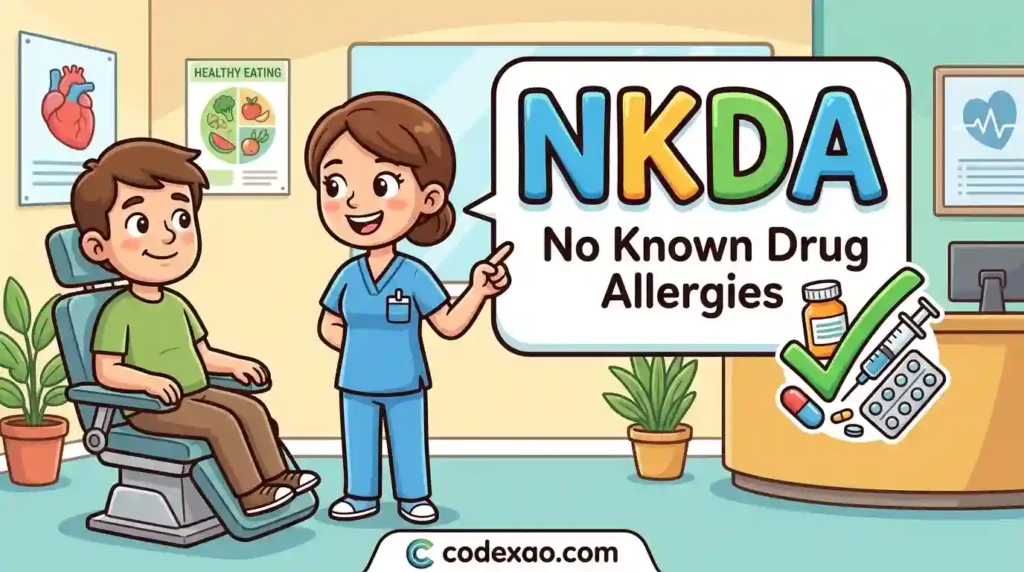
NKDA stands for No Known Drug Allergies.
It is a medical abbreviation used by doctors, nurses, and healthcare professionals to indicate that a patient has no recorded allergies to medications.
The term originated in clinical settings such as hospitals and electronic health records. Over time, it started appearing in online discussions, especially in health-related forums and professional chats.
Quick Answer
NKDA means No Known Drug Allergies. It is commonly used in medical contexts to indicate that a person has no recorded allergies to medications.
How the Meaning Evolved
Originally, NKDA was strictly used in medical charts. Today, it may appear in:
- Online health communities
- Medical student discussions
- Emergency documentation
- Occasionally in dark humor or niche online jokes
Still, its meaning has remained consistent , it is not casual slang in most situations.
Pronunciation
People usually say it as individual letters:
N K D A
How to Use “NKDA” Correctly in Texts and Chat
Context and Tone
NKDA is formal and clinical, not casual or emotional.
Use it when:
- Sharing medical information
- Filling out forms
- Discussing patient history
- Communicating in healthcare settings
Avoid it when:
- Chatting casually with friends
- Posting on social media without context
- Using slang or humor unless clearly intentional
Platform-Specific Usage
- SMS and WhatsApp: Rare unless discussing health
- Instagram and TikTok: Almost never used seriously
- Discord and Reddit: Seen in medical or educational communities
- Professional platforms: Common in healthcare chats
When NOT to Use NKDA
Using NKDA casually can confuse people. For example:
- ❌ “I have NKDA to spicy food”
- ✔️ “I’m not allergic to spicy food”
NKDA specifically refers to drug allergies only, not food or environmental allergies.
Formatting Tips
- Always uppercase: NKDA
- No emojis needed
- Use alongside medical details for clarity
Real Conversation Examples Using “NKDA”
1. In a Hospital Setting
Doctor: Any allergies?
Patient: NKDA
Meaning: The patient has no known drug allergies.
2. Between Medical Students
Student 1: What did you write for allergies?
Student 2: NKDA
Meaning: They documented no drug allergies for the case.
3. In an Online Health Forum
User: My chart says NKDA. What does that mean?
Reply: It means no known drug allergies
Meaning: Clarifying medical terminology.
4. In Emergency Communication
Paramedic: Patient is stable, NKDA reported
Meaning: No medication allergies to worry about during treatment.
5. Casual Misuse Example
Friend: I’m NKDA to pizza 😂
Meaning: Incorrect usage , NKDA is not meant for food.
Common Mistakes and Misunderstandings
1. Thinking It’s Internet Slang
Many people assume NKDA is Gen Z slang. It’s not. It’s a medical abbreviation.
2. Using It for Food Allergies
NKDA only applies to drug allergies, not:
- Food
- Pollen
- Pets
3. Misinterpreting in Serious Contexts
If someone uses NKDA in a medical situation, it’s important. Misunderstanding it could lead to incorrect assumptions about safety.
Generational Confusion
- Gen Z: Might assume it’s slang
- Millennials: May recognize it from forms
- Older adults: More familiar from healthcare
NKDA Across Different Platforms and Demographics
Gen Z vs Millennials
- Gen Z: Rarely uses NKDA unless in medical fields
- Millennials: More likely to recognize it from hospital forms
- Professionals: Use it regularly in healthcare
Platform Trends
- TikTok: Occasionally used in educational medical content
- Instagram: Rare, unless in health posts
- Reddit: Common in medical threads
- Discord: Seen in study groups
Formality Level
- Highly formal
- Not safe for casual slang use
- Best kept in medical or professional contexts
Related Slang, Abbreviations and Alternatives
Here are some related terms you might see:
- NKA — No Known Allergies
- NKFA — No Known Food Allergies
- PMH — Past Medical History
- Hx — History
- Dx — Diagnosis
- Rx — Prescription
- Tx — Treatment
- Sx — Symptoms
- Allergy noted — Indicates a known allergy
- Hypersensitivity — Medical term for allergic reaction
These are commonly used in healthcare and documentation.
FAQs:
What does NKDA mean in medical terms
NKDA means No Known Drug Allergies. It indicates that a patient has no recorded allergic reactions to medications in their medical history.
Is NKDA the same as no allergies at all
No. NKDA only refers to drug allergies. A person may still have food or environmental allergies.
Can I use NKDA in normal conversation
Not really. NKDA is formal and medical. Using it casually may confuse people unless they understand the context.
Why do doctors use NKDA
Doctors use NKDA to quickly communicate that it is safe to prescribe medications without concern for allergic reactions.
What is the difference between NKDA and NKA
NKDA means no known drug allergies, while NKA means no known allergies at all, including food and environmental triggers.
Conclusion:
The NKDA meaning is simple but important. It stands for No Known Drug Allergies and is widely used in medical settings to ensure patient safety.
Even though it might show up in online conversations, NKDA is not typical internet slang.
Using it correctly matters, especially in serious contexts where clarity is critical.
Now that you know what NKDA means, you’ll never be confused when you see it in a chart, message, or discussion again.
Want to learn more modern abbreviations and meanings? Explore more slang guides and stay ahead of the conversation.

Hi, I’m John Mark, the voice behind codexao.com, where meanings aren’t just explained, they’re simplified for the way people actually talk today.
I’ve always been curious about words, how they change, how they trend, and how a simple phrase can carry completely different meanings depending on context. That curiosity turned into codexao, a space where I break down slang, text abbreviations, and everyday words into clear, easy-to-understand explanations.