Have you ever looked at a restaurant menu and spotted the words “prix fixe” without knowing exactly what they mean? You’re not alone.
Many diners encounter this term at upscale restaurants, holiday dinners, and special events but aren’t always sure what they’re signing up for.
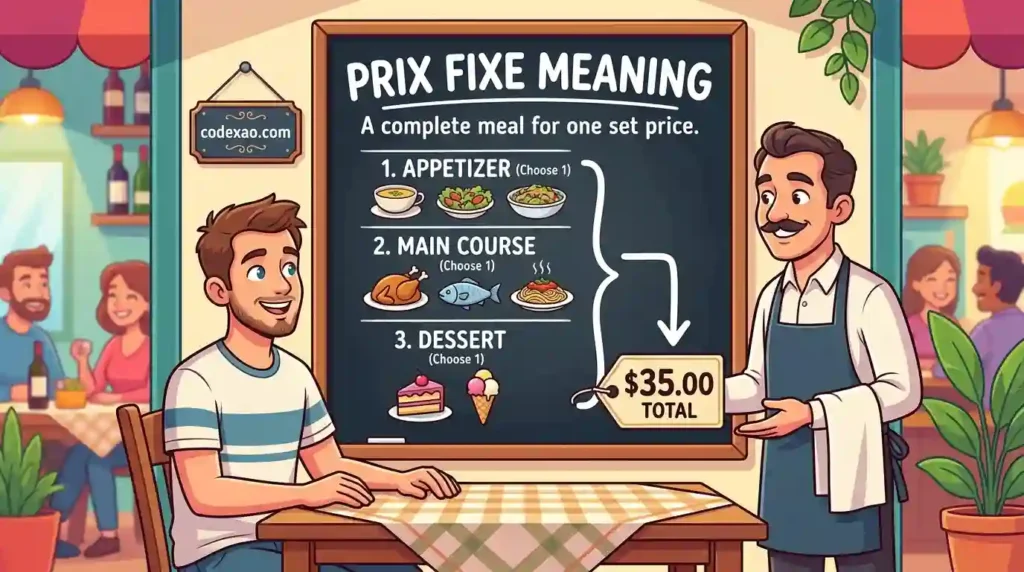
The prix fixe meaning is surprisingly simple once you understand it. Instead of paying separately for every appetizer, entrée, and dessert, you receive a complete meal at one set price.
This dining style has become increasingly popular because it offers convenience, value, and a carefully curated experience.
Whether you’re planning a romantic dinner, attending a special event, or simply exploring restaurant terminology, understanding prix fixe menus can help you make smarter dining decisions.
This guide explains everything you need to know, including the origin of the term, real-world examples, common misconceptions, and when a prix fixe meal is worth choosing over an à la carte menu.
What Does Prix Fixe Mean?
The term prix fixe meaning comes directly from French and translates to “fixed price.”
In restaurants, a prix fixe menu is a meal offered for one predetermined price. Diners typically choose from a limited selection of courses, such as an appetizer, main course, and dessert, all included in the total cost.
Quick Answer
Prix fixe means a fixed-price meal where multiple courses are bundled together for one set cost rather than being priced individually.
Origin of the Term
The phrase originated in France, where restaurants commonly offered complete meals at fixed prices. Over time, the concept spread internationally and became a standard dining option in many fine-dining establishments.
Today, you’ll find prix fixe menus in:
- Fine-dining restaurants
- Holiday celebrations
- Valentine’s Day dinners
- Restaurant week promotions
- Wedding receptions
- Special tasting events
How the Meaning Has Evolved
Historically, prix fixe menus were primarily associated with luxury dining. Today, they appear across many restaurant categories, from casual eateries to Michelin-starred establishments.
Many restaurants use prix fixe menus to showcase seasonal ingredients, chef specialties, or unique culinary experiences.
Pronunciation Guide
Prix fixe is pronounced:
“pree feeks”
The French pronunciation can sound intimidating, but most restaurant staff will understand even if you say it with an English accent.
Prix Fixe Meaning in a Restaurant
Prix fixe is a French term meaning “fixed price.” On a restaurant menu, it describes a set meal offered for one predetermined price. Instead of choosing and paying for each dish separately, you typically select from a limited range of courses such as an appetizer, entrée, and dessert for one combined cost.
For example, a restaurant might offer a three-course prix fixe menu for $60, allowing you to choose one starter, one main course, and one dessert from the listed options. Drinks, tax, and gratuity may cost extra unless the menu specifically says they are included.
Prix fixe menus are especially common at fine-dining restaurants, special events, holiday dinners, and tasting-style experiences. They can make ordering simpler and give diners a chance to experience several dishes as part of a planned meal.
Example:
“We’re offering a $75 prix fixe menu for Valentine’s Day, including an appetizer, entrée, and dessert.”
So, when you see “prix fixe” on a restaurant menu, think “one set price for a predetermined multi-course meal.”
How to Use Prix Fixe Correctly in Texts and Conversations
Unlike internet slang, prix fixe is a dining term used when discussing restaurants, menus, and food experiences.
Common Usage
You might hear someone say:
- “The restaurant offers a prix fixe dinner.”
- “We booked the chef’s prix fixe menu.”
- “The Valentine’s menu is prix fixe only.”
- “I prefer prix fixe because it’s easier to budget.”
Correct Context and Tone
Prix fixe is generally:
- Informative
- Restaurant-related
- Semi-formal
- Professional enough for food reviews
Where You’ll See It
Restaurant Websites
Restaurants often advertise:
- Three-course prix fixe menu
- Seasonal prix fixe experience
- Holiday prix fixe dinner
Food Blogs
Writers frequently compare:
- Prix fixe menus
- Tasting menus
- À la carte dining
Social Media
Examples include:
- Instagram food reviews
- TikTok restaurant recommendations
- Facebook event promotions
When Not to Use It
Avoid using prix fixe when discussing:
- General pricing unrelated to dining
- Fast-food ordering
- Non-restaurant fixed-price services
The term specifically refers to restaurant meal structures.
Real Conversation Examples Using Prix Fixe
Between Friends
💏 1: “Should we try that new steakhouse?”
Friend 2: “Sure, but it’s a prix fixe menu tonight.”
Friend 1: “That’s fine. I actually like knowing the total price upfront.”
Emotional Meaning:
The speaker appreciates predictability and value.
On a Date
🥰Person A: “Did you see the menu?”
Person B: “Yes, it’s a four-course prix fixe dinner.”
Person A: “That sounds perfect for a special occasion.”
Emotional Meaning:
The prix fixe format creates a premium dining experience.
Family Dinner Planning
Parent: “The restaurant offers a holiday prix fixe menu.”
Child: “Does that mean dessert is included?”
Parent: “Exactly.”
Emotional Meaning:
The conversation highlights convenience and simplicity.
Work Event
Manager: “The company dinner uses a prix fixe menu.”
Employee: “That should make ordering easier for everyone.”
Emotional Meaning:
Prix fixe helps streamline group dining.
Food Enthusiasts
Diner 1: “Did you try the chef’s prix fixe menu?”
Diner 2: “Yes, every course was incredible.”
Emotional Meaning:
The menu showcases the chef’s creativity.
Prix Fixe Meaning on Princess Cruises
On Princess Cruises, “prix fixe” generally refers to a fixed-price dining option or set menu, where you pay a predetermined amount for a particular meal or dining experience rather than ordering individual dishes at separate prices.
The exact meaning can depend on the restaurant and dining venue onboard. Princess Cruises offers several dining experiences, and some specialty dining options may use a set price for a multi-course meal. In that situation, the price covers the specified courses or menu selections, while certain premium items or beverages may have additional charges.
For example, if a specialty restaurant offers a prix fixe dinner, you might choose from a selection of starters, a main course, and dessert for one stated price. This differs from à la carte dining, where each menu item is priced separately.
In simple terms, prix fixe on Princess Cruises means a meal or dining experience offered at a predetermined fixed price, rather than paying separately for every course. Because menus and inclusions can vary by ship, restaurant, and sailing, it’s best to check the specific dining venue’s current menu and terms before booking.
Common Mistakes and Misunderstandings
Thinking Prix Fixe Means Unlimited Food
One common misconception is that prix fixe means all-you-can-eat.
It doesn’t.
A prix fixe meal includes a specific number of courses and predetermined options.
Confusing It with Buffet Dining
Buffets allow diners to serve themselves from many selections.
Prix fixe menus provide structured courses chosen from limited options.
Assuming It’s Always Expensive
Many people associate prix fixe menus exclusively with luxury restaurants.
In reality, casual restaurants often offer affordable prix fixe specials, especially during promotional events.
Generational Differences
Younger diners may be unfamiliar with traditional French dining terminology.
Older generations who frequently dine at formal restaurants are generally more familiar with the concept.
How to Clarify the Term
If someone doesn’t understand prix fixe, simply explain:
“It’s a set meal with multiple courses for one fixed price.”
That usually clears up any confusion immediately.
Prix Fixe Across Different Platforms and Demographics
Fine Dining Restaurants
Prix fixe menus are especially common in upscale establishments because they allow chefs to control the dining experience.
Restaurant Week Events
Many cities host restaurant weeks where participating venues create discounted prix fixe menus to attract new customers.
Social Media Trends
Food influencers frequently feature prix fixe experiences because they showcase multiple dishes in one visit.
You’ll often see them highlighted on:
- TikTok restaurant reviews
- Instagram food photography
- YouTube dining vlogs
Millennials and Gen Z
Younger diners often appreciate:
- Predictable costs
- Curated experiences
- Instagram-worthy presentations
Older Diners
Many experienced diners enjoy:
- Traditional dining structures
- Chef-selected courses
- Premium service experiences
Is It Formal or Informal
Prix fixe menus are generally considered more formal than standard ordering, though many casual restaurants now offer them.
They are completely safe for work and suitable for professional conversations.
Related Restaurant Terms and Alternatives
| Term | Meaning |
|---|---|
| À la carte | Individual items priced separately |
| Tasting menu | Multiple small chef-selected courses |
| Chef’s menu | Curated selections chosen by the chef |
| Set menu | Another term for fixed-course dining |
| Table d’hôte | Traditional multi-course fixed menu |
| Degustation | Extensive tasting experience |
| Course meal | Meal served in separate stages |
| Seasonal menu | Menu built around seasonal ingredients |
| Signature menu | Features restaurant specialties |
| Dining experience | Structured culinary journey |
Synonyms
- Fixed-price menu
- Set menu
- Table d’hôte menu
Related Reading Opportunities
- Learn more about tasting menu meaning
- Learn more about à la carte dining
- Learn more about fine dining etiquette
- Learn more about restaurant menu terminology
- Learn more about culinary vocabulary
FAQs:
What does prix fixe mean in a restaurant?
Prix fixe means a restaurant offers multiple courses for one predetermined price. Instead of paying separately for each dish, diners receive a complete meal package at a fixed cost.
Is prix fixe the same as a tasting menu?
Not always. A tasting menu often contains more courses and is designed to showcase a chef’s creativity. A prix fixe menu can be simpler and usually offers limited choices within each course.
Is a prix fixe menu cheaper?
In many cases, yes. Restaurants often bundle courses together at a value price compared with ordering every item individually. However, the savings vary by restaurant.
Why do restaurants offer prix fixe menus?
Restaurants use prix fixe menus to improve kitchen efficiency, highlight seasonal ingredients, manage food costs, and provide a curated dining experience for guests.
Should I choose prix fixe or à la carte?
Choose prix fixe if you want a complete dining experience and predictable pricing. Choose à la carte if you prefer maximum flexibility and customization.
Conclusion:
The prix fixe meaning is simple: a fixed-price meal that includes multiple courses for one predetermined cost.
While the term comes from French, the concept is now common in restaurants around the world.
Prix fixe menus offer convenience, value, and a carefully planned dining experience. They’re especially popular for special occasions, restaurant weeks, and chef-curated events.
The next time you spot a prix fixe menu, you’ll know exactly what it means and whether it’s the right choice for your dining plans.
Drop your favorite restaurant term in the comments below and keep exploring the fascinating language of food culture.

Hi, I’m Isabella Brown, the voice behind Codexao.com, where meanings aren’t just explained, they’re made easy to understand.
I’ve always been fascinated by how words shape the way we think, speak, and connect. But let’s be honest—most definitions out there feel confusing, outdated, or just plain boring.
That’s exactly why I created Codexao. Here, I break down words, slang, and modern expressions into simple, clear meanings you can actually use in real life.