Ever come across the name Rory and wondered what it really means, or why it feels both classic and modern at the same time? You’re not alone.
Whether you heard it in a TV show, met someone with the name, or are considering it for a baby, the curiosity around rory name meaning has grown a lot in recent years.
Names carry stories, culture, and even personality hints.
And Rory? It’s one of those names that packs history, strength, and charm into just four letters.
In this guide (updated for 2026), you’ll learn the true meaning of Rory, where it comes from, how it’s used today, and what kind of personality people associate with it.
We’ll also cover real-life usage, common misconceptions, and related names you might love.
What Does “Rory” Mean?
Quick Answer:
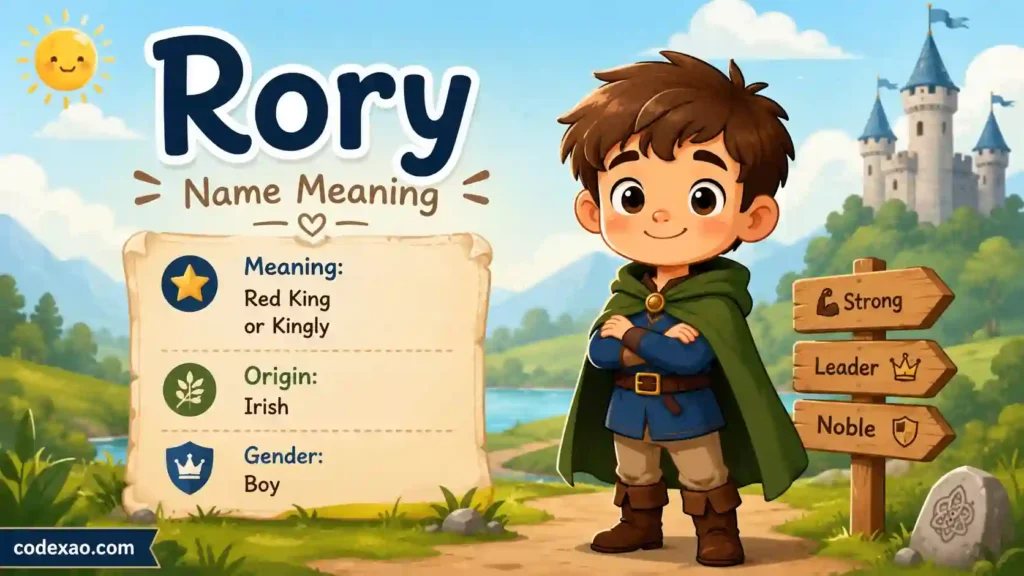
Rory means “red king” or “red-haired ruler” and comes from the Irish Gaelic name Ruaidhrí.
The rory name meaning comes from Ireland, where it originated as the Gaelic name Ruaidhrí. It’s made up of two elements:
- “ruadh” = red (often referring to hair color)
- “rí” = king
Put together, Rory literally means “red king”, a powerful and noble title.
Origin & History
Rory has deep roots in Irish history. It was famously used by Rory O’Connor, the last High King of Ireland in the 12th century. Over time, the name spread beyond Ireland and became popular in English-speaking countries.
Evolution Over Time
Originally a masculine name, Rory has evolved into a unisex name, especially in modern culture. Today, it’s used for both children, thanks in part to pop culture influence.
Pronunciation Guide
Rory is typically pronounced as:
ROAR-ee or ROR-ee
(Some accents may soften or roll the “r” slightly.)
How to Use “Rory” Correctly in Texts & Chat
Unlike slang or abbreviations, Rory is a proper name, but how people use it in digital communication still matters.
Context & Tone
- Casual: “Hey Rory, what’s up?”
- Friendly: “Rory always knows the best places to eat.”
- Emotional: “I miss talking to Rory.”
Platform Usage
- WhatsApp/SMS: Used naturally in personal chats
- Instagram: Appears in captions or tags
- Discord: Often used as a username or nickname
- Twitter/X: Mentioned in conversations or fandom discussions
When NOT to Use
- Avoid casual shortening unless the person prefers it (like “Ro”)
- Don’t assume gender based on the name alone
- In formal settings, always confirm spelling and preference
Formatting Tips
- Capitalize: Rory (always)
- Avoid misspellings like “Rori” or “Rorey” unless intentional
- Emoji pairing (optional): 😊🔥👑 (to reflect warmth or “king” vibe)
Real Conversation Examples Using “Rory”
1. Between Friends
A: “Did Rory reply yet?”
B: “Yeah, they said they’ll join later.”
Shows casual, everyday usage without gender assumption.
2. In a Group Chat
A: “Rory is bringing snacks tonight!”
Highlights excitement and inclusion.
3. Dating Scenario
A: “I met someone named Rory today.”
B: “Ooo, I love that name!”
Shows positive emotional reaction to the name.
4. Family Context
Mom: “Rory, dinner’s ready!”
Traditional usage in a household setting.
5. Gaming/Online
Player1: “Rory carried the whole team!”
Reflects admiration and skill.
Common Mistakes & Misunderstandings
1. Assuming It’s Only a Male Name
Many people think Rory is strictly masculine. In reality, it’s widely used for all genders today.
2. Mispronunciation
Some struggle with “Rory” because of the double “r” sound. It may sound like “Wory” in some accents.
3. Confusing Meaning
Not everyone realizes it means “red king.” Some assume it’s just a modern invented name.
4. Generational Confusion
- Older generations: View it as traditional Irish male name
- Gen Z: Sees it as trendy and gender-neutral
“Rory” Across Different Platforms & Demographics
Gen Z vs Millennials
- Gen Z: Loves Rory for its neutral, aesthetic vibe
- Millennials: Recognize it from pop culture (like TV characters)
Popularity Trends
- Frequently seen in TikTok usernames and captions
- Common in Instagram bios
- Used in Discord gamer tags
Formality Level
- Informal to semi-formal
- Acceptable in professional settings as a real name
- Not slang, completely appropriate in official documents
Pop Culture Boost
Rory gained global popularity from shows like Gilmore Girls, where it was used as a female name, boosting its unisex appeal.
Related Slang, Abbreviations & Alternatives
| Term | Meaning |
|---|---|
| Ryan | “Little king” (another Irish name) |
| Rowan | Nature-inspired, unisex name |
| Riley | “Valiant” or “courageous” |
| Regan | “Little ruler” |
| Ronan | “Little seal” |
| Red | Nickname referencing hair color |
| King | Symbolic of power |
| Rue | Short, modern alternative |
| Ari | Minimalist, trendy name |
| Rory O’ | Traditional Irish variation |
Learn more about similar Irish-inspired names for deeper exploration.
FAQs:
Is Rory a boy or girl name?
Rory is a unisex name. Traditionally male in Ireland, it’s now widely used for girls as well, especially in modern Western cultures.
What does Rory mean in Irish?
In Irish, Rory comes from Ruaidhrí, meaning “red king” or “red-haired ruler.”
Is Rory a rare name?
Rory isn’t rare, but it’s not overly common either. It strikes a balance, recognizable yet distinctive, which is why many parents love it.
What personality traits are associated with Rory?
People often associate Rory with leadership, warmth, creativity, and independence. The “king” meaning adds a sense of confidence and strength.
How do you pronounce Rory correctly?
Rory is pronounced ROAR-ee or ROR-ee. It may vary slightly depending on accent, but both are widely accepted.
Conclusion:
The rory name meaning goes far beyond just a label, it carries history, identity, and a sense of strength.
From its Irish roots meaning “red king” to its modern unisex appeal, Rory has evolved into a name that feels both timeless and fresh.
It’s short, memorable, and packed with character.
Whether you’re choosing it for a baby, writing a character, or just curious, Rory stands out for all the right reasons.
And honestly? Names like Rory stick with you.
Got a favorite unique name or nickname? Drop it below and keep the conversation going!

Hi, I’m John Mark, the voice behind codexao.com, where meanings aren’t just explained, they’re simplified for the way people actually talk today.
I’ve always been curious about words, how they change, how they trend, and how a simple phrase can carry completely different meanings depending on context. That curiosity turned into codexao, a space where I break down slang, text abbreviations, and everyday words into clear, easy-to-understand explanations.