Ever seen someone text “Voy to the store real quick” and wondered what just happened to the sentence? Welcome to the world of Spanglish meaning and modern bilingual communication.
Spanglish is everywhere right now. TikTok captions. Group chats. Instagram comments. Even everyday conversations at home or work.
Millions of bilingual speakers naturally mix English and Spanish without even thinking about it. And honestly, that blend has become part of internet culture itself.
Updated for 2026, this guide breaks down exactly what Spanglish means, where it came from, how people use it online, and why younger generations love it so much.
You’ll also see real conversation examples, common mistakes, platform trends, and related slang terms people confuse with Spanglish.
If you’ve ever felt confused by mixed-language memes or chats, you’re about to become fluent in the vibe
What Does “Spanglish” Mean?
Quick Answer
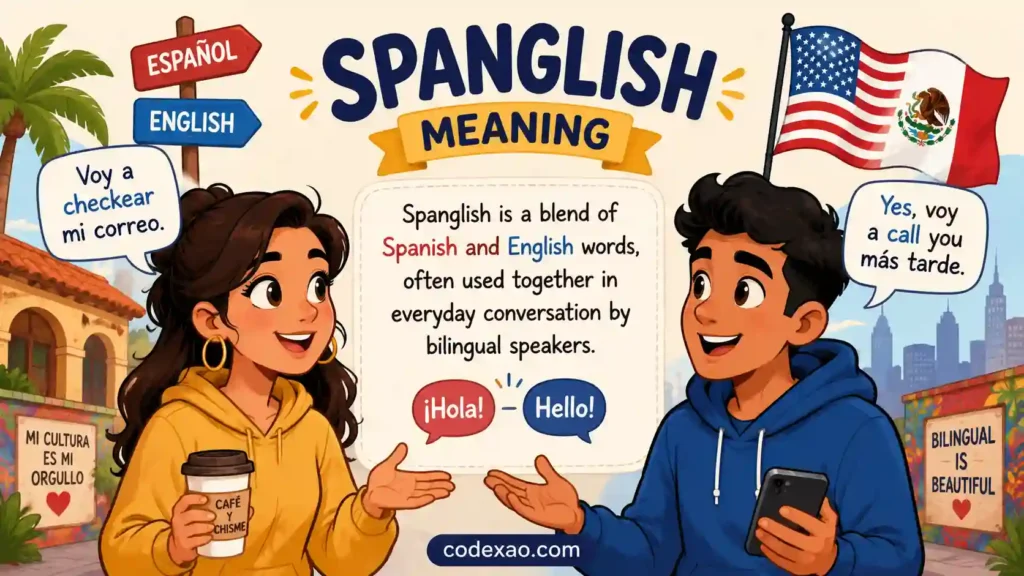
Spanglish meaning refers to blending English and Spanish in the same conversation, sentence, or phrase. It is commonly used by bilingual speakers in casual communication, especially online and in multicultural communities.
Spanglish combines parts of both languages naturally. A person might switch languages mid-sentence or borrow vocabulary from one language while speaking the other.
For example:
- “Estoy busy today.”
- “Textéame later.”
- “Vamos al mall.”
The word itself comes from combining “Spanish” and “English.” Linguists started discussing Spanglish decades ago, but social media pushed it into mainstream internet culture.
It became especially popular in:
- Latino communities in the United States
- Puerto Rico
- Border cities near Mexico
- Bilingual households
- Online gaming and chat spaces
Over time, Spanglish evolved from casual street language into a cultural identity marker. Today, many people proudly use it to reflect both heritage and personality.
Pronunciation Guide
Spanglish is pronounced:
Span-glish
The “Span” sounds like “Spanish,” and “glish” sounds like the end of “English.”
How to Use “Spanglish” Correctly in Texts & Chat
Using Spanglish is less about strict grammar and more about flow, personality, and cultural comfort.
People usually switch languages naturally depending on:
- emotion
- humor
- convenience
- audience
- internet trends
Casual Usage
Spanglish works best in:
- texting
- memes
- social media captions
- gaming chats
- family conversations
- friend groups
Example:
- “Bro, no puedo today. I’m exhausted.”
That sentence feels casual, expressive, and relatable to bilingual speakers.
Platform-Specific Usage
SMS and WhatsApp
People often mix languages quickly and casually.
Example:
- “Llegaste safe?”
Instagram and TikTok
Spanglish appears heavily in captions and memes.
Example:
- “Main character energy pero humilde.”
Discord and Gaming
Gamers mix commands and reactions constantly.
Example:
- “Rush B pero rápido.”
Reddit and X
Users often switch languages for humor or emphasis.
Example:
- “This update está horrible.”
When NOT to Use Spanglish
Spanglish usually does not fit:
- formal business emails
- academic essays
- legal documents
- professional presentations
Using it in the wrong setting can sound unprofessional or confusing.
Formatting Tips
Most people:
- do not capitalize differently
- keep normal punctuation
- pair Spanglish with emojis naturally
Popular emoji pairings:
- 😂
- 💀
- 😭
- 🤌
- 🔥
Example:
- “No puedo with this drama 💀”
Real Conversation Examples Using “Spanglish”
Between Friends
A: “Quieres hang out later?”
B: “Sí, but after dinner.”
This feels casual and natural. The language switch keeps the tone relaxed and friendly.
In a Dating Chat
A: “You looked increíble tonight.”
B: “Stoppp, you’re making me blush 😭”
Here, Spanglish adds flirtiness and emotional warmth.
Family Conversation
Mom: “Clean your room ahora mismo.”
Kid: “I will later, relax.”
Parents in bilingual households use Spanglish constantly, especially when emotional emphasis kicks in.
Work Group Chat
Coworker: “La meeting got moved to 3.”
You: “Perfect, thanks.”
This type of workplace Spanglish appears in relaxed office cultures.
Gaming Chat
Player 1: “Necesitamos backup.”
Player 2: “I’m coming bro.”
Gaming communities mix languages rapidly because speed matters more than grammar.
Common Mistakes & Misunderstandings
Thinking Spanglish Is Bad Grammar
One of the biggest myths is that Spanglish means someone speaks “incorrectly.”
Not true.
Most bilingual speakers switch languages intentionally and fluently.
Assuming Everyone Understands It
Not all Spanish speakers use Spanglish. Some people may feel confused or excluded when too much language mixing happens.
Context matters.
Overusing It Artificially
Trying too hard to sound trendy can feel awkward fast.
Example:
- “Yo literally was like muy shocked.”
That sounds forced instead of natural.
Generational Differences
Gen Z tends to embrace Spanglish proudly online.
Older generations sometimes view it differently and may prefer keeping languages separate.
That cultural gap creates funny misunderstandings in family chats all the time.
Regional Differences
Spanglish in Texas may sound different from Spanglish in New York or Puerto Rico.
Vocabulary changes depending on:
- local slang
- immigration history
- internet culture
- community influences
“Spanglish” Across Different Platforms & Demographics
Gen Z Usage
Gen Z uses Spanglish heavily in:
- memes
- TikTok voiceovers
- reaction videos
- aesthetic captions
It feels expressive, funny, and culturally authentic.
Millennials
Millennials often use lighter Spanglish in:
- texting
- family chats
- casual workplace communication
They usually switch languages more subtly.
Older Generations
Older bilingual speakers may use Spanglish naturally in conversation but less online.
Some also prefer “proper Spanish” or “proper English” depending on the setting.
TikTok and Viral Culture
TikTok massively boosted Spanglish visibility.
Creators use mixed-language humor because it:
- feels relatable
- creates stronger emotional delivery
- reaches bilingual audiences quickly
Common caption style:
- “Me pretending everything está bien.”
Is Spanglish Safe for Work
Usually yes in casual workplaces.
But in formal business settings, it is safer to stick to one language clearly.
Related Slang, Abbreviations & Alternatives
| Term | Meaning |
|---|---|
| Code-switching | Switching between languages naturally |
| Bilingual slang | Informal mixed-language expressions |
| Tex-Mex slang | Regional slang blending English and Spanish |
| Pocho | Informal term for culturally mixed Spanish speakers |
| No sabo kid | Meme term for people with imperfect Spanish |
| Latino slang | General slang used in Latino communities |
| Internet bilingual humor | Online mixed-language jokes |
| Hybrid language | Combination of multiple languages |
| Chicano English | English dialect influenced by Spanish |
| Borrowed words | Words adopted from another language |
You can also explore related topics like:
- Learn more about bilingual slang
- Learn more about texting abbreviations
- Learn more about Gen Z internet language
FAQs:
Is Spanglish officially recognized
Spanglish is culturally recognized and widely studied by linguists, but it is not officially classified as a separate language in most academic systems.
Why is Spanglish so popular online
Social media rewards relatable and expressive communication. Spanglish feels emotional, funny, and authentic to bilingual audiences, especially younger users.
Can non-Spanish speakers understand Spanglish
Sometimes. Basic phrases are easy to follow, but heavy language mixing can confuse people unfamiliar with Spanish vocabulary or cultural references.
Is Spanglish disrespectful to Spanish
No. Most speakers use it naturally as part of their identity and everyday communication. It reflects cultural blending rather than disrespect.
What is the difference between Spanglish and code-switching
Code-switching is the broader act of changing languages during communication. Spanglish specifically refers to mixing English and Spanish together.
Conclusion:
Language online moves fast. Really fast. And Spanglish meaning perfectly reflects how modern communication works today. Flexible. Creative. Emotional. Personal.
People are no longer staying inside strict language boxes, especially on the internet.
Whether it appears in memes, TikTok captions, gaming chats, or family texts, Spanglish has become part of everyday digital culture.
For millions of bilingual speakers, it feels natural because it is natural.
Now the next time someone says “Estoy tired” in a group chat, you’ll instantly get the vibe.
Drop your favorite bilingual slang phrase in the comments below and explore more internet language trends for 2026.

Hi, I’m John Mark, the voice behind codexao.com, where meanings aren’t just explained, they’re simplified for the way people actually talk today.
I’ve always been curious about words, how they change, how they trend, and how a simple phrase can carry completely different meanings depending on context. That curiosity turned into codexao, a space where I break down slang, text abbreviations, and everyday words into clear, easy-to-understand explanations.