Ever watched a movie that wasn’t terrible… but you’d never recommend it? Or eaten food that didn’t wow you but didn’t ruin your day either? That middle-ground feeling is exactly where the word tolerable lives.
Understanding tolerable meaning is surprisingly useful in today’s world of fast texting, subtle sarcasm, and nuanced communication.
Whether you’re chatting with friends, writing professionally, or decoding someone’s tone in a message, this word carries more emotional weight than it seems.
In this guide (updated for 2026), you’ll learn exactly what tolerable means, how people use it in modern conversations, and how to avoid common misunderstandings.
We’ll also break down real-life examples so you can use it naturally, without sounding awkward or overly formal.
What Does “Tolerable” Mean?
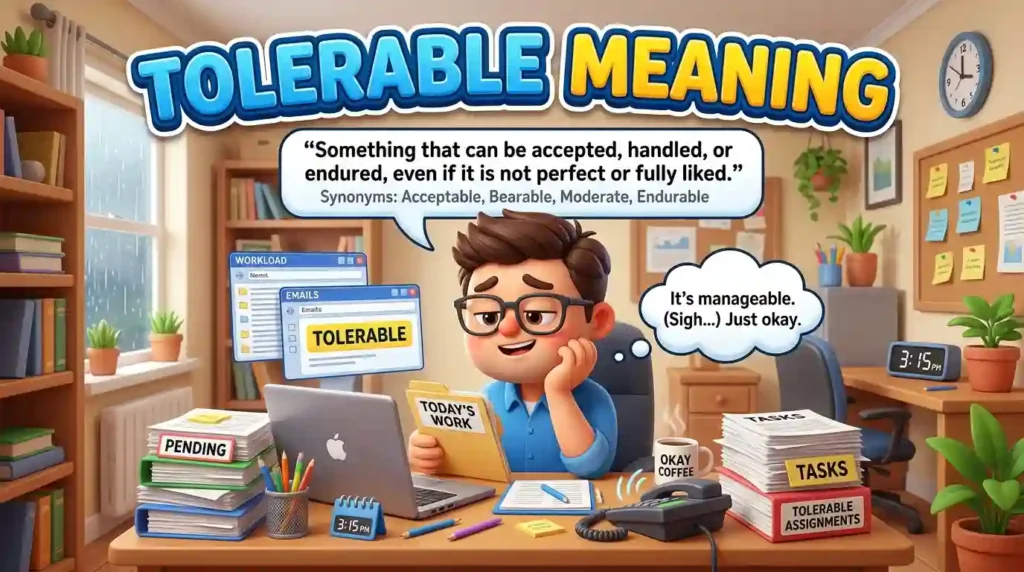
Tolerable means something that is bearable or acceptable, even if it’s not particularly good or enjoyable.
Quick Answer:
Tolerable = okay enough to endure, but not enjoyable.
Origin & Evolution
The word comes from the Latin tolerare, meaning “to endure” or “to bear.” It entered English centuries ago and has stayed surprisingly consistent in meaning.
However, in modern communication, especially online, it has picked up a subtle twist. Today, calling something tolerable often hints at low-key disappointment.
Pronunciation
/ˈtɒl.ər.ə.bəl/ (TOL-er-uh-buhl)
How to Use “Tolerable” Correctly in Texts & Chat
Tone & Context
Tolerable is usually:
- Neutral to slightly negative
- Calm, understated
- Sometimes sarcastic
It’s perfect when you don’t want to be harsh, but also don’t want to be overly positive.
Platform-Specific Usage
- SMS / WhatsApp:
“The food was tolerable.” (Translation: not great) - Instagram / TikTok comments:
Used humorously or sarcastically
“Your outfit is tolerable 😭” - Discord / Gaming chats:
“Ping is tolerable today.” (Playable, but not ideal) - Twitter/X:
Often used in dry humor or critique
When NOT to Use It
Avoid tolerable in:
- Formal praise (e.g., job reviews)
- Important feedback (can sound dismissive)
- Emotional conversations
Formatting Tips
- Lowercase in casual texts: tolerable
- Can pair with emojis:
- 😐 (neutral)
- 😅 (awkward acceptance)
- 🤷 (indifference)
Real Conversation Examples Using “Tolerable”
1. Between Friends
A: “How was the party?”
B: “It was tolerable. Music was kinda bad though.”
Emotion: Mild disappointment, not terrible but forgettable.
2. Dating Scenario
A: “Did you like your date?”
B: “He was tolerable, I guess.”
Emotion: Not impressed, but not a disaster.
3. Family Context
Mom: “How’s your new teacher?”
Teen: “She’s tolerable.”
Emotion: Neutral acceptance, no strong feelings.
4. Work Chat
Colleague: “How’s the new system?”
You: “It’s tolerable for now.”
Emotion: Functional, but needs improvement.
5. Gaming Chat
Player 1: “Lag fixed?”
Player 2: “It’s tolerable now.”
Emotion: Playable, but not perfect.
Common Mistakes & Misunderstandings
1. Thinking It Means “Good”
It doesn’t.
Tolerable ≠ enjoyable. It’s closer to “meh.”
2. Using It as Praise
Saying:
“Your presentation was tolerable”
…might come off as insulting instead of polite.
3. Generational Misunderstandings
- Gen Z: May use it sarcastically
- Older generations: Interpret it literally
This can lead to awkward moments.
4. Cultural Differences
In some cultures, indirect language is polite, so tolerable might seem softer.
In others, it feels blunt or dismissive.
“Tolerable” Across Different Platforms & Demographics
Gen Z Usage
- Often ironic or sarcastic
- Used in memes and comments
- Can mean “barely acceptable”
Millennials
- More literal usage
- Used in reviews or feedback
Workplace vs Social Media
- Workplace: Neutral, careful wording
- Social Media: Casual, sometimes humorous
Is It Safe for Work?
Yes, but use cautiously. It can sound passive-aggressive depending on tone.
Related Slang, Abbreviations & Alternatives
Here are similar expressions you might see:
- “Meh” – Indifferent or unimpressed
- “Mid” – Average, not impressive
- “Okay-ish” – Slightly acceptable
- “Decent” – Mildly positive
- “Bearable” – Similar to tolerable
- “So-so” – Neither good nor bad
- “Not great, not terrible” – Neutral balance
- “Fine” – Context-dependent (can be negative!)
- “Passable” – Just good enough
FAQs:
What does tolerable mean in texting?
In texting, tolerable usually means something is “just okay” or “not that great.” It can also carry a slightly sarcastic tone depending on context and emojis.
Is tolerable rude?
Not directly, but it can feel dismissive. If someone expects praise, calling something tolerable might sound like faint criticism.
Can tolerable be positive?
Technically yes, but it’s rarely strongly positive. It sits in a neutral zone, leaning slightly negative.
What’s a better word than tolerable?
If you want to sound more positive, use:
- “Good”
- “Enjoyable”
- “Decent”
If you want honesty without harshness, tolerable works.
Why do people use tolerable instead of “bad”?
Because it softens criticism. It lets you express dissatisfaction without sounding too harsh or dramatic.
Conclusion:
Tolerable is one of those words that says a lot… without saying too much. It lives in that gray zone between good and bad, perfect for subtle communication.
In modern chats and conversations, understanding tolerable meaning helps you read between the lines.
When someone calls something tolerable, they’re usually not impressed, they’re just not complaining either.
Use it wisely. It can keep your tone polite, but it can also come off as dry or sarcastic if you’re not careful.
Want to sound more natural in conversations? Start noticing how people use words like tolerable, and try it yourself in the right context.
Got a favorite slang word or phrase? Drop it and explore more modern expressions next!

Hi, I’m Isabella Brown, the voice behind Codexao.com, where meanings aren’t just explained, they’re made easy to understand.
I’ve always been fascinated by how words shape the way we think, speak, and connect. But let’s be honest—most definitions out there feel confusing, outdated, or just plain boring.
That’s exactly why I created Codexao. Here, I break down words, slang, and modern expressions into simple, clear meanings you can actually use in real life.