You are reading a menu, and it says the soup comes with an aromatic broth. Sounds lovely. But what does that actually promise? Or maybe you saw a comment online that mentioned being aromatic and you wondered if it meant something else entirely. Fair question.
The aromatic meaning is simple at its core: something with a strong, pleasant smell. Yet the word also shows up in chemistry class, perfume shops, kitchen talk and even online identity conversations, where it gets mixed up with aromantic. One word, four different worlds.
This guide clears up all of it. You will learn the definition, where the word came from, how to use it in real sentences and which mistakes to avoid.
You will also find chat style examples, a table of related words and quick answers to the questions people ask most.
Everything here follows standard dictionary and chemistry sources, so you can trust it whether you are a student, a cook, a curious parent or an English learner.
What Does Aromatic Mean?
Quick Answer: Aromatic means having a noticeable, usually pleasant smell. In chemistry, it also describes molecules built around a stable ring of atoms, like benzene.
That is the whole idea in two lines. Now for the details.
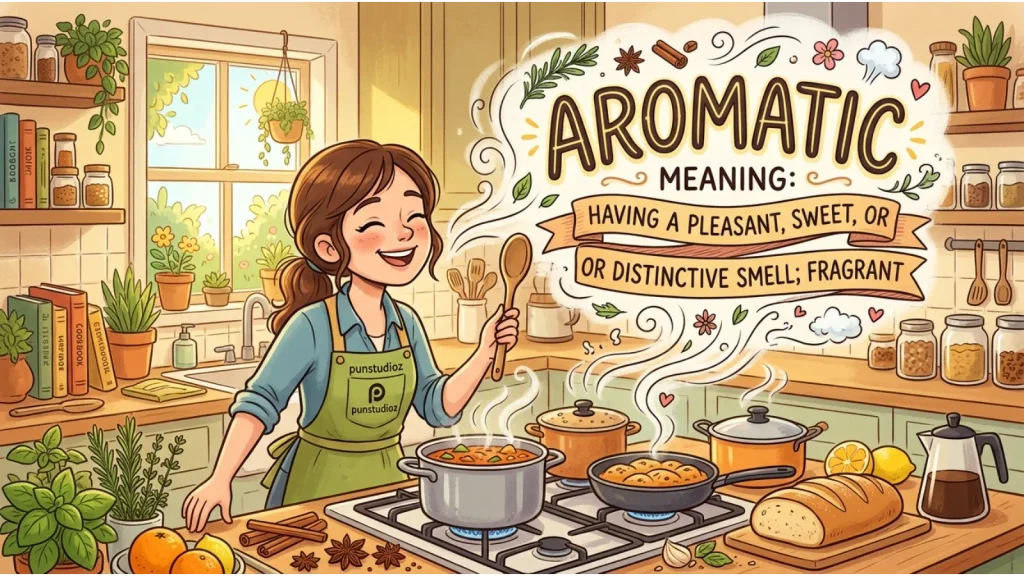
In everyday English, an aromatic thing gives off a scent you can notice from a distance. Fresh coffee is aromatic. So are pine forests, cinnamon sticks and a pot of simmering curry.
Pronunciation: air-uh-MAT-ik. The stress lands on the third syllable, “mat.”
Where the word comes from. It traces back to the Greek word aroma, which meant spice or sweet smelling herb. Latin borrowed it, French passed it along and English adopted it. So the word has always been tied to spices and fragrance.
How the meaning grew. In the 1800s, chemists noticed that many fragrant substances shared a similar molecular design. They started calling that whole family aromatic. Later, scientists learned the smell was not the real point. The ring shaped structure was. Today, some aromatic compounds smell strong, and some barely smell at all.
So you get two meanings that grew from one root:
- General meaning: strong, pleasant scent
- Scientific meaning: a molecule with a special ring structure
Context tells you which one the speaker has in mind.
How to Use Aromatic Correctly in Sentences and Chat
Good news. This word is easy to use once you know the vibe.
Tone and context. Aromatic sounds warm, descriptive and slightly polished. You will hear it in restaurant reviews, cooking blogs, perfume descriptions, gardening tips and science lessons. It is not a slang word, so it works in casual and formal writing.
Where you will see it:
- Food and recipes: aromatic rice, aromatic spices, aromatic broth
- Perfume and candles: an aromatic blend of cedar and vanilla
- Gardening: aromatic herbs like rosemary, thyme and mint
- Science: aromatic compounds, aromatic rings
- Wellness: aromatic oils used in massage or diffusers
Platform tips.
1. On WhatsApp or Instagram DMs, people use it when sharing food photos or describing a cozy scene.
2. On Reddit cooking threads, it pops up constantly.
3. On Discord and Twitter or X, it is rarer and often part of a joke about someone’s very strong coffee.
When to use it and when to skip it.
Use it when you want to sound descriptive and positive. Skip it when the smell is bad. Calling old fish aromatic will confuse people, unless you are being sarcastic.
Formatting tips. Write it in lowercase in normal sentences. Capitalize it only at the start of a sentence or in a title. Pair it with food, flower or coffee emojis if you want a friendly tone in chat.
Real Conversation Examples Using Aromatic
Let us see the word in action. These examples cover different situations.
Example 1: Between friends, talking about food
Sara: Try this rice. It is so aromatic!
Bilal: Wow, I can smell the cardamom from here.
What it shows: Excitement and appreciation. Aromatic works as a compliment for food that smells amazing.
Example 2: In a family group chat
Mom: Dinner is ready. I made aromatic chicken with garlic and herbs.
Ali: Say no more. I am already in the kitchen.
What it shows: Warmth and comfort. The word makes the meal sound homemade and inviting.
Example 3: Work chat at a café
Manager: Customers keep saying the new blend is very aromatic.
Barista: Good. Let us highlight that on the menu.
What it shows: A professional, positive use. Here it helps sell the product.
Example 4: Study group chat, chemistry homework
Hina: Is benzene an aromatic compound?
Zain: Yes. It has that special ring with shared electrons.
What it shows: The scientific meaning. Nobody is talking about smell here at all.
Example 5: Online identity chat, the mix-up
User A: I think I might be aromatic.
User B: Do you mean aromantic? Aromatic is about smell.
User A: Oh no, typo. Yes, aromantic. Thanks!
What it shows: How easily the two words get swapped. A single letter changes the meaning completely.
Example 6: Gaming chat
Player 1: This potion recipe needs aromatic herbs.
Player 2: Got it. Sending you mint and thyme.
What it shows: Casual, practical use in a game setting where crafting items often have descriptive names.
Common Mistakes and Misunderstandings
Even a simple word trips people up. Here are the biggest traps.
Mistake 1: Mixing up aromatic and aromantic.
This is the most common error by far. Aromatic is about scent or chemistry. Aromantic is about romantic attraction, and people often shorten it to aro. Spellcheck will not save you, because both are real words.
Mistake 2: Thinking aromatic always means a good smell.
Mostly it does. But in chemistry, some aromatic compounds are toxic or have a sharp, unpleasant odor. The scientific label is about structure, not fragrance quality.
Mistake 3: Confusing aromatic with aroma.
Aroma is a noun, the smell itself. Aromatic is an adjective, the thing that has the smell. Coffee has an aroma. Coffee is aromatic.
Generational differences.
Older readers usually think of cooking, perfume and herbs first. Younger readers, especially students, may think of chemistry or of the identity term. Neither group is wrong. They just meet the word in different places.
Cultural and regional differences.
1. In South Asian cooking, aromatic often describes basmati rice, whole spices and tempered oils.
2. In British and American food writing, it often describes herbs, broths and roasted dishes.
3. In perfumery, it can mean a fresh, herbal scent family. Same word, slightly different pictures.
How to clarify when someone is confused.
Ask a quick question. “Do you mean aromatic like smell, or aromantic like romance?” That one sentence saves a lot of awkward moments.
Aromatic Across Different Contexts and Age Groups
Since this is not slang, its usage depends more on interest than on age.
Gen Z. You will see the word in study content, science TikTok and cooking videos. It also shows up in typo form, where it replaces aromantic by accident.
Millennials. They use it heavily in food, wellness and home decor talk. Think scented candles, essential oils and coffee culture.
Older generations. They tend to use it in a classic sense, describing herbs, tea, pipe tobacco, spices and garden plants.
Is it formal or informal? It fits both. You can write it in a lab report or a casual text.
Safe for work? Completely. It is a neutral, clean word.
Viral moments. Aromatherapy and scented product trends keep the word visible online. Cooking videos that focus on sizzling garlic, toasted spices and fresh herbs also push it into feeds regularly.
Related Words, Synonyms and Alternatives
Here are the terms that live near aromatic. Use this table to pick the right word for your sentence.
| Term | Simple Meaning |
|---|---|
| Fragrant | Having a sweet or pleasant smell, often flowers |
| Scented | Carrying an added or natural smell |
| Perfumed | Smelling of perfume or strongly of flowers |
| Savory | Salty or spicy in taste, often with a rich smell |
| Pungent | Sharp, strong smell that can be unpleasant |
| Aroma | The smell itself, a noun |
| Aromatherapy | Using scented oils for relaxation |
| Aromantic | A person who feels little or no romantic attraction |
| Aro | Short form of aromantic |
| Odorless | Having no smell at all, the opposite |
Synonyms in casual language: smells amazing, smells so good, mouthwatering, heavenly.
Antonyms in casual language: smells off, stinky, funky, foul, bland.
Want to go deeper? Learn more about aromatherapy basics, or explore our guide to aromantic and aro terms.
FAQs:
What does aromatic mean in simple words?
It means something smells strong and usually pleasant. Think of fresh bread, roasted coffee, basil or incense. In science, the word has a second meaning tied to ring shaped molecules, so context matters.
Is aromatic the same as aromantic?
No. Aromatic describes smells or a type of chemical compound. Aromantic describes a person who feels little or no romantic attraction. The spelling is close, so people mix them up often, especially when typing fast.
What is an example of an aromatic food?
Garlic, ginger, cinnamon, cardamom, fresh basil and biryani rice are all aromatic foods. They release strong scents while cooking, which is a big part of their appeal and why they anchor so many cuisines.
What are aromatic compounds in chemistry?
They are molecules with a flat ring of atoms that share electrons in an unusually stable way. Benzene is the classic example. Many have a noticeable smell, but the ring structure is what defines them.
Is aromatic a positive or negative word?
Mostly positive. It usually suggests a pleasant, inviting scent. For a harsh or unpleasant smell, people choose words like pungent or acrid instead.
Conclusion:
The aromatic meaning comes down to two ideas. In daily life, it describes a strong, pleasant smell.
In chemistry, it describes a stable ring shaped molecule. Same word, different rooms.
Watch out for the classic slip, aromatic versus aromantic. One letter changes everything. If you are ever unsure, ask or double check before you hit send.
Now it is your turn. Drop your favorite aromatic food or scent in the comments below.
And if this guide helped, share it with a friend who keeps mixing up these two words.

Hi, I’m Isabella Brown, the voice behind Codexao.com, where meanings aren’t just explained, they’re made easy to understand.
I’ve always been fascinated by how words shape the way we think, speak, and connect. But let’s be honest—most definitions out there feel confusing, outdated, or just plain boring.
That’s exactly why I created Codexao. Here, I break down words, slang, and modern expressions into simple, clear meanings you can actually use in real life.