Ever heard someone say “He’s a real cat burglar” and wondered what that actually means? It sounds quirky, maybe even harmless, but the phrase carries a very specific, and slightly thrilling, connotation.
In today’s world of fast-moving language and evolving slang, phrases like cat burglar meaning still hold their ground.
Whether you’ve seen it in movies, read it in books, or spotted it in a meme, understanding this term helps you grasp both classic and modern communication better.
This guide breaks everything down in a simple, engaging way.
You’ll learn what a cat burglar is, where the term comes from, how to use it in everyday conversations, and even how it shows up in pop culture today.
What Does “Cat Burglar” Mean?
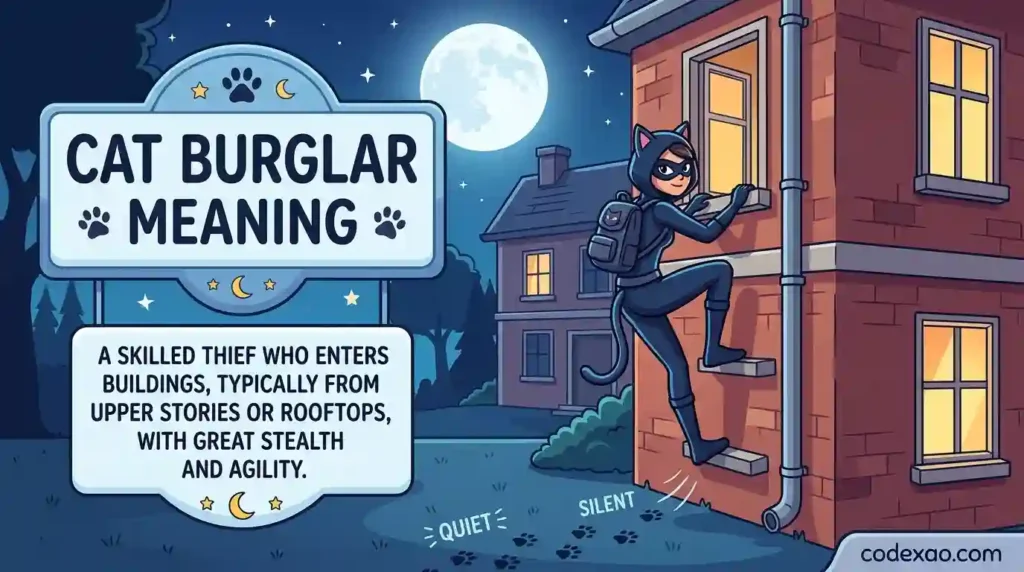
Cat burglar meaning refers to a thief who enters buildings quietly and skillfully, often by climbing walls, rooftops, or windows, much like a cat.
Quick Answer:
A cat burglar is a stealthy thief who uses agility and silence to break into buildings, usually at night, without being noticed.
Origin of the Term
The phrase dates back to the early 1900s. It compares a thief’s movements to a cat, silent, flexible, and able to sneak into tight or elevated spaces.
Originally, it described real criminals who avoided force and relied on finesse instead of violence.
How the Meaning Evolved
Over time, the term expanded beyond literal burglars:
- It can now describe anyone who sneaks around quietly
- Sometimes used humorously for someone taking things unnoticed
- Often appears in movies, comics, and storytelling
Pronunciation Guide
Cat burglar → kat BUR-glər
How to Use “Cat Burglar” Correctly in Texts & Chat
Context & Tone
The phrase is usually:
- Descriptive
- Slightly dramatic or playful
- Informal but widely understood
Where You’ll See It
- WhatsApp & SMS: Casual jokes or storytelling
- Instagram & TikTok: Memes or captions
- Reddit & Discord: Gaming or sneaky strategy references
- Twitter/X: Commentary or humor
When to Use It
✔ Talking about stealth or sneaky behavior
✔ Describing fictional characters
✔ Joking about someone quietly taking something
When NOT to Use It
✘ Formal or professional emails
✘ Legal discussions (use precise terms instead)
✘ Situations requiring clarity over creativity
Formatting Tips
- Usually lowercase unless starting a sentence
- No abbreviation needed
- Can pair with emojis like 🐱 or 🕵️
Real Conversation Examples Using “Cat Burglar”
Between Friends
A: “Who ate the last slice of pizza?”
B: “Not me… must’ve been a cat burglar 😏”
Playful blame, implying someone sneaky
In a Group Chat
Friend 1: “Bro climbed through the window last night 😂”
Friend 2: “Man thinks he’s a cat burglar”
Teasing someone for sneaky behavior
Dating Scenario
A: “You left without saying goodbye?”
B: “I didn’t want to wake you… went full cat burglar mode”
Soft, humorous explanation
Family Context
Mom: “Cookies are missing again.”
Kid: “We’ve got a cat burglar in the house!”
Lighthearted exaggeration
Gaming Chat
Player 1: “How did you get past all guards?”
Player 2: “Stealth build. Total cat burglar vibes.”
Refers to stealth gameplay style
Common Mistakes & Misunderstandings
1. Thinking It Means Any Thief
Not all thieves are cat burglars. The term specifically implies stealth and agility, not force or violence.
2. Taking It Too Literally
Some people assume it involves cats. It doesn’t. The “cat” part is purely metaphorical.
3. Generational Confusion
- Older generations may use it more seriously
- Gen Z might use it jokingly or ironically
4. Cultural Differences
In some regions, the term isn’t commonly used, so it might confuse non-native English speakers.
How to Clarify
If someone doesn’t understand, just say:
“It means a quiet, sneaky thief, like a cat.”
“Cat Burglar” Across Different Platforms & Demographics
Gen Z vs Millennials vs Older Generations
- Gen Z: Uses it humorously or in memes
- Millennials: Recognize it from movies and pop culture
- Older Generations: Use it more literally
Where It’s Trending
- TikTok captions about sneaky behavior
- Instagram memes
- Gaming communities (stealth gameplay)
Formal or Informal?
- Mostly informal
- Acceptable in storytelling
- Not suitable for professional settings
Pop Culture Influence
The phrase gained popularity through:
- Classic crime films
- Comic book characters
- Heist stories
Related Slang, Abbreviations & Alternatives
| Term | Meaning |
|---|---|
| Sneak thief | Someone who steals quietly |
| Pickpocket | Steals from pockets unnoticed |
| Ninja mode | Acting silently and quickly |
| Stealth mode | Moving without being detected |
| Ghosting | Leaving without notice |
| Light-fingered | склонed to stealing |
| Burglar | General term for thief |
| Heist artist | Skilled thief |
| Shadow walker | Fictional stealth character |
| Silent operator | Someone who acts quietly |
FAQs:
What does cat burglar mean in simple terms?
A cat burglar is a thief who sneaks into places quietly and skillfully, often by climbing or avoiding detection. The term highlights stealth rather than force.
Is cat burglar a slang term?
It’s more of an idiomatic expression than modern slang. However, it’s still widely used in casual conversations and pop culture.
Can cat burglar be used as a joke?
Yes, people often use it humorously to describe someone sneaking around or quietly taking something, even in harmless situations.
Is the term offensive?
No, it’s not offensive. It can describe criminal behavior but is often used lightly or metaphorically.
Where did the phrase cat burglar come from?
It originated in the early 20th century, inspired by the quiet and agile movements of cats.
Conclusion:
The cat burglar meaning goes far beyond just “a thief.” It paints avivid picture of someone stealthy, agile, and almost invisible in action.
That’s why it has stayed relevant for over a century.
Today, you’ll hear it in jokes, gaming chats, and storytelling. It’s flexible, expressive, and easy to understand once you know the context.
Next time someone sneaks the last snack or slips out quietly, you know exactly what to call them, a cat burglar.
Got a favorite slang term you want explained next? Drop it and keep exploring the language of the internet.

Hi, I’m Isabella Brown, the voice behind Codexao.com, where meanings aren’t just explained, they’re made easy to understand.
I’ve always been fascinated by how words shape the way we think, speak, and connect. But let’s be honest—most definitions out there feel confusing, outdated, or just plain boring.
That’s exactly why I created Codexao. Here, I break down words, slang, and modern expressions into simple, clear meanings you can actually use in real life.