If you have ever seen the word inducement in a contract, a business email, or even a news headline and paused for a second, you are not alone.
The phrase inducement meaning often confuses readers because it sounds formal, legal, and slightly technical at the same time.
Yet it is actually a simple idea that shows up in everyday business, law, marketing, and negotiations more than you think.
In 2026, understanding words like inducement is more important than ever. From online job offers to digital marketing deals and legal agreements, this term appears in situations where someone is being persuaded or motivated to take an action.
Knowing exactly what it means can help you avoid misunderstandings, scams, or confusion in professional communication.
This guide breaks down inducement meaning in the simplest way possible. You will learn its definition, origin, real life usage, common mistakes, and examples from everyday conversations.
By the end, you will not only understand the term but also know how to use it correctly in context.
WHAT DOES INDUCEMENT MEAN?
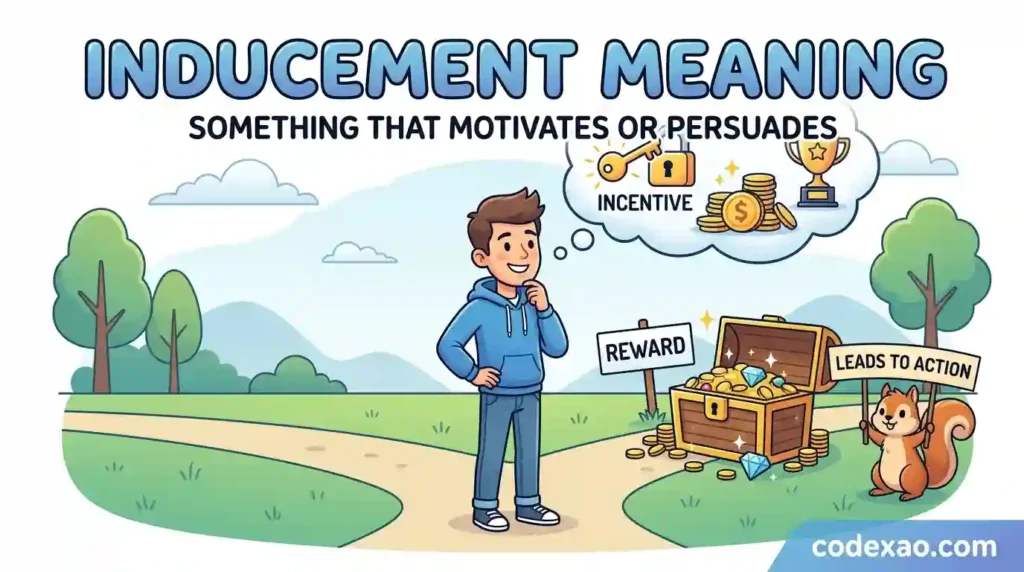
Inducement means something offered or done to persuade someone to take a particular action. It is usually a benefit, incentive, reward, or condition that encourages a decision or behavior.
QUICK ANSWER
Inducement is anything that motivates or persuades a person to do something, especially in legal, business, or formal contexts.
The word originates from the Latin root inducere, which means to lead into or bring about. Over time, it entered legal and business language where it is commonly used to describe incentives offered in contracts, negotiations, or agreements.
Originally, inducement was mostly used in legal discussions about contracts and agreements. Today, it has expanded into marketing, employment offers, financial deals, and even everyday persuasion language.
Pronunciation is simple: in doose ment
EVOLUTION OF MEANING
- Early usage focused on legal persuasion in contracts
- Later used in business incentives and offers
- Modern usage includes marketing rewards and digital promotions
In simple terms, inducement is the reason someone agrees to something.
HOW TO USE INDUCEMENT CORRECTLY IN TEXTS AND CHAT
Although inducement is a formal word, it can appear in professional chats, emails, and business discussions. It is not common in casual texting but still important in certain contexts.
TONE AND CONTEXT
Inducement is typically:
- Formal
- Professional
- Legal or business related
- Neutral in tone
You will rarely see it in casual conversations unless someone is explaining a contract or business deal.
WHERE IT IS USED
- Business emails discussing offers or incentives
- Legal contracts and agreements
- Marketing discussions about promotions
- Financial negotiations
WHEN NOT TO USE IT
Avoid using inducement in:
- Casual chats with friends
- Social media captions
- Informal texting
- Emotional conversations
Instead of inducement, people often say:
- incentive
- reward
- offer
- motivation
FORMATTING STYLE
- Usually written in lowercase unless starting a sentence
- No emojis in formal usage
- Appears in full sentence explanations, not shorthand
REAL CONVERSATION EXAMPLES USING INDUCEMENT
IN BUSINESS EMAIL
Manager: We are offering a signing inducement for new employees joining this quarter
Employee: That sounds interesting, what does it include
Explanation: Here inducement means a bonus or reward offered to encourage joining
IN LEGAL DISCUSSION
Lawyer: The contract was signed without any improper inducement
Client: So everything was done fairly
Explanation: Inducement here means pressure or reward used to influence a decision
IN MARKETING CONTEXT
Marketer: Free shipping is used as an inducement to increase sales
Team member: That should improve conversions
Explanation: Inducement refers to a promotional incentive that encourages buying
IN WORKPLACE CHAT
Colleague: The company added an inducement for overtime shifts
You: That explains why more people are signing up
Explanation: Inducement means extra benefit for taking additional work
IN FINANCIAL TALK
Advisor: Tax inducements are offered for green investments
Investor: That makes clean energy more attractive
Explanation: Inducement refers to financial benefits encouraging investment
COMMON MISTAKES AND MISUNDERSTANDINGS
MISTAKE 1 CONFUSING WITH BRIBERY
Some people think inducement always means something illegal. That is not true. Inducement can be legal or ethical depending on context.
MISTAKE 2 USING IT IN CASUAL CHAT
People sometimes try to use inducement in everyday texting. It sounds unnatural and overly formal.
MISTAKE 3 THINKING IT ONLY MEANS MONEY
Inducement is not always cash. It can be discounts, benefits, perks, or even emotional motivation.
GENERATIONAL CONFUSION
- Older generations associate it with legal contracts
- Younger users rarely use the word unless studying or working in business
- Non native speakers often confuse it with incentive
INDUCEMENT ACROSS DIFFERENT PLATFORMS AND DEMOGRAPHICS
On professional platforms like LinkedIn, inducement appears in discussions about hiring bonuses and business deals.
On social media platforms like Instagram or TikTok, the word is rare unless used in educational content.
In Discord or gaming communities, it may appear in discussions about rewards or in game incentives.
USAGE STYLE
- Gen Z: Rare usage, mostly learning or academic context
- Millennials: Occasional use in work emails
- Professionals: Common in legal and business communication
Inducement is considered formal and not suitable for casual online slang.
RELATED SLANG, ABBREVIATIONS AND ALTERNATIVES
- Incentive meaning reward or motivation to act
- Bonus extra financial reward
- Offer proposal or deal presented
- Perk additional benefit in job or service
- Motivation reason to take action
- Bribe illegal or unethical persuasion
- Discount reduced price to encourage purchase
- Compensation payment or reward for service
- Benefit advantage gained from action
- Reward something given for achievement
These terms are often used instead of inducement in casual language.
FAQs:
WHAT DOES INDUCEMENT MEAN IN SIMPLE WORDS
Inducement means something that encourages or persuades a person to take action. It is often used in business, law, and formal agreements where incentives or benefits are involved.
IS INDUCEMENT THE SAME AS BRIBERY
No. Inducement can be legal and ethical, such as a job bonus or discount. Bribery is illegal and involves unethical influence or corruption.
WHERE IS THE WORD INDUCEMENT COMMONLY USED
It is commonly used in legal contracts, business negotiations, marketing promotions, and financial agreements to describe incentives or motivating factors.
CAN INDUCEMENT BE USED IN CASUAL CONVERSATION
Not really. It sounds too formal for everyday chat. People usually use words like incentive, reward, or offer instead.
WHAT IS AN EXAMPLE OF INDUCEMENT
A company offering a signing bonus to new employees is an example of inducement because it encourages people to accept the job.
CONCLUSION:
Inducement meaning is simple once you break it down. It refers to anything that persuades or encourages someone to take a specific action, especially in formal, business, or legal situations.
While it may sound complex, it is actually just a structured way of describing incentives or motivating factors.
Understanding this term helps you read contracts more clearly, interpret business offers better, and avoid confusion in professional communication.
Whether it is a job bonus, a marketing deal, or a financial incentive, inducement plays a major role in decision making across industries.
If you come across inducement again, you will know it is all about motivation and influence in a formal context.
Explore more slang and meaning guides to level up your understanding of modern and professional language.

Hi, I’m Isabella Brown, the voice behind Codexao.com, where meanings aren’t just explained, they’re made easy to understand.
I’ve always been fascinated by how words shape the way we think, speak, and connect. But let’s be honest—most definitions out there feel confusing, outdated, or just plain boring.
That’s exactly why I created Codexao. Here, I break down words, slang, and modern expressions into simple, clear meanings you can actually use in real life.