Understanding the terrorism meaning is important today because the word is widely used in news, social media, academic discussions, and even casual online conversations.
However, it is often misunderstood or used too loosely, which can lead to confusion or misinformation.
In this guide, we break down the term in simple, human-friendly language so you can clearly understand what it means, how it is used, and why context matters when you see it online or in conversations.
What Does “Terrorism” Mean?
The word terrorism refers to the use of violence or intimidation, especially against civilians, in order to achieve political, ideological, or religious goals.
It is a serious term used in law, politics, international relations, and journalism.
Simple Definition
In everyday language, terrorism means:
The intentional use of fear and violence to influence or control a population or government.
Key Elements of Terrorism
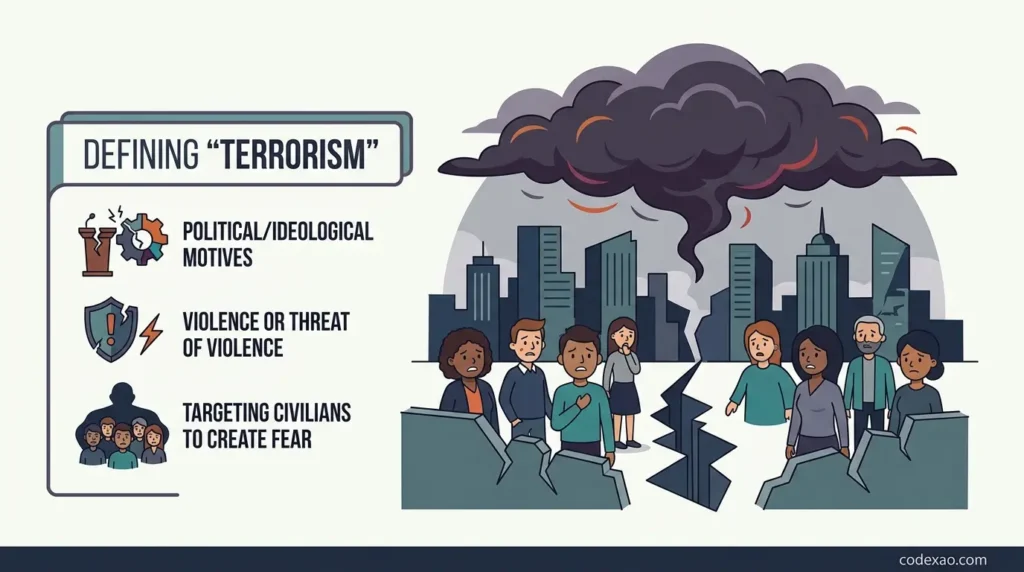
To better understand the meaning, terrorism usually involves:
- Violence or threat of violence
- Targeting civilians or non-combatants
- Political, religious, or ideological motivation
- Intention to spread fear or pressure authorities
- Use of intimidation as a strategy
Origin of the Word
The term “terrorism” comes from the Latin word terrere, meaning “to frighten.” It became widely used during the French Revolution (late 1700s), when the “Reign of Terror” described a period of political violence and fear.
Over time, the meaning expanded globally to describe similar acts in modern contexts.
How Is “Terrorism” Used in Texts, Media, and Conversations?
Unlike internet slang or chat abbreviations, terrorism is not a texting shortcut or casual acronym. It is a formal term used in serious discussions.
However, you may still see it used in different ways online:
1. News & Journalism
- “Authorities are investigating the incident as an act of terrorism.”
- “Global leaders condemned the terrorist attack.”
2. Academic or Educational Context
- “The study analyzes causes of terrorism in modern societies.”
- “Terrorism is a complex global security issue.”
3. Social Media Discussions
People sometimes use the word in posts when discussing world events:
- “Another report of terrorism has shocked the region.”
- “We need global cooperation to prevent terrorism.”
4. Informal or Misused Contexts
Sometimes people misuse the term casually, which can be misleading:
- Calling any violent crime “terrorism” without context
- Using it emotionally in arguments online
This is why understanding the real terrorism meaning is important.
Examples of “Terrorism” in Real-Life Contexts
To make it easier, here are some simple examples of how the term appears in different sentences:
News Report
- “The government increased security measures after the terrorism threat alert.”
Educational Use
- “Terrorism is studied under political science and international relations.”
Social Media Post
- “We should not let terrorism divide communities.”
Discussion Context
- “Experts debate how to define terrorism in international law.”
Common Misunderstandings About Terrorism
Because the word is often used emotionally, people sometimes misunderstand it. Let’s clear up some common confusion:
1. Not All Violence Is Terrorism
A key mistake is assuming every violent act is terrorism. In reality, legal definitions vary by country, and intent matters.
2. It Is Not a Slang Term
Unlike abbreviations such as “LOL” or “BRB,” terrorism is not chat slang or texting shorthand.
3. Context Matters
The same event may be labeled differently depending on legal systems, politics, or investigations.
4. It Is a Sensitive Term
Because it relates to violence and fear, it should be used carefully and accurately.
Related Terms & Concepts You Should Know
If you are researching the terrorism meaning, these related terms will help you understand the topic better:
1. Terrorist
A person who carries out or supports acts of terrorism.
2. Counterterrorism
Actions taken by governments or organizations to prevent or respond to terrorism.
3. Extremism
Holding extreme political or ideological views, sometimes linked to radical actions.
4. Radicalization
The process by which individuals adopt extreme beliefs that may lead to violence.
5. Insurgency
An organized rebellion against authority, sometimes overlapping with terrorism depending on context.
Why Understanding “Terrorism Meaning” Matters Today
In 2026, information spreads faster than ever through social media, news apps, and online platforms. Because of this:
- The term is often used in breaking news headlines
- It can be misunderstood or misused online
- It affects global politics, security, and public perception
Understanding the correct meaning helps you:
- Interpret news more accurately
- Avoid misinformation
- Engage in informed discussions
- Recognize when the term is used correctly or incorrectly
How the Term Is Viewed Globally
Different countries and organizations may define terrorism slightly differently. This can create debate in international law.
Generally, most definitions agree on:
- Use of violence or threat
- Political or ideological motivation
- Targeting civilians or non-combatants
- Intent to create fear
However, disagreements often arise in classification and interpretation.
Quick Summary of Terrorism Meaning
To keep it simple:
- Terrorism = violence or threats used to create fear and achieve political or ideological goals
- It is a serious legal and political term
- It is not slang or casual internet language
- Context is extremely important when interpreting it
FAQs:
1. What is the simple meaning of terrorism?
Terrorism means using violence or threats to create fear and influence governments or societies for political, ideological, or religious goals.
2. Is terrorism a slang word or abbreviation?
No, terrorism is not slang or a texting abbreviation. It is a formal term used in law, politics, and journalism.
3. Where is the term terrorism commonly used?
It is commonly used in news reports, government statements, academic studies, and international discussions.
4. What is the difference between terrorism and violence?
Violence is a general act of physical harm, while terrorism specifically involves intentional fear-based violence for ideological or political purposes.
5. Why is the meaning of terrorism sometimes debated?
Because different countries and organizations define it differently, and political perspectives can influence interpretation.
Conclusion:
The terrorism meaning refers to the use of violence or intimidation to create fear and achieve political, ideological, or religious objectives.
It is a serious and sensitive term that is widely used in global discussions, especially in news and international relations.
Understanding its correct meaning helps you avoid confusion, interpret information more accurately, and stay informed in today’s fast, moving digital world.
While the term is often seen online or in media headlines, it should always be used carefully and in the right context.
Share your favorite text abbreviation or misunderstood word in the comments!

Hi, I’m John Mark, the voice behind codexao.com, where meanings aren’t just explained, they’re simplified for the way people actually talk today.
I’ve always been curious about words, how they change, how they trend, and how a simple phrase can carry completely different meanings depending on context. That curiosity turned into codexao, a space where I break down slang, text abbreviations, and everyday words into clear, easy-to-understand explanations.