Have you ever checked your pulse and noticed it seemed unusually slow? Maybe a fitness tracker showed a heart rate below beats per minute, leaving you wondering if something was wrong.
Understanding bradycardia meaning is important because a slow heart rate can be completely normal for some people and a warning sign for others.
Athletes often have lower resting heart rates, while certain medical conditions can also cause the heart to beat more slowly than expected.
Updated for 2026, this guide explains exactly what bradycardia is, why it happens, common symptoms, treatment options, and when you should seek medical attention.
By the end, you’ll have a clear understanding of whether a slow heart rate is something to celebrate or something to discuss with a healthcare professional.
What Does Bradycardia Mean?
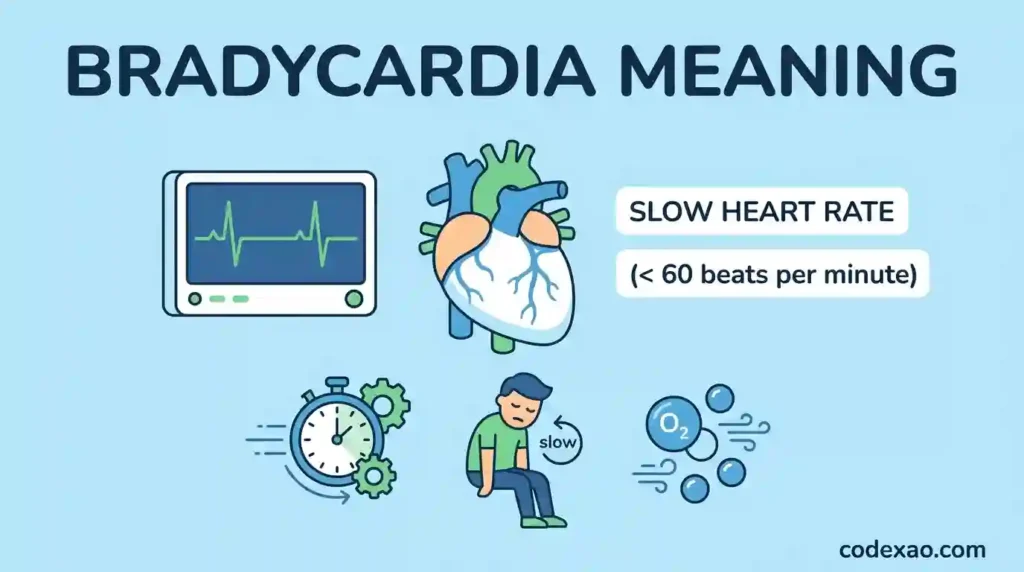
Bradycardia is a medical term used to describe a heart rate that is slower than normal. In most adults, it refers to a resting heart rate below 60 beats per minute.
Quick Answer
Bradycardia means a slow heart rate, usually fewer than 60 beats per minute in adults. It can be normal in healthy individuals or indicate an underlying health issue depending on symptoms and overall health.
Origin of the Term
The word bradycardia comes from Greek roots:
- Brady means slow
- Cardia means heart
Together, the term literally means “slow heart.”
How the Meaning Has Evolved
Historically, bradycardia was viewed mainly as a medical concern. Today, healthcare professionals recognize that many healthy athletes and physically active people naturally have slower resting heart rates without any health problems.
Pronunciation
Bradycardia is pronounced as:
bray-dee-KAR-dee-uh
How Bradycardia Affects the Body
Your heart acts like a pump, delivering oxygen-rich blood throughout the body.
When the heart beats too slowly, it may not pump enough blood to meet the body’s needs. As a result, organs and tissues may receive less oxygen than required.
This reduced blood flow can lead to symptoms such as:
- Fatigue
- Weakness
- Dizziness
- Shortness of breath
- Fainting episodes
However, not everyone with bradycardia experiences symptoms. Some people discover it only during a routine medical examination.
Common Symptoms of Bradycardia
Symptoms vary depending on how slow the heart rate becomes and whether another condition is involved.
Physical Symptoms
- Fatigue
- Low energy
- Weakness
- Exercise intolerance
- Chest discomfort
- Shortness of breath
Neurological Symptoms
- Dizziness
- Lightheadedness
- Confusion
- Memory difficulties
- Fainting
Emergency Symptoms
Seek immediate medical attention if bradycardia occurs alongside:
- Severe chest pain
- Loss of consciousness
- Difficulty breathing
- Sudden confusion
Causes of Bradycardia
Several factors can slow the heart’s natural rhythm.
Age-Related Changes
As people age, changes in the heart’s electrical pathways can increase the risk of bradycardia.
Heart Conditions
Common heart-related causes include:
- Heart attack damage
- Heart failure
- Congenital heart defects
- Coronary artery disease
Medications
Some medications can slow the heart rate, including:
- Beta blockers
- Certain blood pressure medicines
- Some anti-arrhythmic drugs
Sleep Disorders
Sleep apnea is frequently associated with episodes of slow heart rate during sleep.
Electrolyte Imbalances
Low or high levels of minerals such as potassium may affect the heart’s electrical activity.
Thyroid Disorders
An underactive thyroid can slow many body functions, including heart rate.
Types of Bradycardia
Not all slow heart rhythms are the same.
Sinus Bradycardia
This occurs when the heart’s natural pacemaker generates electrical signals more slowly than usual.
It is often seen in:
- Athletes
- Young healthy adults
- People during sleep
Sick Sinus Syndrome
The sinus node does not function properly, causing irregular slow heart rhythms.
Heart Block
Electrical signals struggle to move through the heart correctly, resulting in slower heartbeats.
Heart block can range from mild to severe and sometimes requires a pacemaker.
Real-Life Examples of Bradycardia
Athlete Example
A marathon runner has a resting heart rate of 48 beats per minute but feels healthy and energetic.
What it means: This is often a normal adaptation to cardiovascular fitness.
Older Adult Example
A 75-year-old experiences dizziness and frequent fatigue. Testing reveals a heart rate of 42 beats per minute.
What it means: Medical evaluation is necessary to determine the cause.
Medication Example
A patient starts a new blood pressure medication and notices unusual tiredness.
What it means: The medication may be slowing the heart rate.
Sleep Apnea Example
A person with untreated sleep apnea experiences episodes of nighttime bradycardia.
What it means: Treating the sleep disorder may improve heart rhythm.
Hospital Monitoring Example
A routine ECG reveals bradycardia even though the patient has no symptoms.
What it means: Some cases require observation rather than treatment.
Common Mistakes and Misunderstandings
Assuming Every Slow Heart Rate Is Dangerous
Many healthy individuals naturally have slow resting heart rates.
Ignoring Symptoms
A slow heart rate combined with dizziness, fainting, or fatigue should not be ignored.
Self-Diagnosing With Fitness Trackers
Wearable devices are useful tools, but they cannot replace professional medical evaluation.
Generational Differences
Older adults often associate any slow heart rate with illness, while younger fitness enthusiasts may assume every slow heart rate is healthy. Both assumptions can be incorrect without proper assessment.
Bradycardia Across Different Age Groups
Athletes and Active Adults
Lower resting heart rates are common because the heart becomes more efficient.
Middle-Aged Adults
Bradycardia may be linked to medications, thyroid disorders, or developing heart conditions.
Older Adults
Age-related changes in the heart’s electrical system increase the likelihood of symptomatic bradycardia.
Children
Heart rate standards differ significantly by age. What appears slow for a child may require evaluation.
Diagnosis of Bradycardia
Healthcare providers may use several tests:
Electrocardiogram
An ECG records the heart’s electrical activity.
Holter Monitor
A portable monitor records heart rhythms over 24 hours or longer.
Blood Tests
These can identify thyroid problems, infections, or electrolyte imbalances.
Exercise Stress Testing
Doctors assess how the heart responds during physical activity.
Treatment Options for Bradycardia
Treatment depends on the underlying cause.
Observation
If no symptoms are present, treatment may not be necessary.
Medication Adjustments
A doctor may change medications that contribute to slow heart rates.
Treating Underlying Conditions
Managing thyroid disease, sleep apnea, or heart conditions may resolve bradycardia.
Pacemaker
A pacemaker may be recommended when the heart’s natural electrical system cannot maintain an adequate rate.
Related Medical Terms and Alternatives
| Term | Meaning |
|---|---|
| Tachycardia | Abnormally fast heart rate |
| Arrhythmia | Irregular heartbeat |
| Sinus Rhythm | Normal heart rhythm |
| Heart Block | Delayed electrical conduction |
| Palpitations | Feeling of unusual heartbeats |
| ECG | Electrical recording of the heart |
| Pacemaker | Device that regulates heart rhythm |
| Hypotension | Low blood pressure |
| Cardiology | Medical specialty focused on the heart |
| Syncope | Temporary loss of consciousness |
Learn more about:
- Tachycardia
- Arrhythmia
- ECG interpretation
- Heart block
- Pacemaker therapy
FAQs:
Is a heart rate below 60 always bradycardia?
Technically yes, but it is not always abnormal. Many healthy athletes naturally have heart rates below 60 beats per minute.
Can anxiety cause bradycardia?
Anxiety more commonly increases heart rate. However, certain physiological responses may occasionally slow the heart temporarily.
What heart rate is dangerously low?
The answer varies by person. A very low heart rate accompanied by symptoms such as fainting or chest pain requires immediate medical evaluation.
Can bradycardia go away on its own?
Sometimes. If the cause is temporary, such as medication effects or an illness, the condition may improve once the underlying issue is resolved.
Does bradycardia require a pacemaker?
Not always. Pacemakers are generally reserved for cases where symptoms are significant or the heart’s electrical system is not functioning properly.
Can exercise cause bradycardia?
Regular endurance training can lead to a lower resting heart rate, which is often a sign of improved cardiovascular fitness.
Conclusion:
Understanding bradycardia meaning starts with recognizing that a slow heart rate is not automatically a health problem.
In many healthy people, especially athletes, it can be completely normal.
The key factor is whether symptoms are present. Dizziness, fainting, fatigue, or breathing difficulties may indicate that the heart is not pumping enough blood to meet the body’s needs.
If you notice a consistently slow heart rate or experience concerning symptoms, consult a healthcare professional for proper evaluation.
Knowing what bradycardia means can help you make informed decisions about your heart health and overall well-being.
Explore more medical meaning guides and health terminology resources to expand your understanding of common healthcare terms.

Hi, I’m John Mark, the voice behind codexao.com, where meanings aren’t just explained, they’re simplified for the way people actually talk today.
I’ve always been curious about words, how they change, how they trend, and how a simple phrase can carry completely different meanings depending on context. That curiosity turned into codexao, a space where I break down slang, text abbreviations, and everyday words into clear, easy-to-understand explanations.