Have you ever read a poem, song lyric, or famous quote that sounded smooth and memorable even after reading it just once? That effect is often created by literary techniques that play with sounds.
One of the most powerful yet overlooked techniques is consonance meaning.
Consonance helps writers create rhythm, add emotion, and make phrases stick in the reader’s mind.
Whether you’re a student studying literature, a writer improving your craft, or simply curious about language, understanding consonance can make reading and writing much more enjoyable.
Updated for 2026, this guide explains what consonance means, how it works, where you’ll find it, and how to recognize it instantly.
You’ll also discover real examples, common mistakes, and related literary devices that often get confused with consonance.
What Does Consonance Mean?
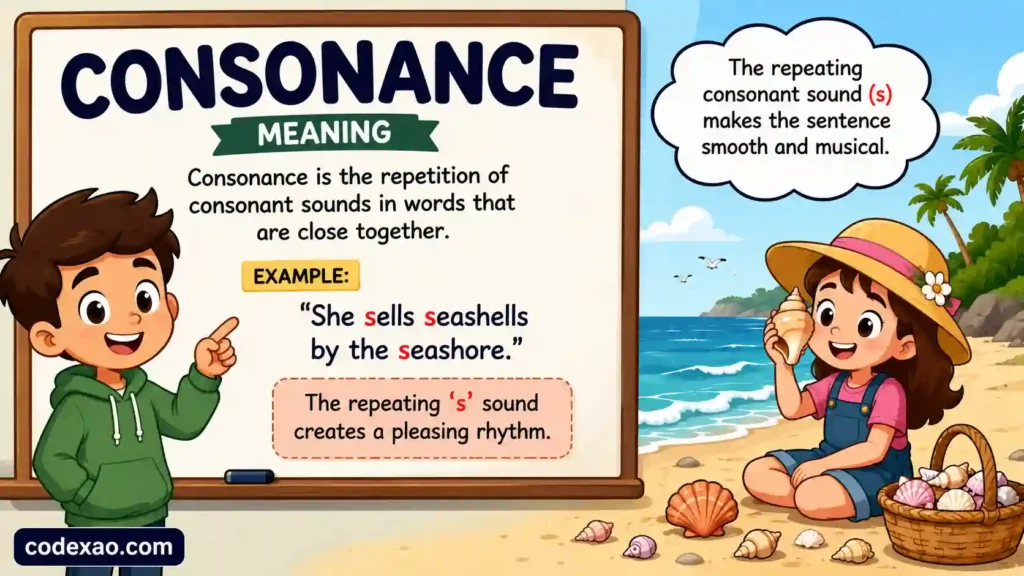
Consonance is a literary device that occurs when similar consonant sounds are repeated in nearby words.
Unlike rhyme, the repeated sounds do not need to appear at the end of words. They can appear at the beginning, middle, or end.
Quick Answer
Consonance meaning is the repetition of consonant sounds in closely placed words to create rhythm, emphasis, and musicality in language.
Origin of the Term
The word consonance comes from the Latin word consonare, which means “to sound together.”
Literary scholars have used the term for centuries when analyzing poetry, speeches, and artistic writing. Over time, consonance became recognized as one of the key sound devices used to enhance language.
Pronunciation
Consonance is pronounced as:
KON-suh-nuhns
How the Meaning Has Evolved
Historically, consonance was mostly discussed in poetry analysis. Today, the concept extends beyond literature. Songwriters, marketers, speechwriters, and content creators use consonance to make language more memorable and impactful.
How to Use Consonance Correctly in Texts and Writing
Consonance is most effective when used naturally. The repeated consonant sounds should enhance the flow without sounding forced.
Common Contexts
Poetry
Poets often use consonance to create rhythm and mood.
Example:
“The lumpy, bumpy road.”
The repeated “m” and “p” sounds create texture and movement.
Creative Writing
Authors use consonance to make descriptions more vivid.
Example:
“The rustling leaves whispered softly.”
Song Lyrics
Musicians frequently rely on consonance because repeated sounds make lyrics easier to remember.
Speeches
Public speakers use consonance to make key points more impactful and persuasive.
When Not to Use It
Avoid excessive consonance in formal reports, academic papers, or technical documents where clarity matters more than style.
Too much repetition can distract readers and make writing feel unnatural.
Formatting Tips
- Use consonance subtly
- Focus on natural word choice
- Combine with imagery for stronger impact
- Avoid overloading every sentence
- Read your writing aloud to test the sound
Real Conversation Examples Using Consonance
Although consonance is mainly a literary device, similar sound patterns appear in everyday language.
Between Friends
Friend 1: That road was really rough and rocky.
Friend 2: Yeah, my bike practically bounced the whole way.
The repeated “r” sounds create a rough auditory effect that matches the topic.
In a Family Conversation
Parent: Did you hear the pitter patter outside?
Child: The rain started again.
The repeated “t” sounds imitate rainfall.
In Dating Messages
Person A: Your smile makes every moment magical.
Person B: That’s sweet.
The repeated “m” sounds create a softer emotional tone.
In a Work Chat
Manager: Let’s focus on smart, steady progress.
Employee: Agreed.
The repeated “s” sounds reinforce the message.
In Gaming
Player 1: That quick strike was nonsensical.
Player 2: Totally changed the match.
The repeated “k” sounds create energy and intensity.
Common Mistakes and Misunderstandings
Many people confuse consonance with other literary devices.
Mistake 1: Confusing Consonance with Alliteration
Alliteration repeats sounds at the beginning of words.
Example:
“Wild winds whistle.”
Consonance can appear anywhere within words.
Example:
“Blank and think.”
Mistake 2: Confusing Consonance with Assonance
Assonance involves repeated vowel sounds.
Example:
“Light my fire.”
Consonance involves repeated consonant sounds.
Mistake 3: Assuming Every Repeated Sound Is Consonance
Not all repeated sounds qualify.
The repetition should be noticeable and intentional enough to create a stylistic effect.
Generational Differences
Students and literature enthusiasts often recognize consonance immediately.
Older readers who haven’t studied literary terms recently may mistake it for rhyme or alliteration.
How to Clarify It
A simple explanation works best:
“Consonance is repeated consonant sounds, while alliteration repeats sounds specifically at the beginning of words.”
Consonance Across Different Platforms and Demographics
Consonance appears almost everywhere language is used creatively.
Students
Students encounter consonance in literature classes, poetry analysis, and language arts assignments.
Writers
Novelists, bloggers, and copywriters use consonance to improve readability and engagement.
Songwriters
Many popular songs use consonance to create catchy lyrics and memorable hooks.
Social Media Creators
TikTok captions, Instagram quotes, and viral posts often use sound repetition to boost memorability.
Marketing Professionals
Brands frequently use consonance in slogans because people remember rhythmic phrases more easily.
Is It Formal or Informal
Consonance itself is neither formal nor informal.
It can appear in:
- Poetry
- Advertising
- Speeches
- Literature
- Everyday conversation
- Social media content
Related Slang, Abbreviations and Alternatives
While consonance is a literary term rather than slang, several related concepts help readers understand sound-based writing techniques.
| Term | Meaning |
|---|---|
| Alliteration | Repetition of beginning consonant sounds |
| Assonance | Repetition of vowel sounds |
| Rhyme | Matching ending sounds |
| Onomatopoeia | Words that imitate sounds |
| Rhythm | Pattern of sounds and beats |
| Meter | Structured rhythm in poetry |
| Repetition | Reusing words or sounds |
| Euphony | Pleasant sounding language |
| Cacophony | Harsh sounding language |
| Figurative Language | Creative language beyond literal meaning |
Related reading opportunities:
- Learn more about alliteration
- Explore assonance examples
- Understand figurative language
- Discover poetic devices
- Study rhyme schemes
FAQs:
What is consonance in simple terms?
Consonance is the repetition of consonant sounds in nearby words. Writers use it to create rhythm, improve flow, and make language more memorable.
What is a famous example of consonance?
One well-known example is “pitter patter.” The repeated consonant sounds create a musical effect that mimics the sound of light rain.
Is consonance the same as alliteration?
No. Alliteration repeats consonant sounds at the beginning of words, while consonance allows those repeated sounds to appear anywhere within words.
Why is consonance important in poetry?
Consonance adds rhythm, mood, and musicality. It helps poems sound smoother and makes important lines more memorable for readers.
Can consonance appear in everyday speech?
Yes. Many common expressions, brand slogans, and casual conversations naturally contain consonance without people realizing it.
How do I identify consonance quickly?
Listen for repeated consonant sounds in nearby words. Reading sentences aloud often makes consonance easier to recognize.
Conclusion:
Understanding consonance meaning opens the door to a deeper appreciation of language. It’s one of those literary techniques that quietly shapes how words sound and feel.
From poetry and song lyrics to speeches and marketing slogans, consonance helps create rhythm, emphasis, and memorability.
Once you know what to listen for, you’ll start noticing it everywhere.
The next time you read a poem or hear a catchy phrase, pay attention to repeated consonant sounds. Chances are, consonance is doing more work than you realized.
What is your favorite literary device? Explore more language and meaning guides to strengthen your understanding of how words create powerful effects.

Hi, I’m John Mark, the voice behind codexao.com, where meanings aren’t just explained, they’re simplified for the way people actually talk today.
I’ve always been curious about words, how they change, how they trend, and how a simple phrase can carry completely different meanings depending on context. That curiosity turned into codexao, a space where I break down slang, text abbreviations, and everyday words into clear, easy-to-understand explanations.