Ever watched a crime show where the detective casually says, “The body is already in rigor mortis”? Most people nod along without fully knowing what it means. That’s where things get interesting.
The rigor mortis meaning has become surprisingly common in pop culture, medical discussions, forensic documentaries, and even internet memes.
Whether you heard it in a Netflix thriller, a biology class, or a dark humor TikTok comment section, understanding the term helps you follow conversations more confidently.
Updated for 2026, this guide breaks down everything in simple language.
You’ll learn the exact definition, where the term came from, how it’s used in real life, and why people sometimes misuse it online.
We’ll also cover examples, common misunderstandings, related terms, and modern internet usage.
If the phrase ever sounded confusing or overly scientific, don’t worry. You’re about to understand it like a pro.
What Does “Rigor Mortis” Mean?
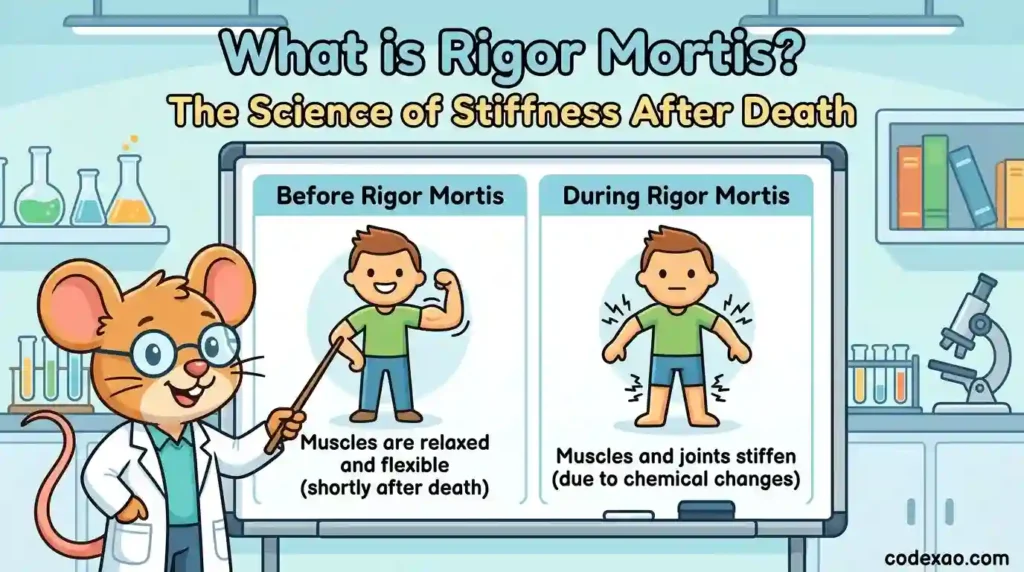
The term rigor mortis refers to the stiffening of muscles after death. It happens because the body stops producing energy, causing muscles to lock into place temporarily.
Quick Answer
Rigor mortis means muscle stiffness that occurs after death due to natural chemical changes in the body.
The phrase comes from Latin.
- Rigor means stiffness
- Mortis means of death
Put together, it literally translates to “stiffness of death.”
Origin and History
Scientists and medical professionals have used the term for centuries. It became widely recognized through forensic science and crime investigations. In modern culture, TV shows and true-crime podcasts pushed the phrase into everyday conversations.
Back in older medical texts, rigor mortis was mainly discussed in anatomy and postmortem studies. Today, you’ll hear it in everything from detective dramas to meme culture.
Pronunciation Guide
RIG-er MOR-tis
It sounds formal, but most English speakers pronounce it casually in conversation.
How the Meaning Evolved
Originally, rigor mortis was strictly a scientific term. Over time, people began using it metaphorically online.
For example:
- “I’m so tired my legs are in rigor mortis.”
- “This old laptop has rigor mortis.”
These uses are exaggerated jokes rather than medically correct statements.
How to Use “Rigor Mortis” Correctly in Texts and Chat
Unlike internet abbreviations such as LOL or BRB, rigor mortis is not casual slang by default. It’s mostly used in:
- Medical discussions
- Crime documentaries
- Dark humor jokes
- Horror content
- Internet memes
Correct Contexts
You can use the phrase when discussing:
- Forensic science
- Biology
- Human anatomy
- Crime stories
- Horror fiction
Example:
“The detective estimated the time of death using rigor mortis.”
Casual Internet Usage
Online, younger users sometimes use it dramatically to describe stiffness or exhaustion.
Example:
“After leg day, I woke up in full rigor mortis.”
The speaker obviously isn’t dead. They’re joking about sore muscles.
Platform-Specific Usage
SMS and WhatsApp
Usually appears in dark humor or dramatic jokes.
Instagram and TikTok
Common in horror edits, true crime clips, and meme captions.
Used seriously in forensic discussions and casually in dark comedy threads.
Discord
Gamers may jokingly say:
“My hands got rigor mortis after that 8-hour grind.”
X formerly Twitter
Often appears during reactions to crime documentaries or trending mysteries.
When NOT to Use It
Avoid using rigor mortis:
- In professional business emails
- Around sensitive grieving situations
- In formal academic writing without context
- As a joke near someone affected by loss
Dark humor works online because audiences understand the tone. Real-life situations are different.
Formatting Tips
- Usually written in lowercase unless starting a sentence
- No abbreviation exists for it
- Often paired with skull emojis in memes 💀
Real Conversation Examples Using “Rigor Mortis”
Between Friends
Alex: “Why are you walking like a robot?”
Sam: “Gym destroyed my legs. I’ve got rigor mortis.”
Meaning: Sam jokingly compares muscle soreness to post-death stiffness.
In a Crime Documentary Discussion
Maya: “How did they know when the victim died?”
Chris: “The investigators studied rigor mortis.”
Meaning: The term is used correctly in a forensic context.
In a Gaming Chat
Player 1: “You still online?”
Player 2: “Barely. My wrists are entering rigor mortis.”
Meaning: Dramatic exaggeration after gaming for too long.
Family Conversation
Dad: “Why are you lying on the couch like that?”
Teen: “Because school gave me emotional rigor mortis.”
Meaning: Humorous exaggeration of exhaustion.
Horror Movie Discussion
Emma: “That movie was creepy.”
Noah: “The rigor mortis scene made it worse.”
Meaning: Used literally in a horror-related conversation.
Common Mistakes and Misunderstandings
Even though the phrase sounds familiar, people often misuse it.
Confusing It with Decomposition
Rigor mortis is not the same thing as body decay.
Rigor mortis specifically refers to muscle stiffening after death. Decomposition happens later as the body naturally breaks down.
Thinking It Lasts Forever
Some people assume rigor mortis permanently stiffens the body. That’s incorrect.
The stiffness eventually fades as tissues begin decomposing.
Using It in Insensitive Situations
Dark humor online can blur boundaries. Saying “rigor mortis” around grieving families or serious medical situations may come across as disrespectful.
Generational Differences
Younger internet users may use the term jokingly. Older generations usually associate it strictly with death or forensic science.
That difference can lead to awkward misunderstandings.
Regional and Cultural Differences
In English-speaking countries, the term is widely recognized thanks to crime media. In some cultures, however, people may not know the phrase unless they studied biology or medicine.
“Rigor Mortis” Across Different Platforms and Demographics
Gen Z Usage
Gen Z often uses rigor mortis sarcastically or dramatically online.
Examples:
- “Homework gave me rigor mortis.”
- “I sat too long and entered rigor mortis mode.”
It’s usually ironic humor.
Millennials
Millennials mostly recognize the phrase from:
- Crime dramas
- Medical shows
- CSI-style television
- Internet forums
They tend to use it more accurately.
Older Generations
Older adults generally use the term only in medical or forensic contexts.
They may find meme usage strange or overly dark.
TikTok and Instagram
True crime creators frequently mention rigor mortis when explaining investigations.
Meanwhile, meme creators use it in exaggerated reaction posts.
Is It Formal or Informal
The term itself is formal and scientific.
The way people use it online can become informal or humorous depending on context.
Is It Safe for Work
Usually yes in educational discussions.
However, joking references about death may not fit every workplace environment.
Related Slang, Abbreviations and Alternatives
| Term | Meaning |
|---|---|
| Dead tired | Extremely exhausted |
| Burned out | Mentally or physically drained |
| Zombie mode | Functioning while exhausted |
| KO | Knocked out or unconscious |
| Exhausted | Completely worn out |
| Stiff as a board | Very physically stiff |
| Brain dead | Mentally exhausted |
| Wiped out | Totally tired |
| Fatigued | Lacking energy |
| Crashed | Suddenly became exhausted |
You could also explore related expressions like:
- “dead inside”
- “running on fumes”
- “sleep-deprived zombie”
These phrases carry a similar dramatic tone without the forensic meaning.
FAQs:
What does rigor mortis literally mean
The phrase literally translates from Latin to “stiffness of death.” It describes muscle stiffening that occurs after death due to chemical changes inside the body.
How quickly does rigor mortis happen
Rigor mortis usually begins within a few hours after death. Environmental conditions like temperature can affect how quickly it develops.
Why do detectives mention rigor mortis
Investigators use rigor mortis to estimate the approximate time of death. It’s one of several forensic clues examined during investigations.
Is rigor mortis used as slang online
Yes. Some internet users jokingly use the phrase to describe extreme tiredness, soreness, or stiffness after physical activity.
Can rigor mortis happen while alive
No. True rigor mortis only happens after death. Muscle stiffness during life has completely different medical causes.
Why is rigor mortis so common in crime shows
Crime dramas use the term because it sounds scientific and helps explain forensic timelines. Shows like detective series made the phrase familiar to mainstream audiences.
Conclusion:
The rigor mortis meaning is actually pretty simple once you strip away the intimidating Latin words.
It refers to the temporary stiffening of muscles after death caused by natural chemical changes in the body.
What started as a scientific and forensic term has now crossed into internet culture, memes, gaming chats, and dramatic online humor.
Context matters, though. A joke between friends lands differently than a real-world medical conversation.
Now when someone mentions rigor mortis in a crime documentary or TikTok comment, you’ll know exactly what they mean and why the phrase became so recognizable.
Got another strange internet phrase or slang term you want decoded? Drop it in the comments and keep exploring the wild world of digital language.

Hi, I’m Isabella Brown, the voice behind Codexao.com, where meanings aren’t just explained, they’re made easy to understand.
I’ve always been fascinated by how words shape the way we think, speak, and connect. But let’s be honest—most definitions out there feel confusing, outdated, or just plain boring.
That’s exactly why I created Codexao. Here, I break down words, slang, and modern expressions into simple, clear meanings you can actually use in real life.