Ever heard the word vassal in a fantasy game, medieval movie, or history class and wondered what it actually means? You are not alone.
The term sounds ancient, dramatic, and a little mysterious, but it still pops up everywhere online today.
From political debates on social media to gaming communities on Discord, people continue using the word in ways that go far beyond castles and kings.
Understanding the vassal meaning is more useful than you might think. It helps explain how power, loyalty, and influence worked in medieval times and why the term still carries weight in modern conversations.
In some cases, calling someone a vassal is just playful humor. In others, it can sound sharp, sarcastic, or even insulting.
By the end, you’ll know:
- What vassal actually means
- Where the word came from
- How people use it today
- Common misunderstandings
- Related slang and historical terms
What Does “Vassal” Mean?
Quick Answer
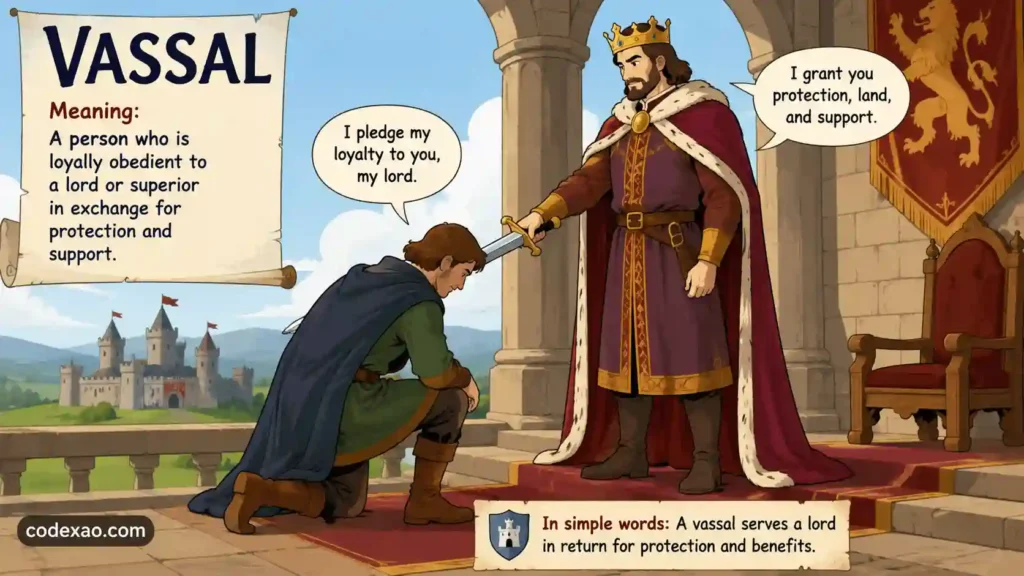
A vassal is a person who serves or supports a more powerful ruler or leader in exchange for protection, land, status, or benefits.
Historically, the word comes from the medieval feudal system. A king or lord would give land to a noble or knight, and in return, that person promised loyalty and military service.
In modern English, the word often carries a negative tone. Calling someone a “vassal” today can imply they blindly follow a stronger person, company, or country.
Origin of the Word
The word traces back to medieval Europe and comes from the Latin word vassus, meaning servant or subordinate.
It became popular during the feudal era between the 9th and 15th centuries. Back then, society depended on loyalty agreements between rulers and nobles.
A vassal would:
- Swear loyalty to a lord
- Receive land called a fief
- Offer military support
- Provide political backing
Over time, the word evolved beyond history books.
Now you’ll hear it in:
- Political commentary
- Fantasy novels
- Video games
- Online debates
- Historical memes
Pronunciation Guide
Vassal is pronounced:
VAS-uhl
The first syllable sounds like “mass.”
How to Use “Vassal” Correctly in Texts and Chat
The word isn’t everyday slang like “LOL” or “BRB,” but it appears often in online discussions about power dynamics, history, and gaming.
Common Tone and Context
People usually use vassal in:
- Historical discussions
- Sarcastic political comments
- Fantasy roleplay
- Gaming communities
- Debates about influence or control
The tone can be:
- Serious
- Dramatic
- Humorous
- Insulting
- Satirical
Platform-Specific Usage
SMS and WhatsApp
Rare, but possible in jokes.
Example:
“Bro acts like the boss’s vassal at work.”
Instagram and TikTok
Often used in memes or political commentary.
Example:
“That country is basically a vassal state.”
Discord and Gaming Chats
Very common in strategy games and fantasy servers.
Example:
“I made three kingdoms my vassals.”
Used heavily in history, politics, and gaming communities.
When NOT to Use It
Avoid using vassal in:
- Professional emails
- Formal workplace communication
- Academic writing without context
- Sensitive political discussions unless you understand the implications
Calling someone a vassal can sound insulting or overly dramatic.
Formatting Tips
People usually write it in lowercase:
- vassal
Common emoji pairings:
- 👑
- ⚔️
- 🏰
- 🤴
Real Conversation Examples Using “Vassal”
Between Friends
Alex: “You always agree with Jake.”
Ryan: “Yeah because he buys the pizza.”
Alex: “So basically you’re his vassal.”
This jokingly suggests Ryan follows Jake for rewards.
In a Gaming Chat
Player 1: “I conquered the north kingdom.”
Player 2: “Did you destroy them?”
Player 1: “Nah, made them my vassal instead.”
Here, the word reflects classic strategy game mechanics.
In a Family Conversation
Dad: “Why does your little brother copy everything you do?”
Sister: “He’s basically my tiny vassal.”
The speaker humorously compares sibling behavior to medieval loyalty.
In Dating Talk
Mia: “He replies instantly every single time.”
Sara: “Girl, that man is your loyal vassal.”
This exaggerates devotion in a playful way.
In a Work Chat
Coworker: “The manager has favorites again.”
Employee: “Yep. His loyal vassals got promoted.”
This carries a sarcastic and slightly negative tone.
Common Mistakes and Misunderstandings
Confusing Vassal With Servant
A servant works for someone. A vassal had status, land, and political importance.
Not all vassals were poor or powerless. Some were wealthy nobles.
Assuming It Only Applies to History
A lot of people think the word belongs only in medieval textbooks.
Not true.
Modern speakers use it metaphorically all the time.
Example:
“That company became a vassal of a larger corporation.”
Using It as a Compliment
Be careful here.
Calling someone a vassal usually implies dependence or submission. Most people won’t see it as praise.
Generational Differences
Older generations may recognize the word mainly from history lessons.
Gen Z and younger Millennials often know it from:
- Fantasy games
- Anime
- Political memes
- TikTok history edits
Regional and Cultural Usage
In Western media, the term is tied strongly to European feudal history.
In gaming culture worldwide, though, “vassal” often just means a controlled ally or subordinate faction.
“Vassal” Across Different Platforms and Demographics
Gen Z Usage
Gen Z often uses the term ironically.
Example:
“I’d become a coffee shop vassal for free WiFi.”
The humor comes from exaggerating loyalty or dependence.
Millennials
Millennials commonly encounter the word through:
- Fantasy franchises
- RPG games
- Historical dramas
- Strategy games
Older Generations
Older audiences usually associate the term with:
- Medieval Europe
- School history lessons
- Feudalism
TikTok and Meme Culture
History creators and gaming influencers helped revive the term.
You’ll see phrases like:
- “Corporate vassal”
- “Internet vassal”
- “Kingdom vassal”
- “Emotional vassal”
Is It Formal or Informal
The word itself is formal English, but modern usage is often casual or sarcastic.
It is generally safe for work in historical contexts.
In workplace jokes or political discussions, though, it may sound aggressive.
Related Slang, Abbreviations and Alternatives
| Term | Meaning |
|---|---|
| Feudalism | Medieval social system based on land and loyalty |
| Serf | A laborer bound to land |
| Knight | Warrior serving a lord |
| Subject | Person under a ruler’s authority |
| Minion | Informal word for loyal follower |
| Puppet state | Country controlled by another power |
| Loyalist | Strong supporter of a leader or cause |
| Follower | Someone who supports or imitates another |
| Underling | Lower-ranking subordinate |
| Retainer | Historical attendant serving a noble |
You could also explore related terms like:
- “feudal system meaning”
- “serf meaning”
- “knight meaning”
- “loyalist meaning”
Synonyms
- subordinate
- follower
- dependent
- supporter
Antonyms
- ruler
- leader
- master
- sovereign
FAQs:
What does vassal mean in simple words
A vassal is someone who serves or supports a more powerful person in exchange for protection, rewards, or benefits. Historically, this happened in medieval Europe.
Is vassal a bad word
Not always. In history, it was a normal social role. In modern conversation, though, it can sound insulting if used to suggest weakness or blind loyalty.
What is a vassal state
A vassal state is a smaller country controlled or heavily influenced by a stronger nation while still appearing partly independent.
Can vassal be used in gaming
Absolutely. Many strategy and fantasy games use the term for kingdoms or factions controlled by another ruler.
What is the difference between a vassal and a knight
A knight was usually a warrior. A vassal was anyone who pledged loyalty to a lord. Some knights were also vassals.
Why is the word trending again
Fantasy entertainment, gaming culture, political memes, and TikTok history creators brought the term back into popular online conversation.
Conclusion:
The vassal meaning started in medieval Europe, but the word still thrives online today.
From fantasy games to sarcastic memes, it remains a powerful way to describe loyalty, dependence, or control.
What makes the term interesting is how flexible it has become. One minute it appears in a history documentary.
The next, someone is joking about becoming a “vassal” for free snacks at work.
Language evolves fast online, and old words often return with fresh meanings. Vassal is a perfect example of that.
Got a favorite old-school word making a comeback online? Drop it in the comments and explore more modern slang guides next.

Hi, I’m Isabella Brown, the voice behind Codexao.com, where meanings aren’t just explained, they’re made easy to understand.
I’ve always been fascinated by how words shape the way we think, speak, and connect. But let’s be honest—most definitions out there feel confusing, outdated, or just plain boring.
That’s exactly why I created Codexao. Here, I break down words, slang, and modern expressions into simple, clear meanings you can actually use in real life.