Ever seen someone called the “kingpin” of a friend group, gaming squad, or business empire and wondered what it actually means?
You are not alone. The term has exploded across social media, memes, movies, gaming communities, and even business conversations.
From crime dramas to TikTok captions, kingpin meaning has evolved way beyond its original definition.
Today, people use it to describe anyone who seems to run the show.
Maybe it is the friend who organizes everything, the gamer carrying the team, or the entrepreneur quietly making major moves online.
This guide breaks down exactly what kingpin means, where it came from, how people use it in texting and slang, and the biggest mistakes people make when using it.
You will also see real chat examples, platform-specific usage, and related slang terms that are trending right now.
If you have ever been confused by the word “kingpin,” this guide clears it up fast.
What Does “Kingpin” Mean?
Quick Answer:
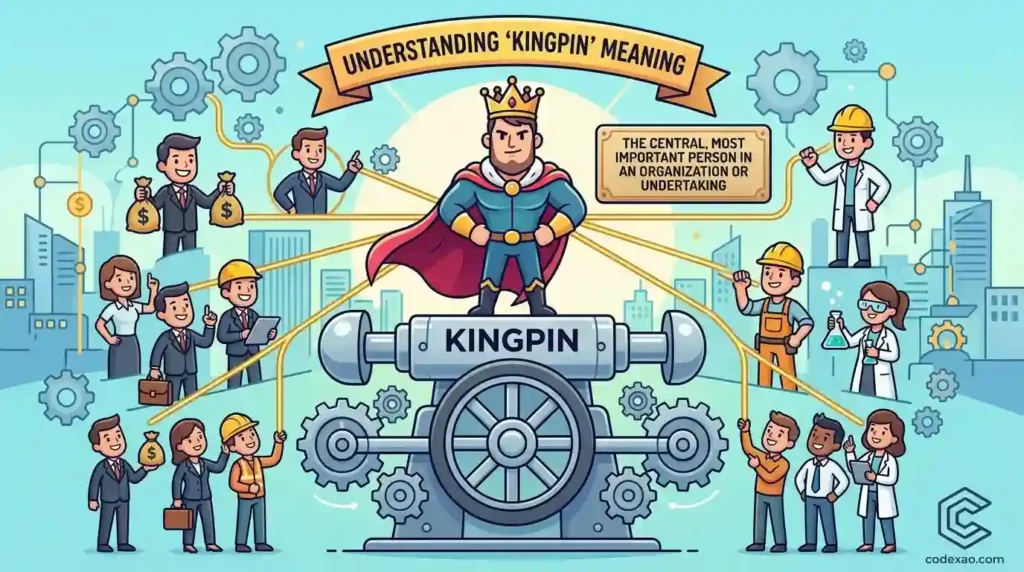
A kingpin is the most powerful, important, or influential person in a group, organization, or situation.
The word originally came from bowling. The “kingpin” was the central pin that held the entire setup together. Knock it down, and everything else falls.
Over time, the meaning shifted into everyday language. Now, calling someone a kingpin usually means they are:
- In control
- Highly respected
- Influential
- Running things behind the scenes
Sometimes the word has a positive vibe. Other times, it sounds shady or criminal depending on the context.
Origin of Kingpin
The term became especially popular through crime movies, TV shows, and comic books. Organized crime leaders were often labeled “drug kingpins” or “crime kingpins.”
Then internet culture grabbed it and softened the meaning. Gen Z and Millennials now use it more casually online.
For example:
- “She’s the kingpin of our project team.”
- “Bro is the kingpin of fantasy football.”
Pronunciation Guide
Kingpin is pronounced:
king-pin
Very straightforward. No hidden tricks there.
How to Use “Kingpin” Correctly in Texts and Chat
The beauty of kingpin is that it works in tons of situations.
Casual Usage
Most people use kingpin casually to hype someone up.
Examples:
- “You’re the kingpin of this server.”
- “Dad is the kingpin of backyard BBQs.”
It usually carries admiration, humor, or respect.
Tone and Emotion
Depending on context, kingpin can sound:
- Respectful
- Funny
- Sarcastic
- Intimidating
- Dramatic
That flexibility is why it keeps trending online.
Platform-Specific Usage
SMS and WhatsApp
Usually playful or complimentary.
Example:
- “Sarah’s the kingpin of vacation planning.”
Instagram and TikTok
Often used in captions or meme culture.
Example:
- “The kingpin of late-night snacks.”
Discord and Gaming
Used for dominant players or group leaders.
Example:
- “Jake is the kingpin of ranked matches.”
Reddit and X
More sarcastic or analytical.
Example:
- “This dude became the kingpin of crypto Twitter overnight.”
When NOT to Use It
Avoid using kingpin:
- In formal business emails
- Academic writing
- Professional reports
- Serious workplace communication
It sounds too slang-heavy and dramatic for formal settings.
Formatting Tips
People often pair kingpin with:
- Crown emojis 👑
- Fire emojis 🔥
- Laughing emojis 😂
Capitalization is flexible:
- kingpin
- Kingpin
- THE KINGPIN
All work depending on tone.
Real Conversation Examples Using “Kingpin”
Between Friends
Alex: “Who planned this whole road trip?”
Mia: “Honestly, Ryan’s the kingpin behind everything.”
This shows admiration and leadership.
In a Gaming Chat
Player 1: “How did we win again?”
Player 2: “Because Zoe is the kingpin of this squad.”
Here, kingpin means the strongest player.
Dating Conversation
Taylor: “You somehow got reservations everywhere.”
Chris: “I know a few people.”
Taylor: “So you’re basically the restaurant kingpin.”
This sounds playful and slightly teasing.
Family Group Chat
Mom: “Who fixed the Wi-Fi?”
Brother: “Dad. He’s the tech kingpin.”
This gives someone humorous respect.
Workplace Chat
Coworker: “Who knows the client best?”
Manager: “Nina’s our kingpin for that account.”
This usage is more professional but still informal.
Common Mistakes and Misunderstandings
Thinking It Always Means Criminal
A lot of people assume kingpin only refers to crime bosses because of movies and TV.
Not anymore.
Modern slang often uses it positively or jokingly.
Using It in Serious Professional Writing
Calling your CEO a “marketing kingpin” in a formal report might sound awkward or exaggerated.
Keep it casual.
Misreading the Tone
Sometimes kingpin is sarcastic.
Example:
- “Oh great, the kingpin finally showed up.”
That may actually mean the opposite.
Always pay attention to context and emojis.
Generational Differences
Older generations may associate kingpin with:
- Organized crime
- Mafia films
- Negative influence
Gen Z often uses it casually for:
- Popular people
- Skilled gamers
- Social media creators
- Group leaders
That difference can create confusion fast.
“Kingpin” Across Different Platforms and Demographics
Gen Z Usage
Gen Z uses kingpin heavily in:
- TikTok comments
- Gaming culture
- Meme captions
- Group chats
It often means someone elite or influential.
Millennials
Millennials tend to use it more ironically.
Example:
- “I’m the kingpin of forgetting passwords.”
Self-deprecating humor is common here.
Older Generations
Older adults usually connect kingpin with:
- Crime dramas
- Mafia leaders
- Illegal operations
That older definition still exists, especially in news media.
Is It Safe for Work
Usually yes, but context matters.
Saying:
- “She’s the kingpin of sales strategy”
is probably fine casually.
But phrases like:
- “drug kingpin”
obviously carry negative associations.
Viral Pop Culture Influence
The term stayed popular thanks to:
- Crime documentaries
- Superhero media
- Gaming communities
- TikTok slang trends
Many younger users now hear the word online before hearing its original meaning.
Related Slang, Abbreviations and Alternatives
| Term | Meaning |
|---|---|
| Boss | Someone in charge or highly respected |
| MVP | Most valuable person |
| GOAT | Greatest of all time |
| Big shot | Influential person |
| Mastermind | Strategic thinker behind success |
| Shot-caller | Decision-maker in a group |
| Top dog | The leading person |
| Heavy hitter | Powerful or effective person |
| Head honcho | Informal leader |
| Puppet master | Someone controlling things behind the scenes |
You could also explore related slang like:
- GOAT meaning
- NPC meaning
- Sigma meaning
- Rizz meaning
- Main character meaning
These terms often overlap in internet culture.
FAQs:
What does kingpin mean in texting
In texting, kingpin refers to someone influential, dominant, skilled, or respected within a group. It is usually playful or complimentary.
Is kingpin a compliment
Most of the time, yes. Calling someone a kingpin often praises their leadership, skill, or influence. Context still matters because it can occasionally sound sarcastic.
Does kingpin always relate to crime
No. While the word historically appeared in crime-related contexts, modern slang uses it much more broadly and casually online.
Can girls be called kingpins
Absolutely. The term is gender-neutral in modern slang and can describe anyone influential or in control.
Why is kingpin popular online
The word sounds dramatic, memorable, and funny. Social media users love exaggeration, so kingpin became a popular way to hype people up humorously.
Conclusion:
Kingpin meaning has changed a lot over the years. What started as a bowling term turned into a crime-world label and eventually became modern internet slang for someone powerful, respected, or influential.
Today, you will spot it everywhere. Gaming chats. TikTok captions. Group texts. Meme pages. Even workplace banter.
The key is context. Sometimes kingpin sounds complimentary. Sometimes sarcastic. Either way, it usually points to the person “running the show.”
Now that you know the full kingpin meaning, you will never feel lost when it pops up online again.
Drop your favorite slang word or text abbreviation in the comments and see if your friends know what it means too.

Hi, I’m John Mark, the voice behind codexao.com, where meanings aren’t just explained, they’re simplified for the way people actually talk today.
I’ve always been curious about words, how they change, how they trend, and how a simple phrase can carry completely different meanings depending on context. That curiosity turned into codexao, a space where I break down slang, text abbreviations, and everyday words into clear, easy-to-understand explanations.