Ever felt shaky, dizzy, or suddenly starving even after eating earlier? That sudden crash might be linked to low blood sugar.
The medical term for that is hypoglycemia meaning low glucose levels in the body.
You have probably heard the word during doctor visits, diabetes discussions, fitness videos, or health posts online.
But many people still confuse hypoglycemia with diabetes itself. They are connected, yet not exactly the same thing.
Understanding hypoglycemia matters more than ever in 2026 because conversations around blood sugar health, energy crashes, and metabolic wellness are everywhere.
From athletes to office workers, people are paying closer attention to how their body responds to food and energy levels.
In this guide, you will learn the exact hypoglycemia meaning, where the term comes from, symptoms to watch for, real-life examples, common myths, and how different groups talk about it today.
What Does Hypoglycemia Mean?
The word hypoglycemia refers to a condition where blood sugar levels fall too low for the body to function properly.
The term comes from Greek roots:
- Hypo means low
- Glyco relates to sugar
- Emia relates to blood
So together, hypoglycemia literally means low sugar in the blood.
Quick Answer
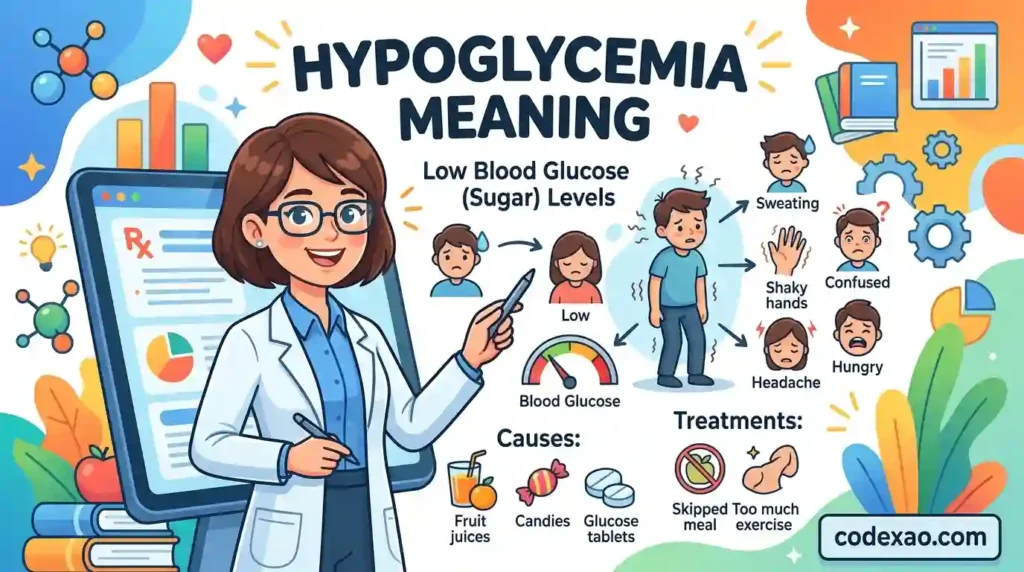
Hypoglycemia means abnormally low blood sugar levels that can cause symptoms like dizziness, sweating, shakiness, hunger, confusion, and weakness.
Doctors usually consider blood sugar below 70 mg/dL as hypoglycemia.
Pronunciation Guide
Hypoglycemia is pronounced like this:
hy-po-gly-SEE-mee-uh
At first glance, it looks intimidating. Honestly, most people stumble over it the first time.
How the Meaning Has Evolved
Years ago, hypoglycemia was discussed mostly in diabetes care. Today, the conversation is broader.
Now people talk about:
- blood sugar crashes
- energy dips
- reactive hypoglycemia
- glucose spikes and crashes
- metabolic health
Social media wellness communities also made the term more mainstream. TikTok creators and health influencers frequently mention blood sugar balance, though not always accurately.
How to Use Hypoglycemia Correctly in Health Conversations
Unlike internet slang, hypoglycemia is a medical term. That means context matters.
Correct Usage
You use hypoglycemia when discussing:
- low blood sugar episodes
- diabetes management
- fasting side effects
- exercise-related glucose drops
- medical emergencies
Example:
- “She felt dizzy because of hypoglycemia.”
- “The doctor warned him about nighttime hypoglycemia.”
Casual vs Professional Use
In casual conversation, people often say:
- blood sugar crash
- sugar crash
- low blood sugar
In medical settings, healthcare professionals usually say hypoglycemia.
When Not to Use It
Do not use hypoglycemia to describe:
- normal hunger
- simple tiredness
- emotional mood swings without evidence
- sugar cravings alone
A lot of people online casually claim they are “hypoglycemic” after skipping breakfast once. Real hypoglycemia is more serious than ordinary hunger.
Platform-Specific Usage
On TikTok
Often discussed in wellness and nutrition videos.
On Reddit
People share personal diabetes experiences and symptoms.
On Instagram
Usually appears in health infographics and fitness advice posts.
On YouTube
Doctors and nutrition creators explain symptoms and treatment strategies.
Symptoms of Hypoglycemia
Symptoms can appear suddenly. Some feel mild. Others become dangerous very quickly.
Common signs include:
- shaking
- sweating
- dizziness
- headaches
- blurred vision
- confusion
- hunger
- irritability
- rapid heartbeat
- weakness
Severe hypoglycemia may lead to:
- seizures
- fainting
- unconsciousness
The brain depends heavily on glucose. When levels drop too low, mental functioning slows down fast.
Real Conversation Examples Using Hypoglycemia
Between Friends
Friend 1: “Why are you suddenly so pale?”
Friend 2: “I think my blood sugar dropped. Probably hypoglycemia.”
This shows concern about sudden physical symptoms.
At Work
Coworker: “You okay? You seem distracted.”
Employee: “Yeah, I skipped lunch and my hypoglycemia kicked in.”
Here the term explains difficulty focusing due to low blood sugar.
During Exercise
Trainer: “Stop for a minute. Are you dizzy?”
Athlete: “A little. Might be hypoglycemia.”
This reflects exercise-related glucose drops.
Family Situation
Parent: “Did grandma eat today?”
Sibling: “Not much. Her hypoglycemia symptoms started again.”
This shows monitoring of a health condition.
Gaming or Streaming Context
Streamer: “Hold up chat, I need juice or my hypoglycemia is about to ruin this match.”
A humorous but realistic modern usage.
Common Mistakes and Misunderstandings
Confusing Hypoglycemia with Diabetes
Hypoglycemia is not diabetes itself.
It is a condition involving low blood sugar. Diabetes is a disease affecting blood sugar regulation overall.
People with diabetes can experience hypoglycemia, especially if medications lower glucose too much.
Assuming Every Energy Crash Is Hypoglycemia
Feeling sleepy at 3 PM does not automatically mean low blood sugar.
Stress, dehydration, lack of sleep, and poor nutrition can cause similar symptoms.
Ignoring Mild Symptoms
Some people brush off warning signs like shakiness or sweating. That can become dangerous if blood sugar continues dropping.
Generational Differences
Older generations often associate hypoglycemia only with severe diabetic emergencies.
Gen Z and Millennials sometimes use the term more casually in wellness conversations.
That difference can create confusion online.
Hypoglycemia Across Different Platforms and Demographics
Gen Z
Gen Z talks about blood sugar balance constantly.
You will see phrases like:
- glucose spikes
- sugar crash
- cortisol and blood sugar
- balanced meals
Some discussions are informative. Others are exaggerated wellness trends.
Millennials
Millennials often discuss hypoglycemia in fitness, dieting, and intermittent fasting communities.
Older Adults
Older adults usually encounter the term through medical care or diabetes management.
On TikTok
Short videos about blood sugar hacks became wildly popular in recent years.
Topics often include:
- eating protein first
- avoiding sugar crashes
- continuous glucose monitors
Is It Formal or Informal
Hypoglycemia is a formal medical term.
Still, everyday conversation increasingly uses it casually when discussing health and energy.
Safe for Work
Yes. The term is completely safe for work and appropriate in professional health discussions.
What Causes Hypoglycemia
Several things can trigger low blood sugar.
Diabetes Medication
This is the most common cause.
Insulin or certain medications can lower glucose too much.
Skipping Meals
Going too long without eating can reduce blood sugar levels.
Intense Exercise
Heavy workouts burn glucose quickly.
Alcohol Consumption
Drinking heavily without food may trigger hypoglycemia.
Certain Medical Conditions
Hormonal disorders and liver disease may also contribute.
Related Medical Terms and Alternatives
| Term | Meaning |
|---|---|
| Hyperglycemia | High blood sugar |
| Glucose | Sugar used for energy |
| Insulin | Hormone controlling blood sugar |
| Diabetes | Disease affecting glucose regulation |
| Blood sugar crash | Casual term for sudden low energy |
| Reactive hypoglycemia | Blood sugar drop after eating |
| Glucose monitor | Device measuring blood sugar |
| Fasting glucose | Blood sugar measured after fasting |
| Ketosis | Fat-burning metabolic state |
| Insulin resistance | Reduced response to insulin |
Synonyms in Casual Language
- sugar crash
- low sugar
- blood sugar dip
Opposite Term
The opposite of hypoglycemia is hyperglycemia, which means high blood sugar.
FAQs:
What does hypoglycemia feel like
Hypoglycemia often feels like sudden weakness, shakiness, sweating, dizziness, or confusion. Some people also feel anxious, hungry, or lightheaded. Symptoms can appear quickly and become serious if untreated.
Can non-diabetics get hypoglycemia
Yes. Non-diabetics can experience hypoglycemia from skipping meals, intense exercise, alcohol use, or certain medical conditions. It is less common but still possible.
Is hypoglycemia an emergency
Mild cases may improve quickly with sugar intake. Severe hypoglycemia can become a medical emergency because it may cause seizures or unconsciousness.
What foods help hypoglycemia fast
Fast-acting carbohydrates work best. Fruit juice, glucose tablets, regular soda, honey, or candy can quickly raise blood sugar levels.
How is hypoglycemia diagnosed
Doctors usually diagnose hypoglycemia using blood sugar tests, symptom tracking, and medical history. In some cases, continuous glucose monitoring may help.
Conclusion:
Hypoglycemia meaning goes far beyond simply “feeling hungry.” It describes a real medical condition involving dangerously low blood sugar levels.
Understanding the symptoms matters because early warning signs can prevent serious complications.
Whether you hear the term in a doctor’s office, on TikTok, or during a fitness discussion, knowing the real definition helps separate facts from internet myths.
Blood sugar health is becoming a huge conversation in 2026, and hypoglycemia sits right at the center of it.
The more informed you are, the easier it becomes to recognize symptoms and respond safely.
Got a favorite health term or internet phrase you want explained next? Drop it in the comments and keep exploring modern language with us.

Hi, I’m Isabella Brown, the voice behind Codexao.com, where meanings aren’t just explained, they’re made easy to understand.
I’ve always been fascinated by how words shape the way we think, speak, and connect. But let’s be honest—most definitions out there feel confusing, outdated, or just plain boring.
That’s exactly why I created Codexao. Here, I break down words, slang, and modern expressions into simple, clear meanings you can actually use in real life.